Abdul
Meaning of Abdul
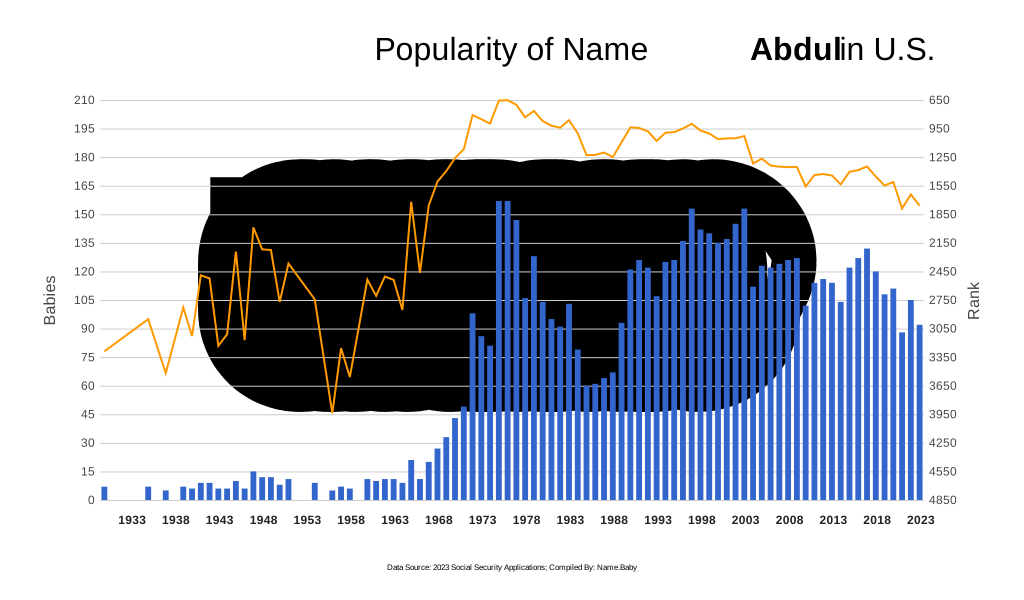
Abdul stems from the Arabic phrase “ʿabd al-,” literally “servant of the,” a devotional prefix traditionally linked to one of the 99 names of God—Abdul-Rahman, Abdul-Aziz, and so on—yet it also stands firmly on its own, projecting humility and spiritual commitment. Rooted in the rich exchange of cultures that once flowed from Andalusian Córdoba to modern Marrakech, the name traveled along trade routes into South Asia and, more recently, into North American neighborhoods where it has held a modest but steady berth on U.S. birth charts since the 1950s. Pronounced ab-DOOL in Arabic and rendered uhb-DOOL in English, Abdul carries a clear, percussive sound that broadcasters appreciate for its crisp cadence. Its consonant-heavy structure comes from the Semitic triliteral root ʿ-b-d, the same linguistic family that gives Spanish its “adobe” and Latin its “labor,” subtly linking the name to ideas of service and effort across tongues. In contemporary use, Abdul evokes faith, global connectivity, and a quiet resilience that appeals to parents seeking a classic Muslim name with straightforward international usability.
Pronunciation
Arabic
- Pronunced as ab-DOOL (/ˈɑbdul/)
English
- Pronunced as uhb-DOOL (/əb-ˈduːl/)
U.S. Popularity Chart
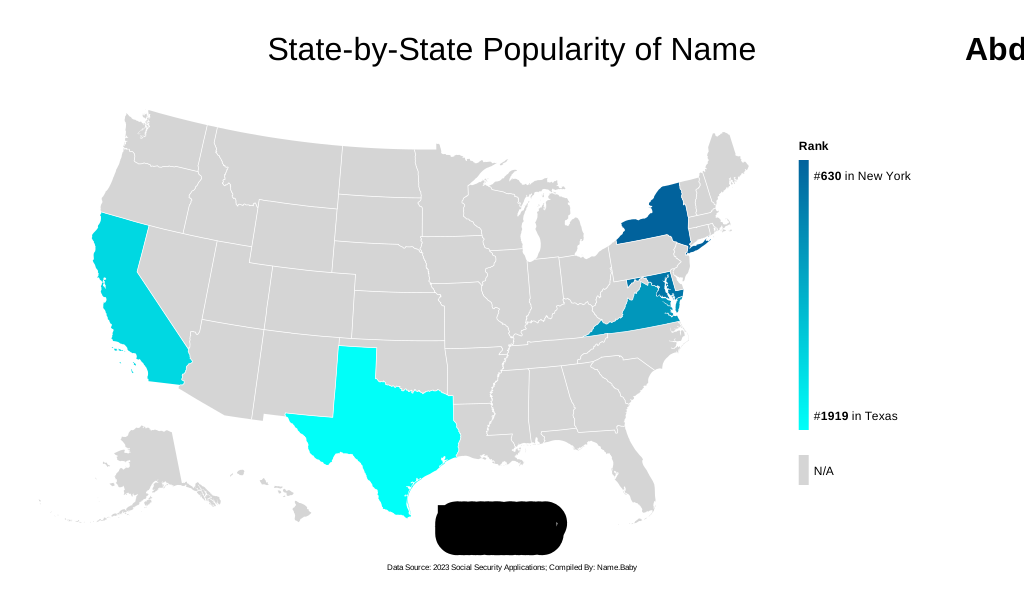
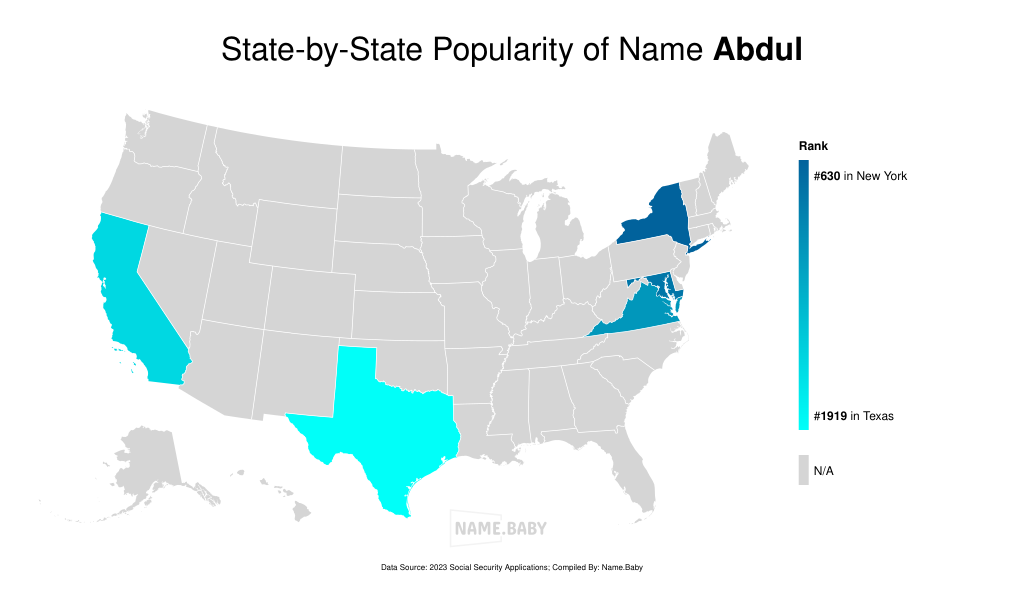
States Popularity Chart
Similar Names to Abdul
Notable People Named Abdul
| Abdul Qadeer Khan was a Pakistani nuclear physicist and metallurgical engineer widely known as the father of Pakistan's atomic weapons program. |
| Khan Abdul Ghaffar Khan was an Indian independence activist who founded the Khudai Khidmatgar movement against British rule and later became a Pakistani politician. |
| Abdul Qadir was a Pakistani leg spinner, the leading leg-break bowler of the late 1970s and 1980s, who inspired players like Shane Warne and later worked as a commentator and chief selector. |
| Maulana Abdul Hamid Khan Bhashani was a Bangladeshi statesman and Awami League founder celebrated as Mozlum Jananeta for his lifelong fight for the poor. |
| Abdul Razak Hussein - Abdul Razak bin Hussein was a Malaysian lawyer and statesman who served as the country's second prime minister and is remembered as the Father of Development. |
| Abdul Majeed al-Zindani was a charismatic Yemeni cleric and politician who founded Iman University and led the Islah party. |
| Abdul Somad Batubara is an Indonesian Islamic preacher and scholar from North Sumatra who once lectured at Sultan Syarif Kasim II State Islamic University in Riau. |
| Abdul Rahman bin Faisal Al Saud was the last emir of Nejd and the father of Abdulaziz, founder of Saudi Arabia. |
| Abdul Fatah Younis was a Libyan military officer and interior minister, once considered Muammar Gaddafi's second in command, who defected to the rebels in 2011 during the First Libyan Civil War. |
| Abdul Rahman Arif was an Iraqi military officer who became Iraq's third president in 1966, succeeding his younger brother Abdul Salam Arif after his death in a plane crash, and held office until 1968. |
| Abdul Qadir al-Husayni was a Palestinian revolutionary who founded the Army of the Holy War and led its fighters in the Arab revolt of the late 1930s and the 1948 war. |
