Alanis
Meaning of Alanis
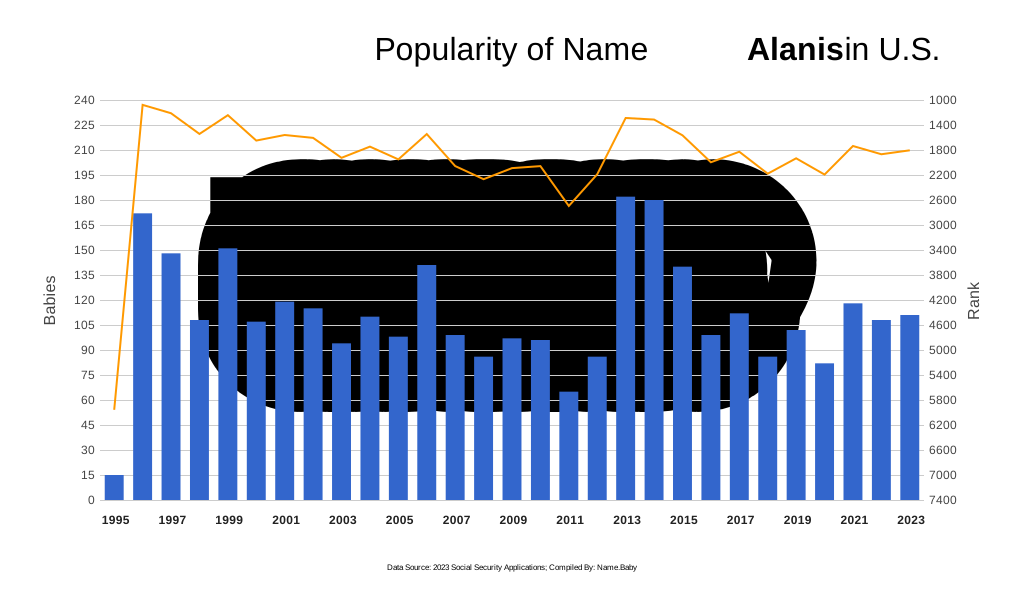
Alanis—pronounced ah-lah-NEES in French and uh-LAH-nis in English—is generally interpreted as the modern feminine form of Alan, a name of Old Breton and Gaelic provenance that is variously glossed as “little rock,” “handsome,” or, by extension, “harmony.” Contemporary awareness of the name is indelibly linked to the Canadian-American singer-songwriter Alanis Morissette, whose mid-1990s commercial breakthrough precipitated a sharp but short-lived rise in U.S. usage: national birth-record data show an abrupt leap from near-obscurity to a rank of 688 in 1996—the year after her landmark album—followed by a gradual stabilization in the 700–900 range over the subsequent decades. The profile that emerges is one of a culturally specific, media-catalyzed appellation that has maintained modest endurance without reverting to true rarity. Parents who select Alanis today often cite its phonetic distinction, its Breton roots that confer a subtle Celtic lilt, and its association with artistic independence, yet they also benefit from a statistical assurance that their daughter’s name, while recognizable, will remain uncommon within her peer group.
Pronunciation
French
- Pronunced as ah-lah-NEES (/a.la.nis/)
American English
- Pronunced as uh-LAH-nis (/əˈlɑːnɪs/)
U.S. Popularity Chart
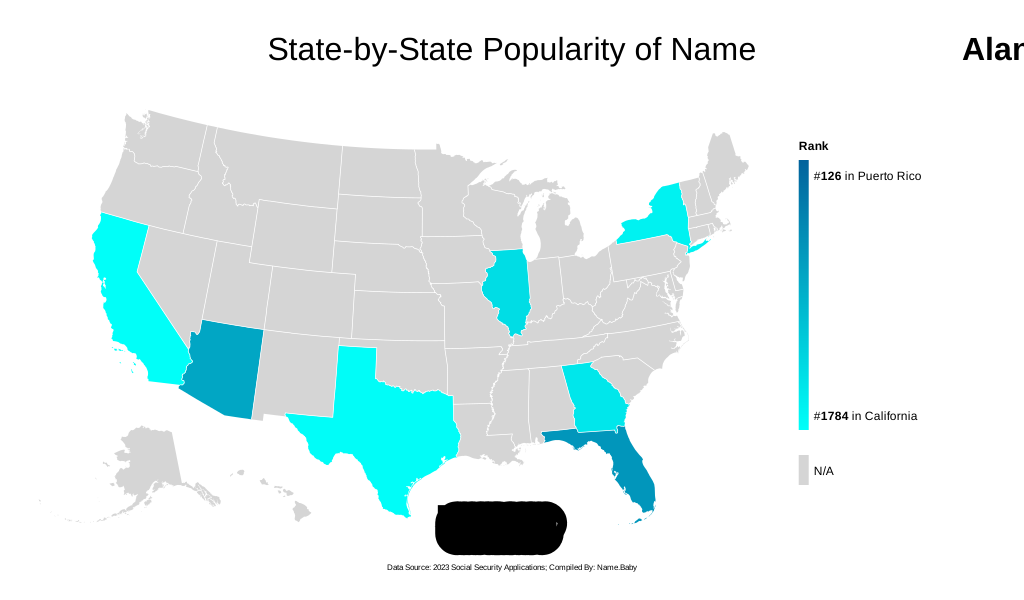
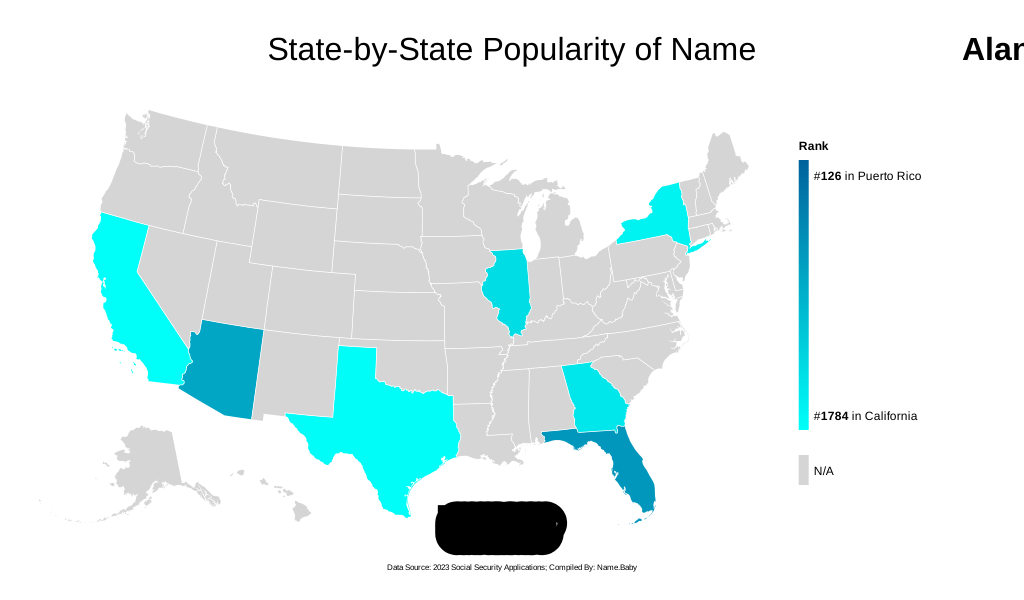
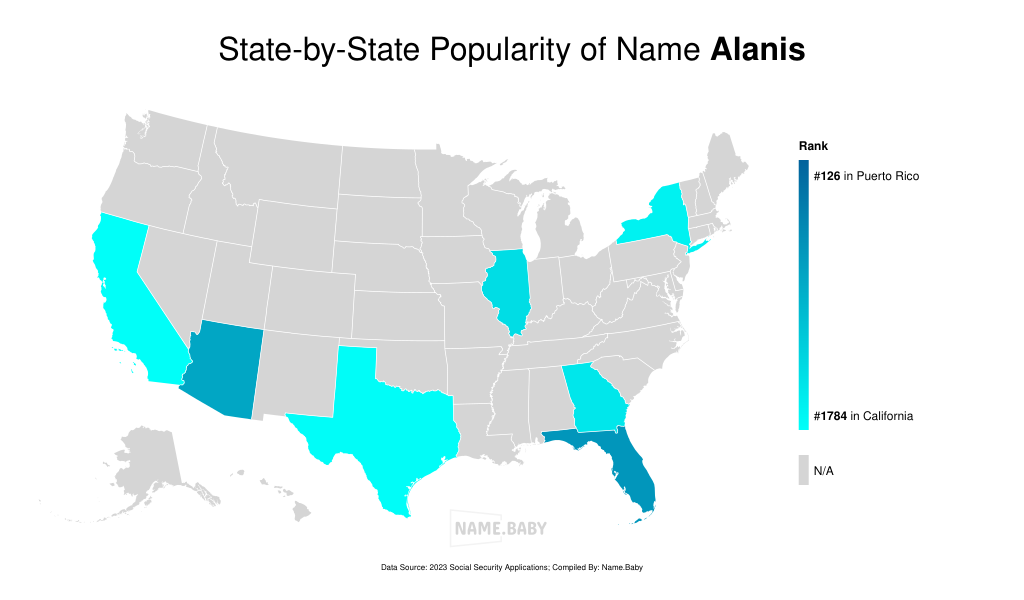
States Popularity Chart
Notable People Named Alanis
| Alanis Morissette is a Canadian and American singer-songwriter who became a 1990s icon with her emotional voice and confessional songs, selling over 60 million records and winning seven Grammy Awards. |
| Alanis Obomsawin is an Abenaki filmmaker, singer, and activist best known for her National Film Board of Canada documentaries on First Nations issues, including Kanehsatake: 270 Years of Resistance. |
