Alder
Meaning of Alder
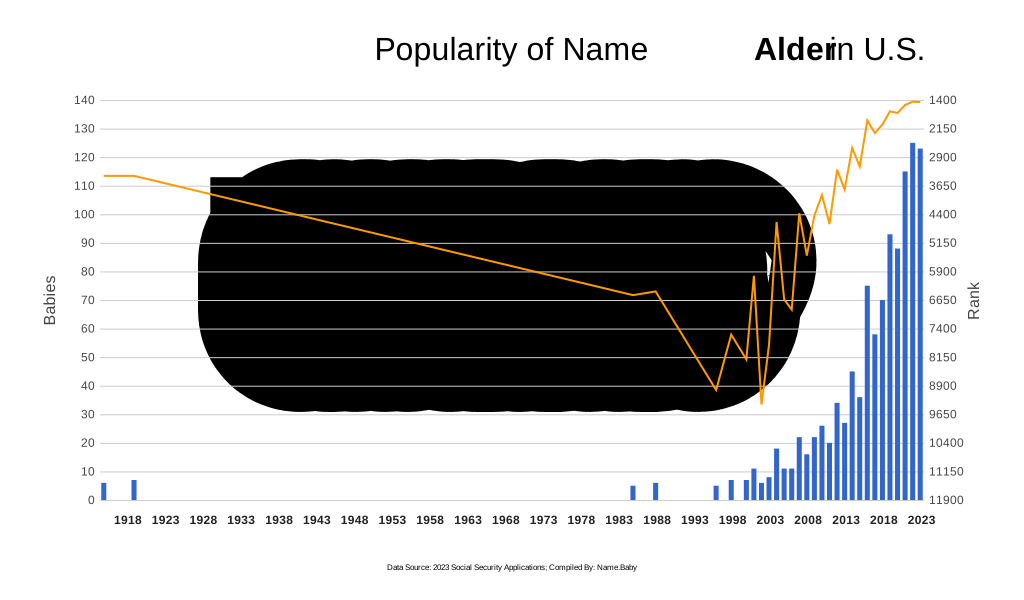
Alder swaggers in from the riverbank, its roots in Old English “alor,” meaning—no surprise—“alder tree,” that water-loving sentinel whose timber once propped up medieval bridges and kept clog-wearing feet dry. Storytellers on both sides of the Atlantic whisper that the alder bleeds red when cut, a wink to courage and quiet strength, so the name carries a dash of knightly bravado beneath its leafy veneer. Eco-fresh like Rowan yet rarer, Alder feels both vintage and up-to-the-minute, having hovered just inside the U.S. Top 1000 for over a century before sprouting upward again in the 2020s. Pronounced AWL-dur, it rolls off the tongue with the mellow confidence of a campfire guitar riff. Parents who pick it tend to picture muddy boots, wide skies, and a child who builds forts before breakfast—earthy, resourceful, unmistakably spirited. In short, Alder is the boy-next-door who secretly knows the password to the enchanted forest gate.
Pronunciation
British English
- Pronunced as AWL-dur (/ˈɔːldər/)
American English
- Pronunced as AWL-dur (/ˈɔldər/)
U.S. Popularity Chart
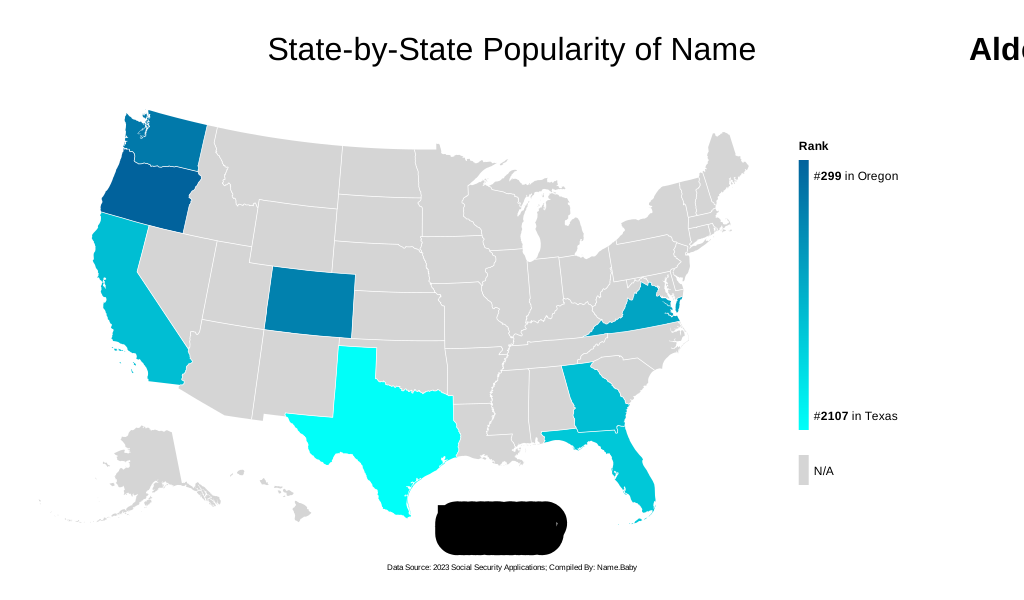
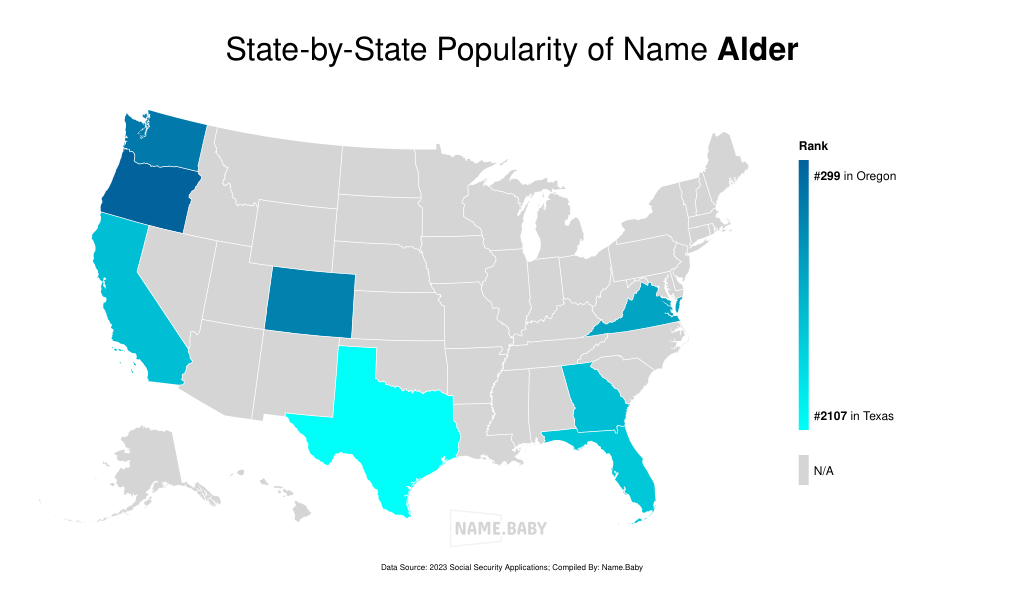
States Popularity Chart
Notable People Named Alder
| Alder Yarrow is an American wine writer who has published the acclaimed blog Vinography since 2004. |
