Ameer
Meaning of Ameer
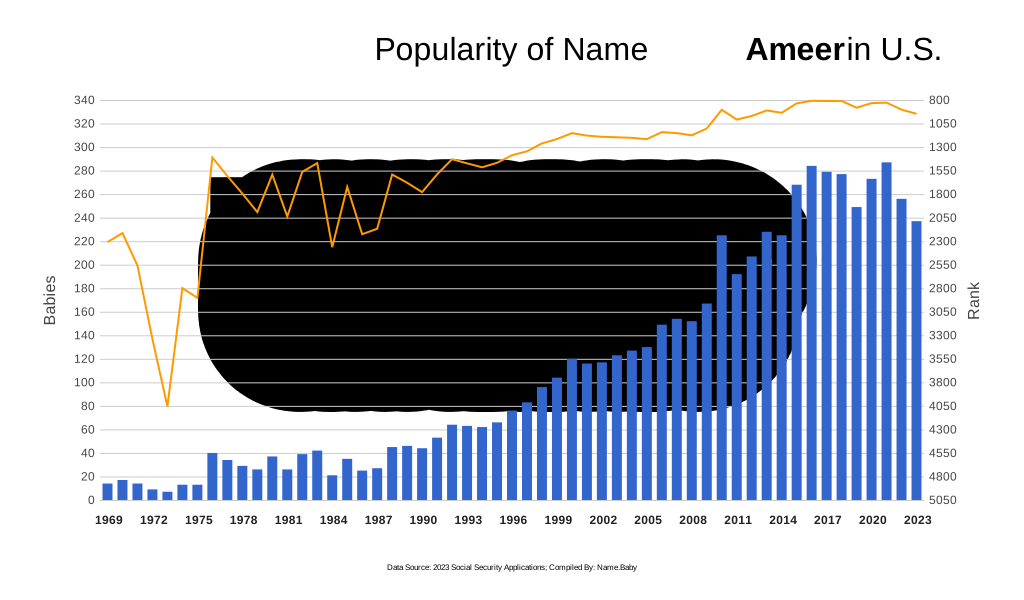
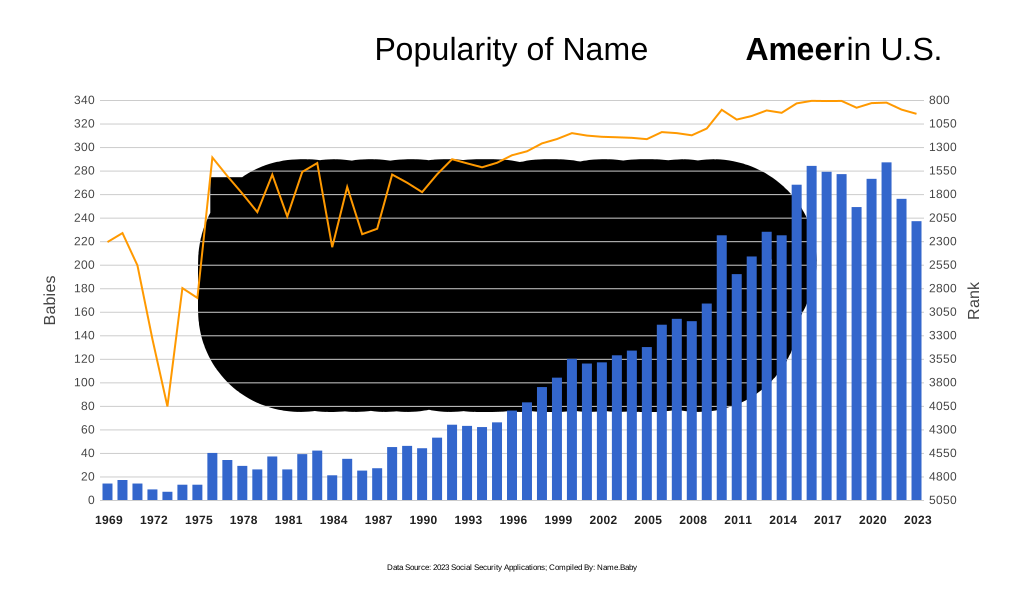
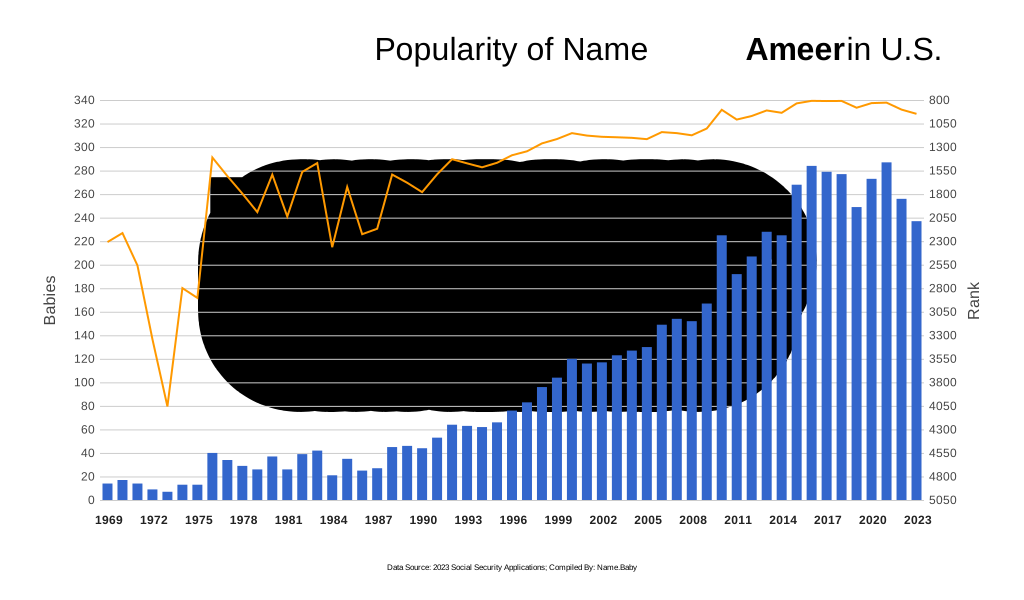
Ameer, the Anglicized transliteration of the Arabic title ʾAmīr (أمير), emerges from Semitic roots connoting “prince,” “commander,” or, more broadly, “one who holds authority,” and has long functioned both as a personal name and a designation of rank within classical Islamic polities. In contemporary Anglo-American usage it maintains a modest but persistent presence, charting in the middle latitudes of the United States Social Security rankings for more than half a century—an historical pattern that suggests steady cultural diffusion rather than episodic fashion. Phonetically rendered in English as uh-MEER (/əˈmɪər/), the name’s uncluttered two-syllable structure enables effortless cross-linguistic transfer, while its semantic association with leadership and noble stewardship imparts a gravitas appreciated by parents seeking a succinct yet dignified appellation. Although often viewed as a variant of the more widely recorded Amir, the doubled vowel in Ameer accentuates the original long “ī” sound and preserves orthographic continuity with other Arabic loanwords in English. Together, these linguistic and sociocultural dimensions position Ameer as a choice that quietly signals cosmopolitan awareness and time-honored virtues without surrendering to transient naming trends.
Pronunciation
British English
- Pronunced as uh-MEER (/əˈmɪər/)
American English
- Pronunced as uh-MEER (/əˈmɪr/)
U.S. Popularity Chart
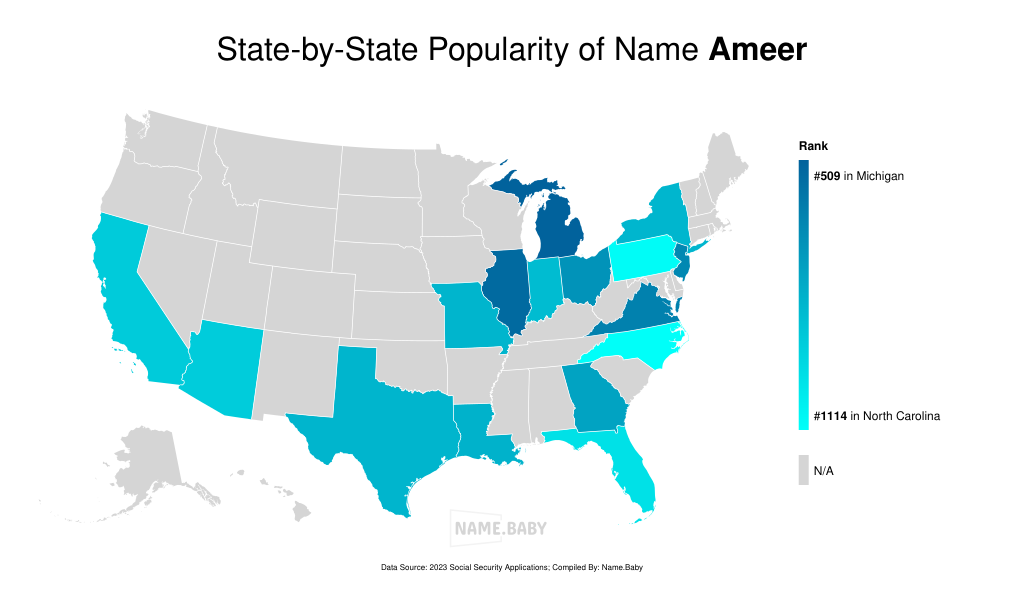
States Popularity Chart


Notable People Named Ameer
| Ameer Abdullah is an Alabama-born NFL running back who starred at Nebraska before being drafted by the Detroit Lions in 2015. |
| Ameer Jackson is an American basketball player who became the youngest import in Qatar's league in 2018 and finished that season as its top scorer. |
| Ameer Gilani is a Pakistani actor and singer best known for his role as Hassan Fareed in the 2020 drama Sabaat. |
| Ameer Muhammad Khan Jogezai was nominated as Governor of Balochistan with Prime Minister Imran Khan's approval, though the nomination was later withdrawn. |
| Ameer Khan is a former first-class cricketer who played 42 matches for Chittagong Division between 2000 and 2012. |
