Aran
Meaning of Aran
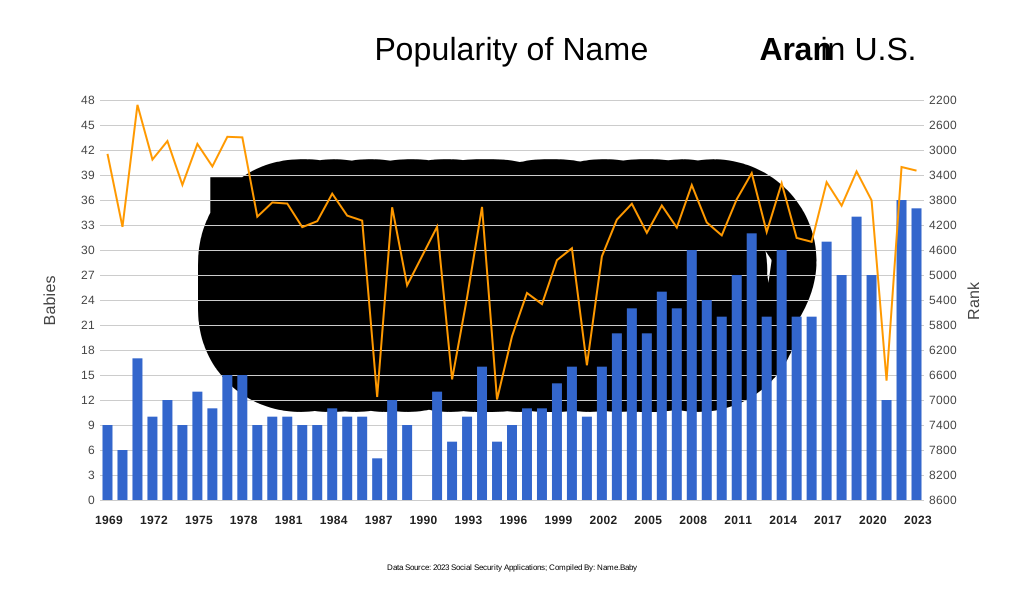
Aran, rendered in English as AIR-uhn (/ˈɛərən/), is a masculine given name whose etymology converges upon both the Hebrew Aharon—often interpreted as “exalted” or “mountain of strength”—and the Gaelic toponym of the Aran Islands off the western coast of Ireland, where it evokes a lineage of rugged maritime tradition. In scholarly discourse, the Hebrew derivation is traced through classical texts to denote loftiness of character, while the Irish association, reinforced by the renowned Aran sweater motif, suggests resilience and a connection to ancestral craftsmanship. Demographically, Aran has maintained a consistent presence in the United States Social Security Administration records since the late twentieth century, appearing as the 893rd most popular male name in 2024 with thirty-one recorded occurrences and generally occupying a position between ranks 762 and 908 over the past three decades. Its steadiness—marked by only moderate fluctuations in annual frequency—reflects a subtle preference among parents seeking a name that balances historical depth with contemporary understatement. In anglophone contexts, Aran carries an academic yet understated resonance, appealing to those who favour names of measured distinction and cross-cultural heritage.
Pronunciation
English
- Pronunced as AIR-uhn (/ˈɛərən/)
U.S. Popularity Chart
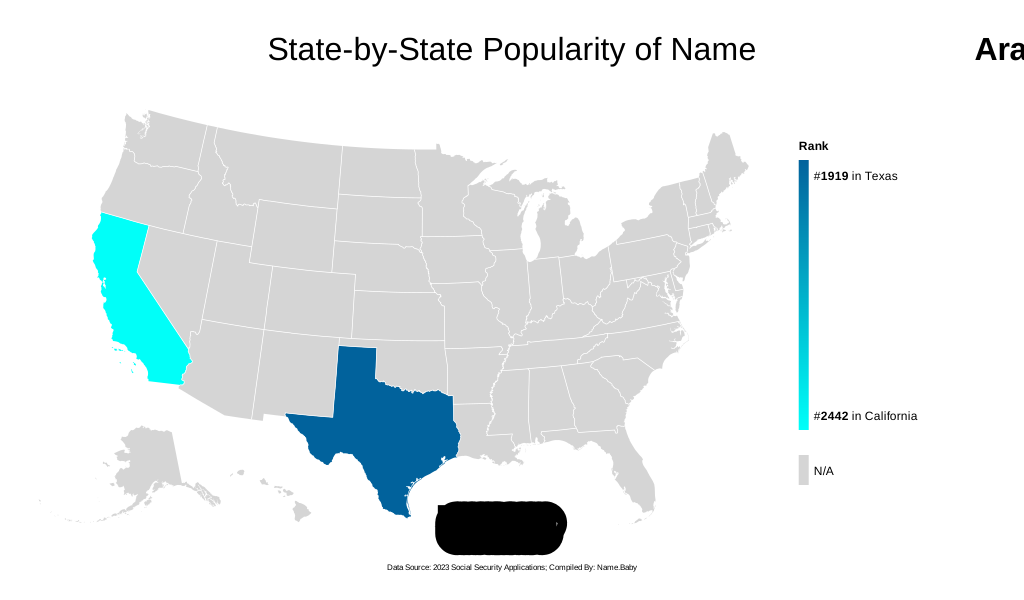
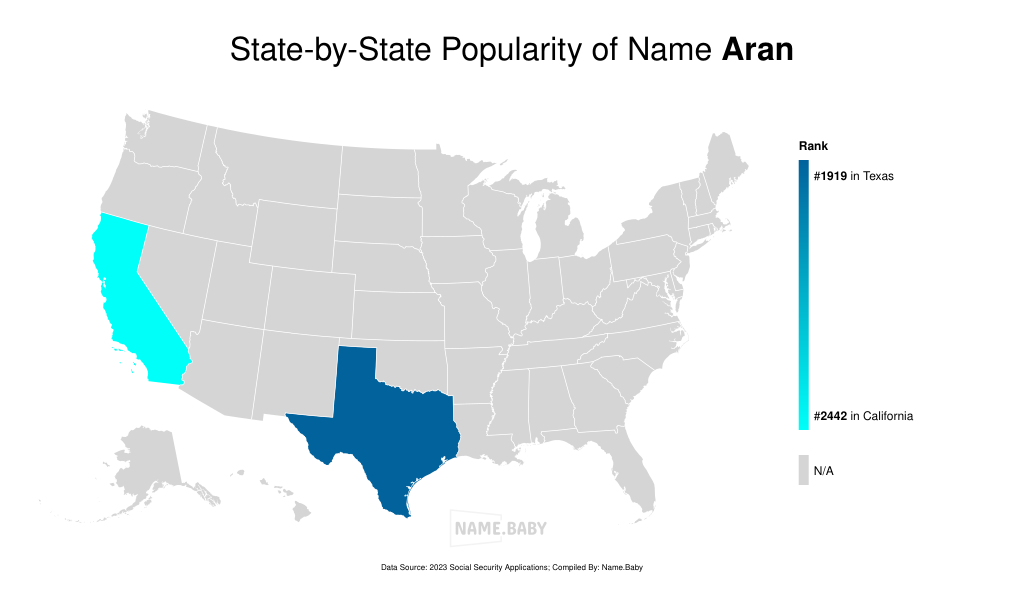
States Popularity Chart
Notable People Named Aran
| Aran Embleton is an English footballer who turned down American scholarships to play for her home team. |
| Aran Bell is an American ballet dancer featured in First Position who became an American Ballet Theatre principal at age 21. |
| Aran Tharp is a New York filmmaker known for his filming, photography and lighting work with the avant-garde band The Psychic Paramount. |
| Aran John Hansen is a New Zealand sailor who competed in the Soling class at the 1984 and 1988 Olympics. |
