Cipriano
Meaning of Cipriano
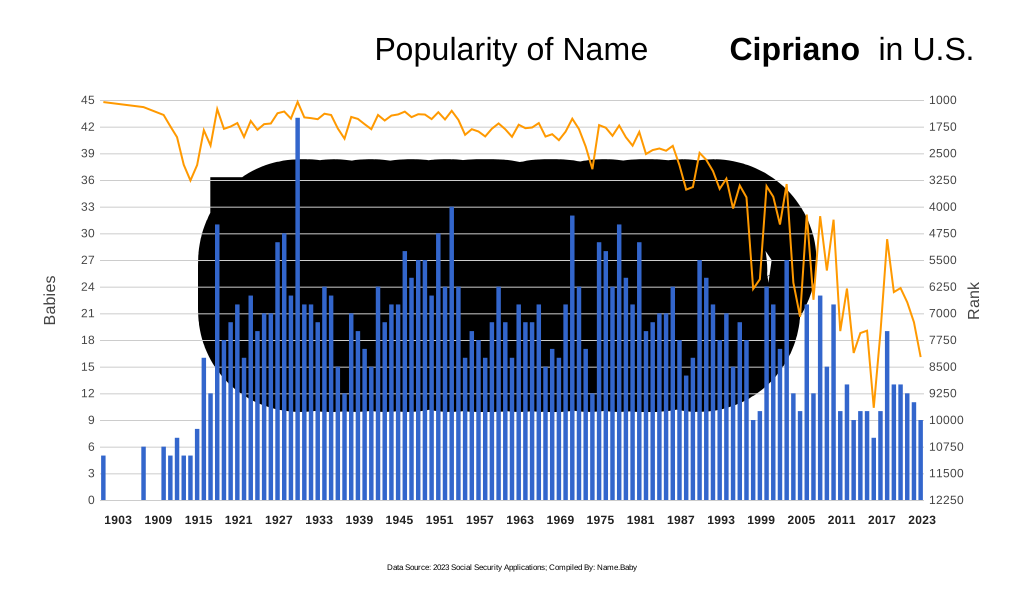
In the realm of onomastics, Cipriano emerges as a richly layered appellation of Latin provenance—derived from Cyprianus, “one hailing from the island of Cyprus”—and perpetuated through the ages by figures such as St. Cyprian of Carthage, whose epistolary wisdom and martyrdom conferred upon the name a sacral gravitas. In its Italian enunciation chee-PREE-ah-noh (/tʃiˌpriˌaˈno/), Cipriano resonates like the echo of marble colonnades and the gentle susurrus of Mediterranean breezes, weaving geographic signification into a tapestry of poetic elegance. From an academic standpoint, it exemplifies a toponymic tradition in which personal identity is inextricably bound to place, while culturally it imparts the warm cadence of Latin heritage and scholarly dignity. Though modestly represented in contemporary American registers—seventeen newborns bore the name in 2024, achieving rank 907—its enduring presence bespeaks a familial aspiration toward a name that embodies historical depth, cultural richness, and the timeless spirit of classical distinction.
Pronunciation
Italian
- Pronunced as chee-PREE-ah-noh (/tʃiˌpri:ˌa:no/)
U.S. Popularity Chart
Notable People Named Cipriano
| Cipriano de Rore was a Renaissance composer whose expressive, innovative madrigals helped shape the future of Italian music. |
| Cipriano de Valera was a Spanish Protestant reformer best known for revising the influential Reina Valera Bible. |
| Cipriano Muñoz, 2nd Count of la Viñaza - Cipriano Munoz y Manzano was a Spanish diplomat, politician, and scholar known for his work on language and art history. |
| Cipriano Mera Sanz was a Spanish anarchist and military and political leader during the Second Spanish Republic. |
| Cipriano Biyehima Kihangire was a Ugandan Roman Catholic bishop who served in Gulu from 1968 to 1988. |
