Delfina
Meaning of Delfina
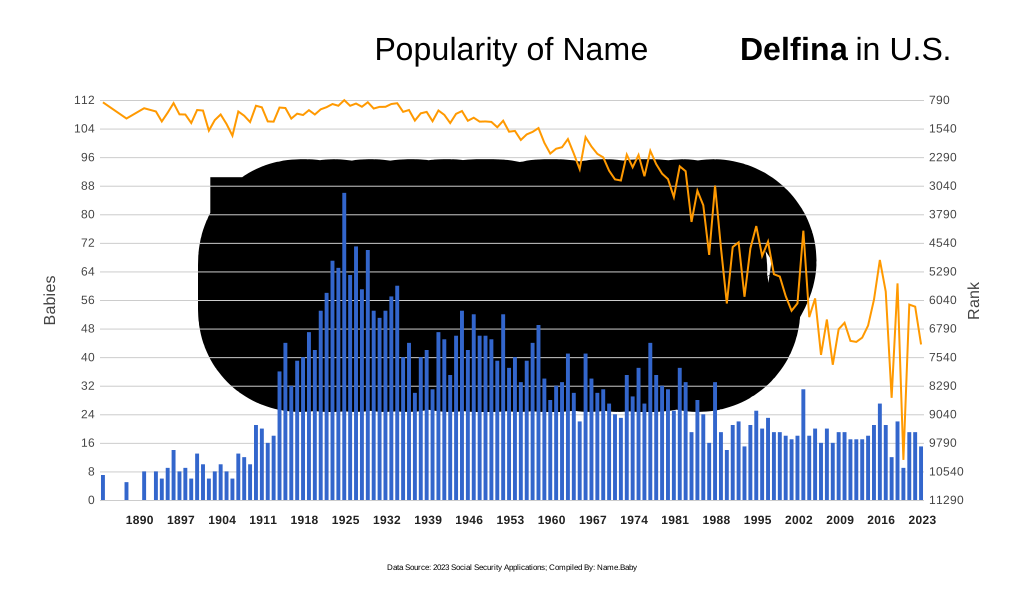
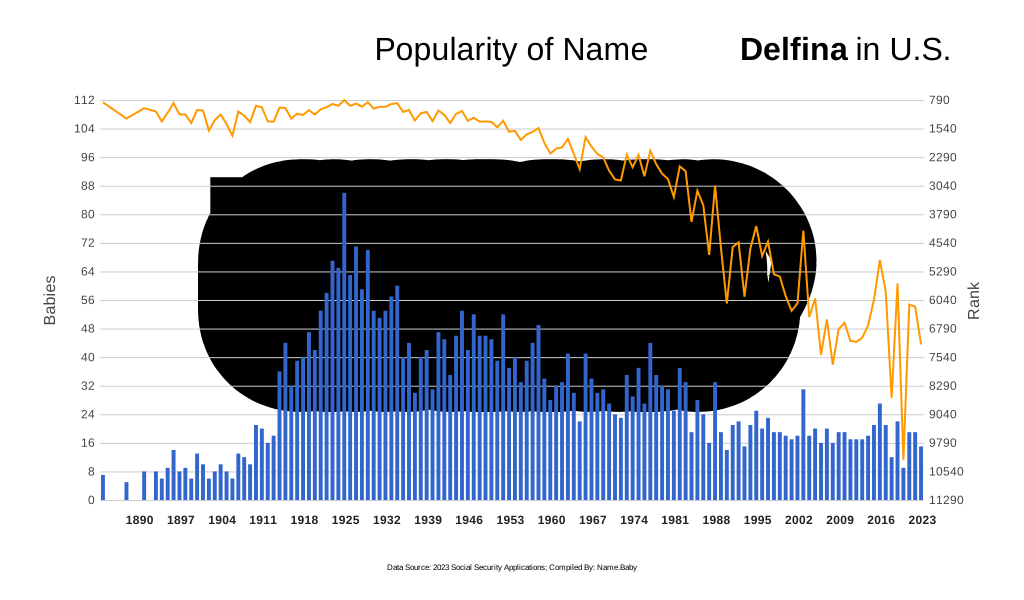
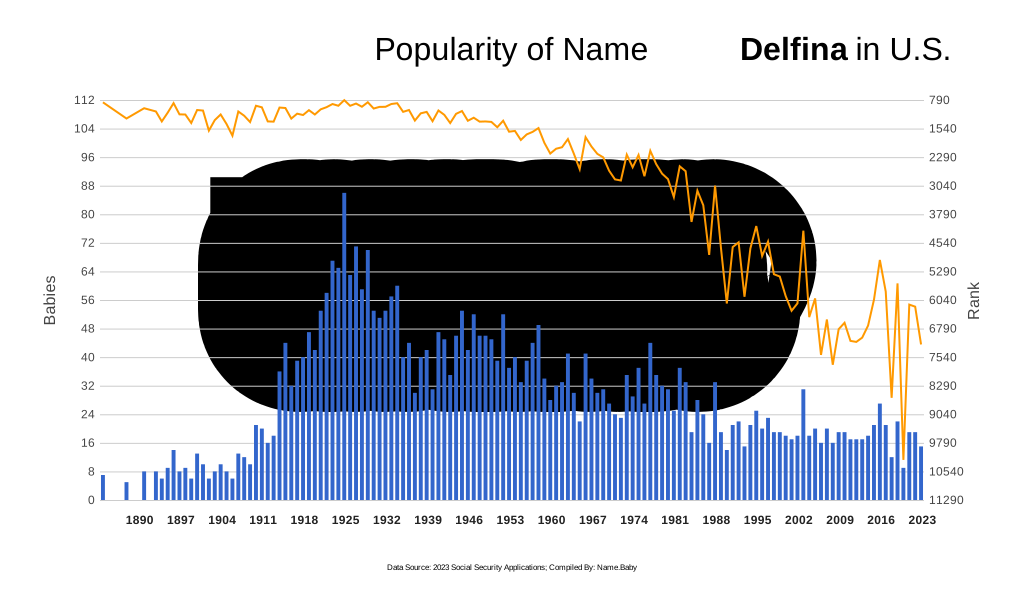
Delfina is a feminine appellation of Greco-Latin provenance, originating from the Latin Delphīna—itself derived from the ancient Greek δελφίς (delphís), “dolphin” — and historically transmitted through Italian linguistic channels. It conveys a semantic field associated with the dolphin’s attributes of intelligence, navigational guidance and protective benevolence, qualities that have lent the name a subtle emblematic resonance in hagiographical and literary contexts; for instance, it appears in the cult of Saint Delfina of Albenga (12th century) and in Renaissance poetic circles. In contemporary Anglo-American usage, its phonological profile (Italian: del-FEE-nah, /dɛlˈfiːna/) remains invariant, reflecting a straightforward adaptation of the original prosody. Analytical examination of United States Social Security Administration records reveals that Delfina has sustained a modest yet discernible ascent within the lower decile of the Top 1000 names: from ten recorded usages (rank 946) in 2020 to eighteen (rank 932) in 2024, indicating a gradual but consistent preference among new parents seeking a name that balances classical erudition with distinctive rarity.
Pronunciation
Italian
- Pronunced as del-FEE-nah (/dɛlˈfiːna/)
U.S. Popularity Chart
Notable People Named Delfina
| Maria Delfina Entrecanales de Azcarate was a Spanish-British arts patron and philanthropist who settled in England in 1946. |
| Delfina de la Cruz was a Chilean pianist, pioneering female choral composer and First Lady of Chile from 1876 to 1881. |
| Delfina Delettrez Fendi is a renowned Italian designer and jeweler based in Rome. |
| Delfina Pignatiello is an Argentine former swimmer who represented her country at the 2020 Summer Olympics. |
| Delfina Merino is an Argentine field hockey player who won Olympic silver medals in 2012 and 2020. |
