Doriana
Meaning of Doriana
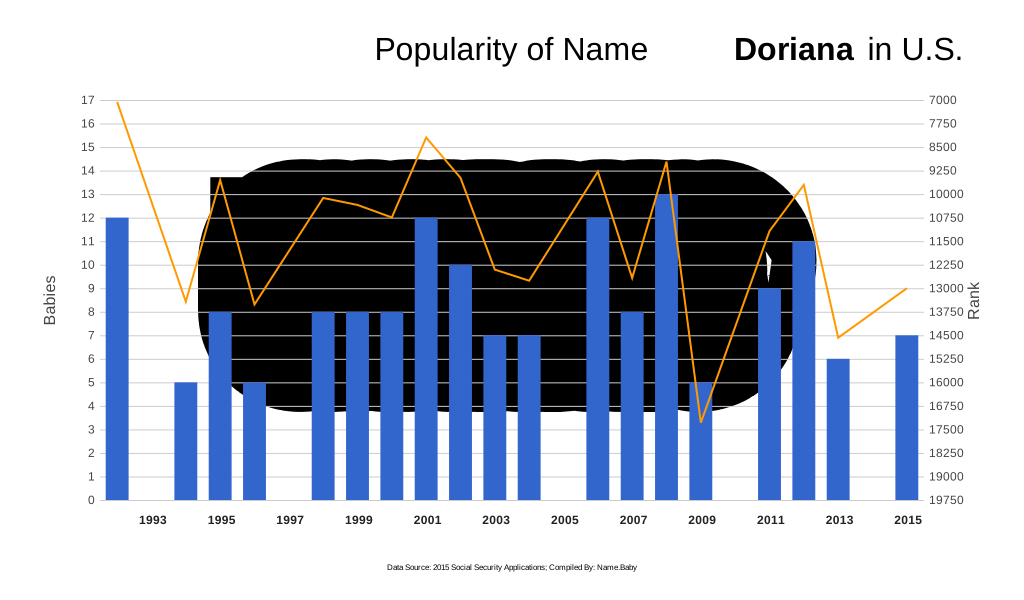
Doriana, in its Italian articulation (/doˈri.a.na/), derives from the ancient Greek ethnonym Dorian and incorporates the Latinate feminine suffix –ana, thereby signalling both regional affiliation to the Peloponnesian Dorians and a morphological adaptation characteristic of Italic name-formation. Its usage in the United States, as recorded by the Social Security Administration, has remained modest and sporadic—typically five to thirteen newborns per year since the early 1990s, with national rankings fluctuating between approximately 840 and 980—underscoring its appeal as a rare yet classically grounded choice within Anglo-American naming patterns. Phonetically, the name’s penultimate stress imparts a rhythmic formality, while etymologically it aligns with a subset of personal names that repurpose ethnonyms into individualized markers of cultural heritage. For parents seeking a technically precise appellation that balances historical resonance with low contemporary frequency, Doriana offers a coolly elegant option distinguished by its complex lineage and measured distinctiveness.
Pronunciation
Italian
- Pronunced as doh-ree-AH-nah (/doˈri.a.na/)
U.S. Popularity Chart
Notable People Named Doriana
| Doriana Rivera Aliaga is a retired Peruvian badminton player who won two Pan American Games doubles bronze medals and later represented New Zealand. |
| Doriana Pigliapoco is an Italian fencer who competed in women's team foil at the 1976 Summer Olympics. |
