Elan
Meaning of Elan
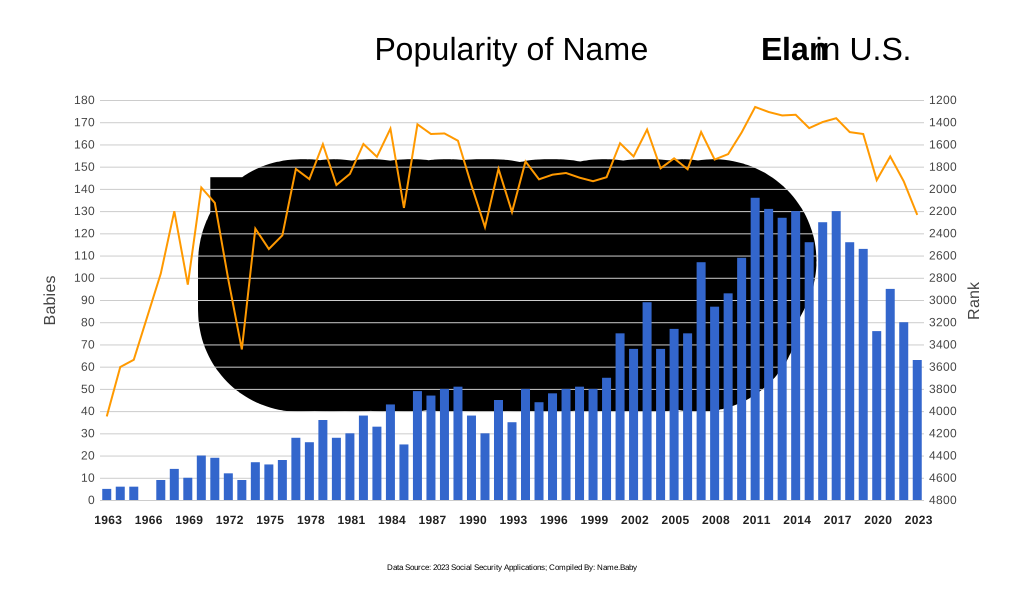
Elan, pronounced EE-lan (/iː.læn/), derives principally from the Hebrew אֵילָן, a masculine term for “tree,” and thus carries the semantic weight of rooted endurance, measured growth, and quiet strength; nevertheless, through the permeable boundaries of Anglo-American vocabulary, it also absorbs a secondary association with the French loanword élán, long used in English to signify spirited energy and forward drive. This etymological pairing—arboreal solidity on one side, kinetic verve on the other—has not translated into mass popularity: since its first recorded appearances in U.S. Social Security data during the early 1960s, Elan has consistently occupied the lower reaches of the national charts, registering between roughly fifty and one hundred thirty births per year and never rising above the mid-700s in rank. Such statistical stability, neither obscure nor ubiquitous, situates the name in the rarefied space where familiarity coexists with distinctiveness, offering parents a lexically concise yet symbolically layered choice that balances tradition with understated modernity.
Pronunciation
English
- Pronunced as EE-lan (/iː.læn/)
U.S. Popularity Chart
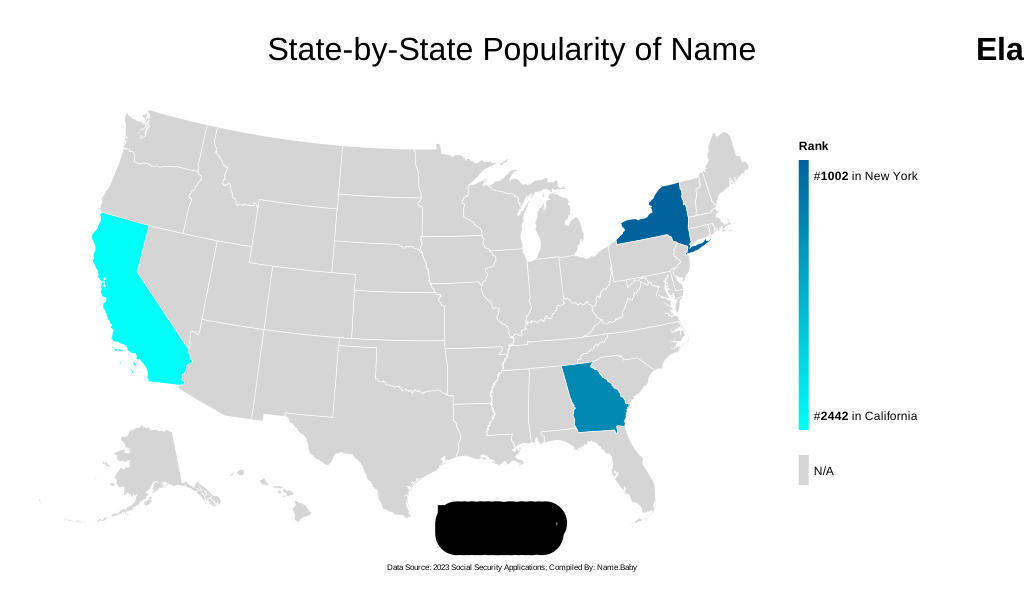
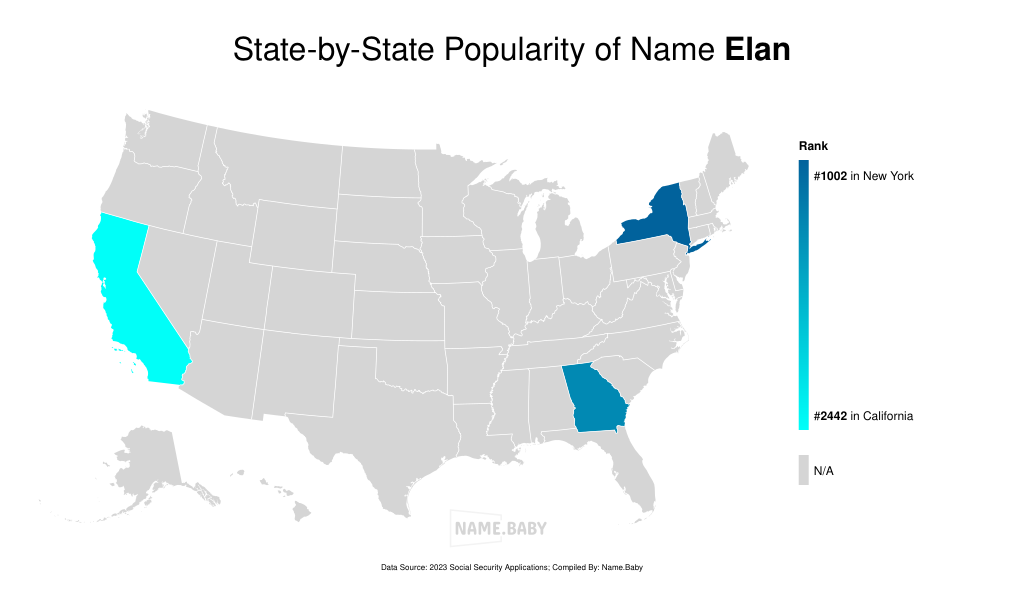
States Popularity Chart
Notable People Named Elan
| Elan Lee is an American game designer known for pioneering alternate reality games and co-creating Exploding Kittens. |
| Elan Somekh Carr is an American lawyer and diplomat who leads the Israeli American Council and served as a US special envoy combating antisemitism. |
| Elan Atias is an American singer and songwriter known for his reggae music. |
| Elan Gale is an American author, television writer and producer known for The Bachelor and creating FBoy Island. |
