Eleanora
Meaning of Eleanora
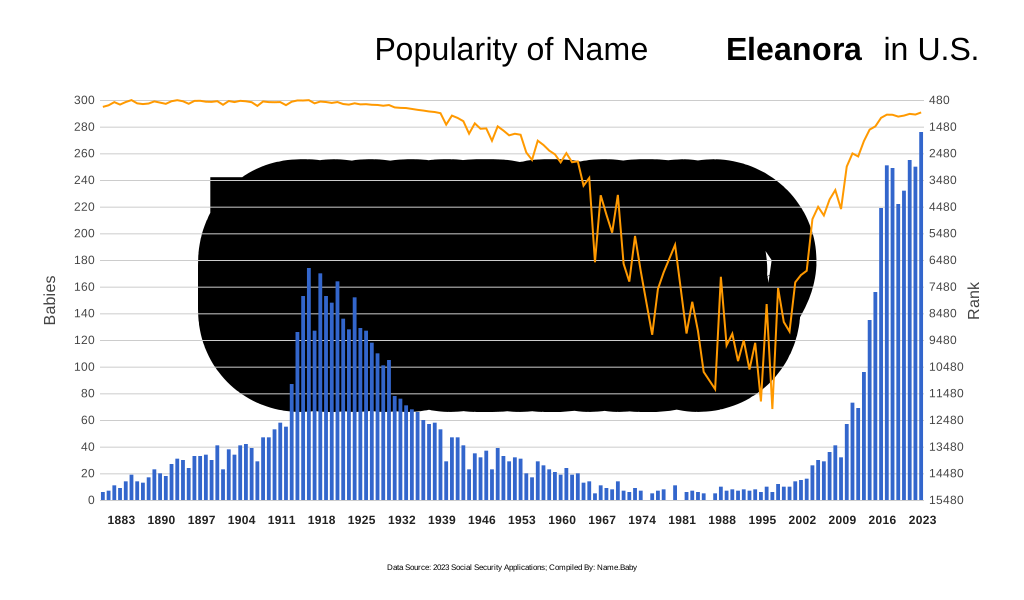
Eleanora descends from medieval Occitan Aliénor—probably a dialectal form of the Greek-rooted Helenē, “torch” or “bright one”—and gained its concluding -a via Italian phonology, giving the name a hint of bel canto resonance. The historical range stretches from Eleanor of Aquitaine’s twelfth-century statecraft to twentieth-century jazz icon Billie Holiday, born Eleanora Fagan, underscoring an adaptability that slips easily between royal court and smoke-filled club. In U.S. data the name crested in the 1910s, dipped for decades, and has been climbing again since the early 2000s, reaching rank 652 in 2024; the curve suggests a cyclical but steady revival rather than a fad spike. Pronounced el-ee-uh-NOR-uh in English or eh-leh-ah-NOR-ah in Italian, it offers parents a recognizably classic yet statistically uncommon option—an antique heirloom polished just enough for modern use.
Pronunciation
Italian
- Pronunced as eh-leh-ah-NOR-ah (/elea'nora/)
English
- Pronunced as el-ee-uh-NOR-uh (/ˌɛliəˈnɔrə/)
U.S. Popularity Chart
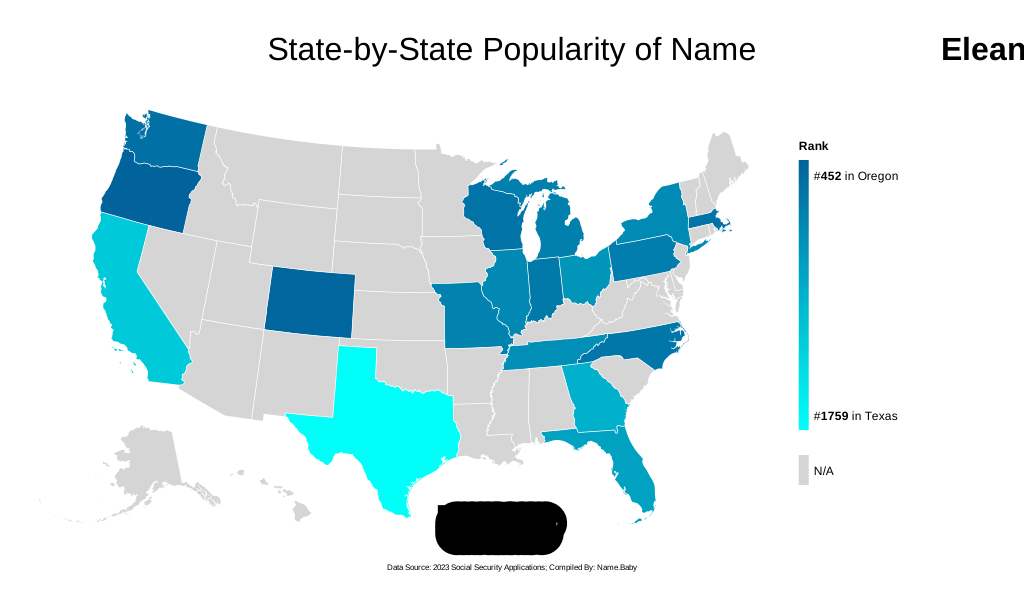
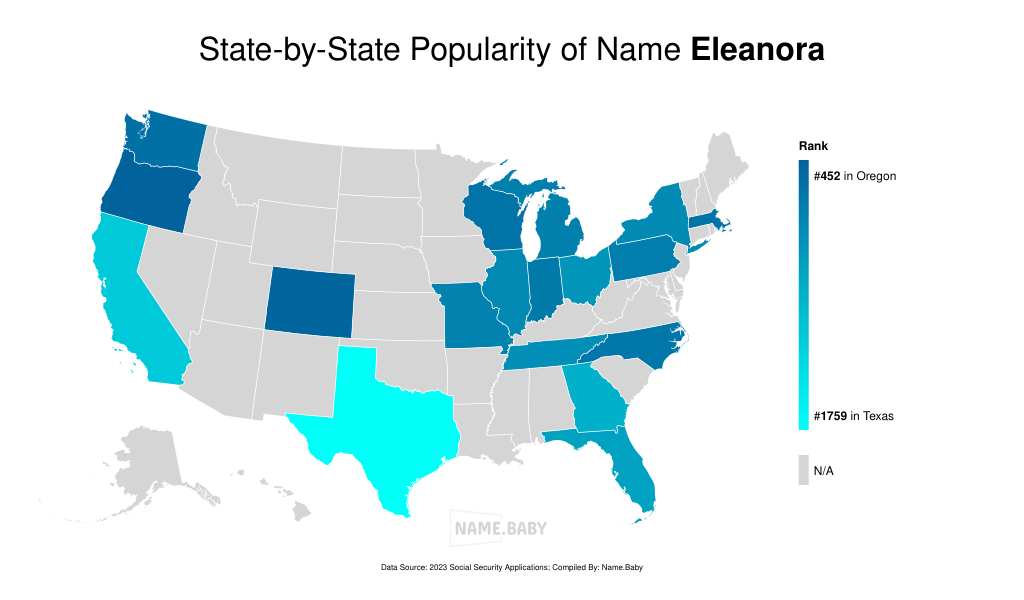
States Popularity Chart
Notable People Named Eleanora
| Eleanora Atherton was a wealthy English heiress and philanthropist who funded churches and schools across nineteenth century Manchester and Salford. |
| Eleanora Frances Knopf was a pioneering American geologist with the USGS who earned her Ph.D. at Bryn Mawr and became the first in the country to use petrography in her lifelong study of Stissing Mountain. |
