Gaius
Meaning of Gaius
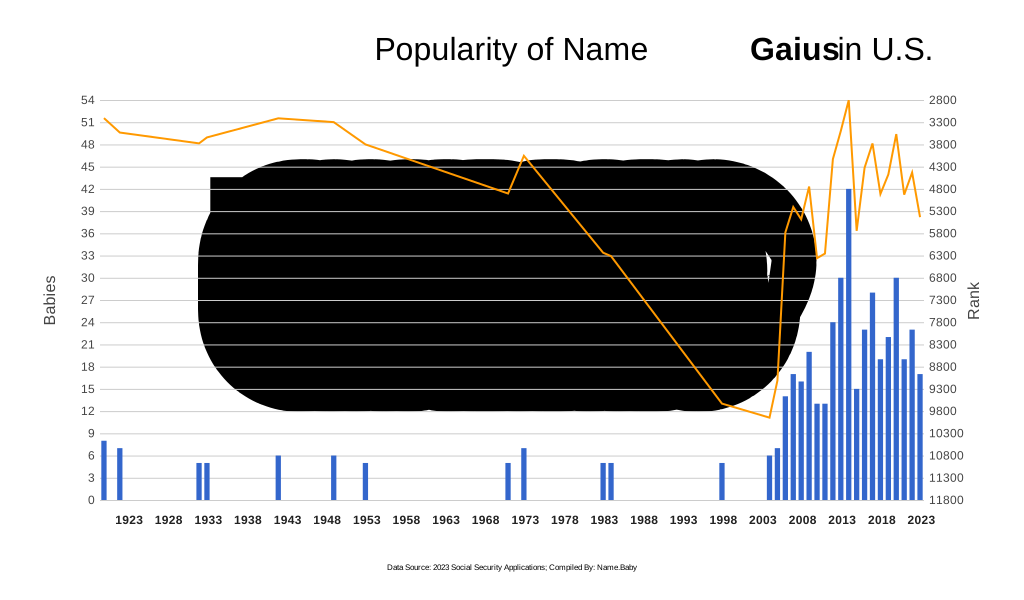
Gaius, a name as luminous as moonlight on ancient marble, springs from the Latin gaudere—“to rejoice”—its two syllables gliding like silken petals over a tranquil pond at dawn. It evokes the stately presence of Gaius Julius Caesar, the measured cadences of Roman oratory and the devout whispers of early saints, weaving a tapestry that blends civic grandeur with hushed reverence. Though it seldom ascends the summit of modern popularity, Gaius endures with quiet grace in American birth registers—its soft bloom reminiscent of a single ume blossom braving winter’s hush—its occurrence gently nestled near the lower reaches of the top thousand. Pronounced GAY-uhs, it bestows upon its bearer a classical dignity tempered by serene composure, like a cool breeze that carries both the weight of history and the promise of tranquil joy.
Pronunciation
English
- Pronunced as GAY-uhs (/ˈɡeɪəs/)
U.S. Popularity Chart
Notable People Named Gaius
| Gaius Furius Sabinius Aquila Timesitheus was a Roman imperial officer in the early third century, likely of Greek origin. |
| Gaius Sempronius Gracchus was a Roman politician and soldier known for reforms to land ownership, justice, and affordable grain. |
| Gaius Cilnius Maecenas was an advisor to Octavian and a patron of poets like Horace and Virgil, whose name became synonymous with a patron of the arts. |
| Gaius Asinius Pollio was a Roman statesman, writer, and historian best known as a patron of Virgil and friend of Horace. |
| Gaius Appuleius Diocles was a Roman charioteer often described as the highest-paid athlete of all time. |
| Gaius Octavius was a Roman politician best known as the father of Emperor Augustus. |
| Gaius Petronius - Gaius or Publius Petronius served as the second and fourth prefect of Roman Egypt. |
