Hampton
Meaning of Hampton
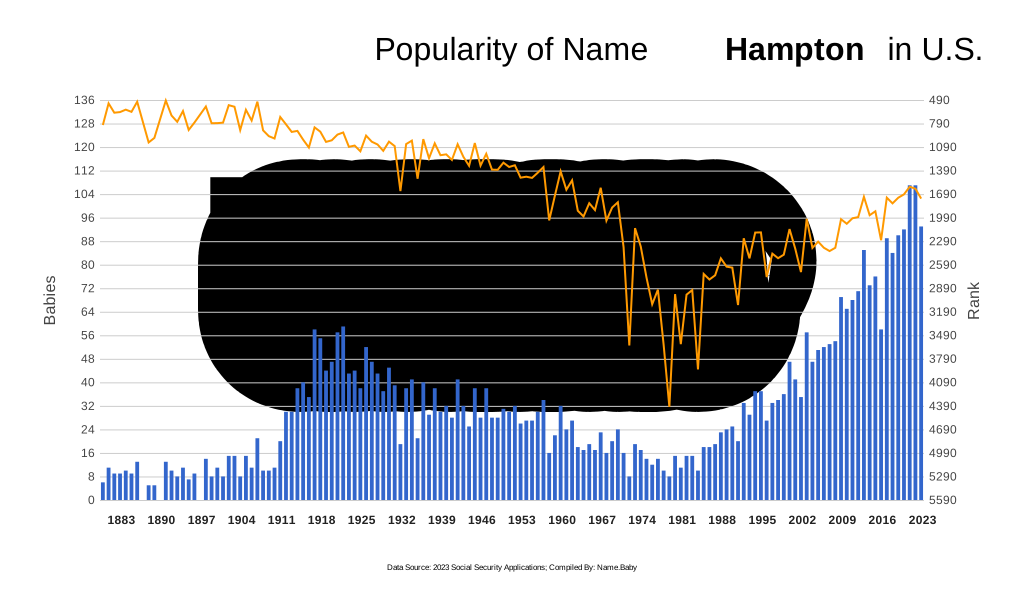
Rooted in the Old English elements hām (“home, estate”) and tūn (“enclosed settlement, farm”), Hampton originated as a placename identifying several medieval villages, most famously the site that later bore Hampton Court Palace. From those placid manorial landscapes the word migrated into surname status and, by the late nineteenth century, into the American forename repertoire. Although the Social Security files show uninterrupted annual use since their inception in 1880, the absolute numbers remain modest—typically fewer than 150 registrations per year and, in recent seasons, a national rank hovering around the 800 mark—so the designation preserves an air of selective rarity. Culturally, Hampton evokes layered Anglo-American imagery: the Tudor brickwork of Hampton Court, the salt-sprayed affluence of Long Island’s Hamptons, and even the swing-era vitality associated with surname-bearer Lionel Hampton. Together these associations confer on the given name a blend of landed solidity and understated sophistication. For contemporary parents attracted to the current fashion for surname-first choices yet wary of ephemera, Hampton offers a historically grounded, cool-toned alternative whose cadence is familiar, whose pedigree is venerable, and whose statistical footprint remains reassuringly restrained.
Pronunciation
American English
- Pronunced as HAMP-tuhn (/ˈhæmp.tən/)
U.S. Popularity Chart
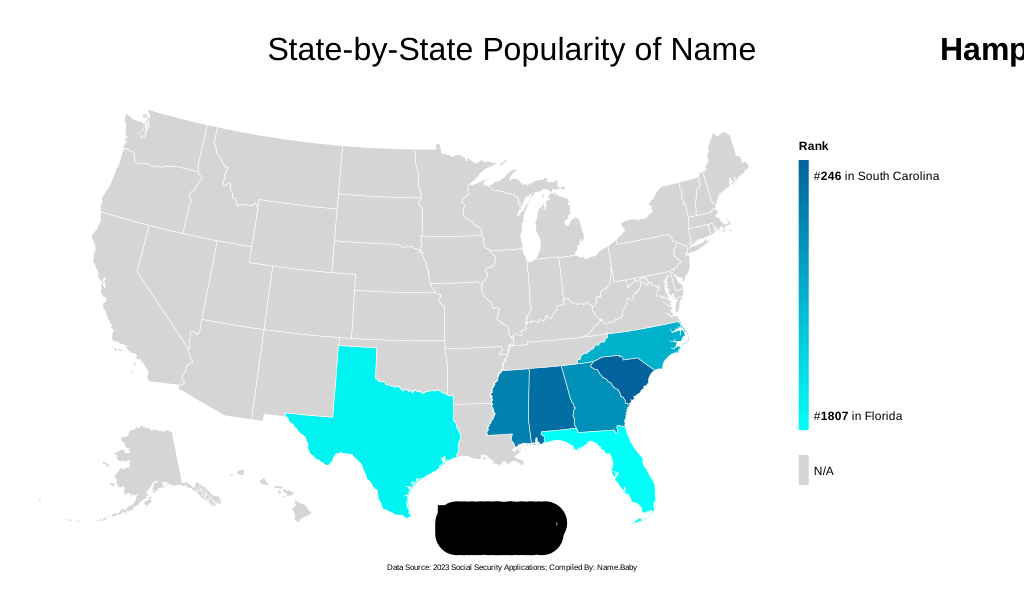
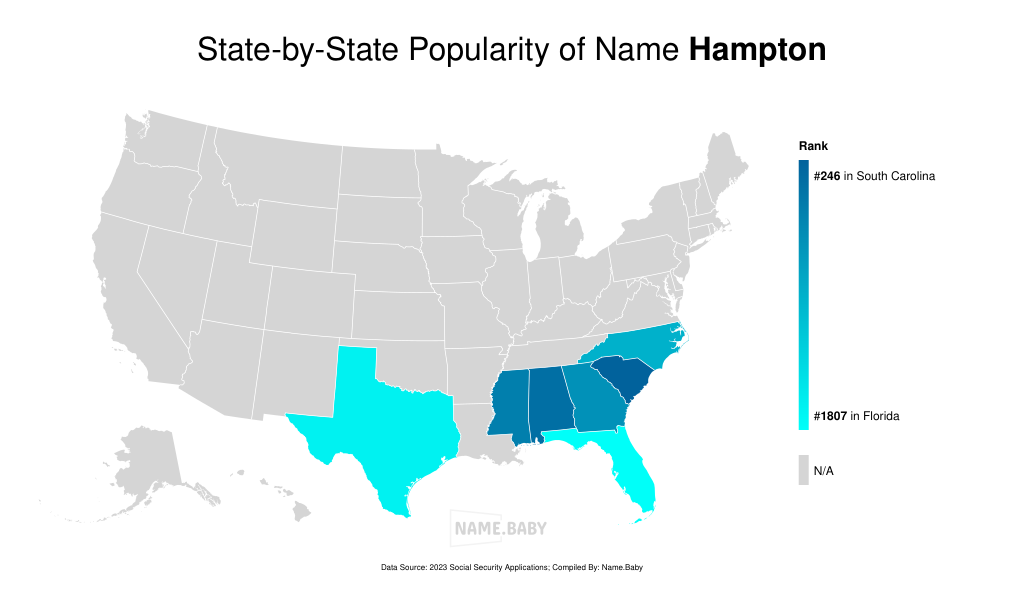
States Popularity Chart
Similar Names to Hampton
Notable People Named Hampton
| Wade Hampton Sides is an American historian and journalist known for bestselling narrative histories like Ghost Soldiers and Hellhound on His Trail. |
| Hampton Hawes was an American jazz pianist whose memoir Raise Up Off Me won the Deems Taylor Award for music writing in 1975. |
| Hampton Fancher is an American actor and filmmaker best known for co-writing Blade Runner and its sequel Blade Runner 2049. |
| Hampton Wildman Parker was an English zoologist honored as a Commander of the Order of the British Empire. |
