Jai
Meaning of Jai
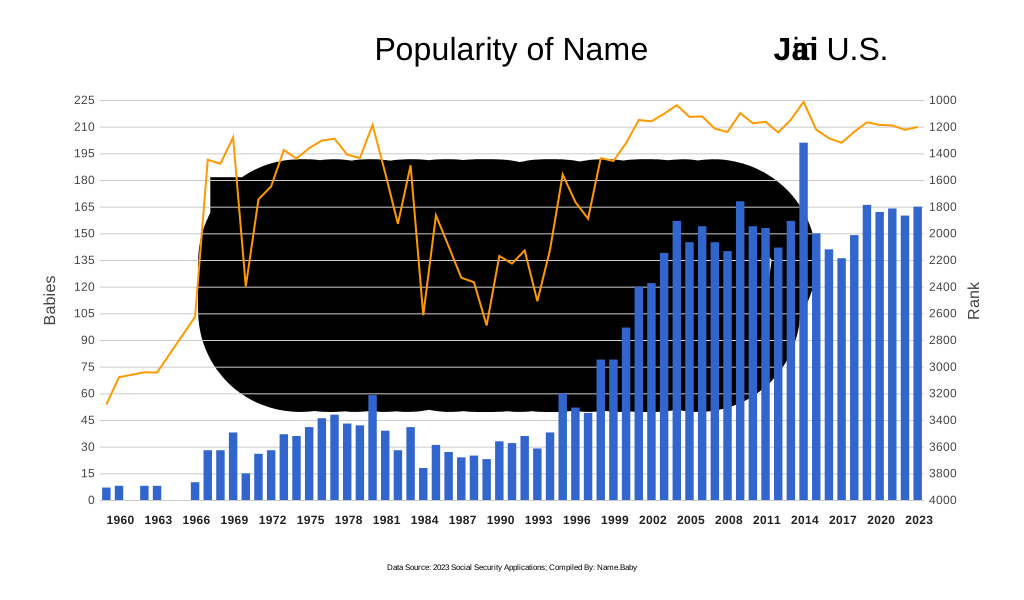
Jai is a compact, two-syllable-in-spirit but single-syllable-in-sound name that originates from Sanskrit, where it simply means “victory” and turns up in rallying cries such as “Jai Hind”—literally, “Victory to India.” In English-speaking contexts it sometimes doubles as a streamlined spelling of Jay or a clipped form of Hebrew-rooted Jairus, making it culturally agile and, increasingly, gender-inclusive. The Social Security files show a steady, mid-table presence since the late 1960s; in the past decade it has hovered around the mid-700s in U.S. rank, a statistical sweet spot for parents who like their child’s name to be familiar enough to pronounce (jye) yet uncommon enough to avoid classroom duplication. Phonetically brisk and graphically minimalist, Jai carries an implicit promise of forward momentum—victory distilled to three letters—without the bravado of longer virtue names.
Pronunciation
English,Hindi
- Pronunced as jye (/dʒaɪ/)
U.S. Popularity Chart
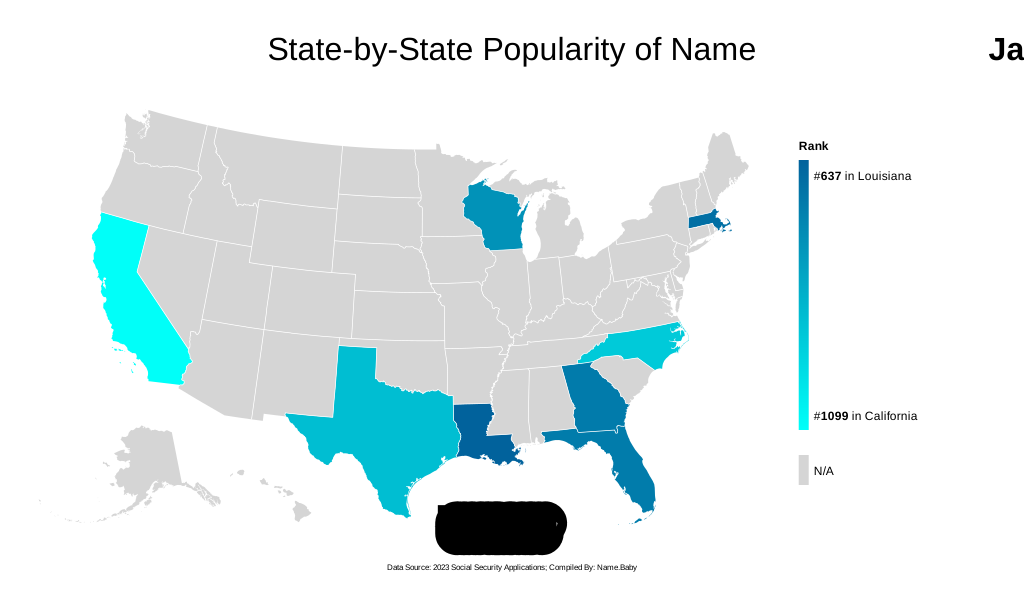
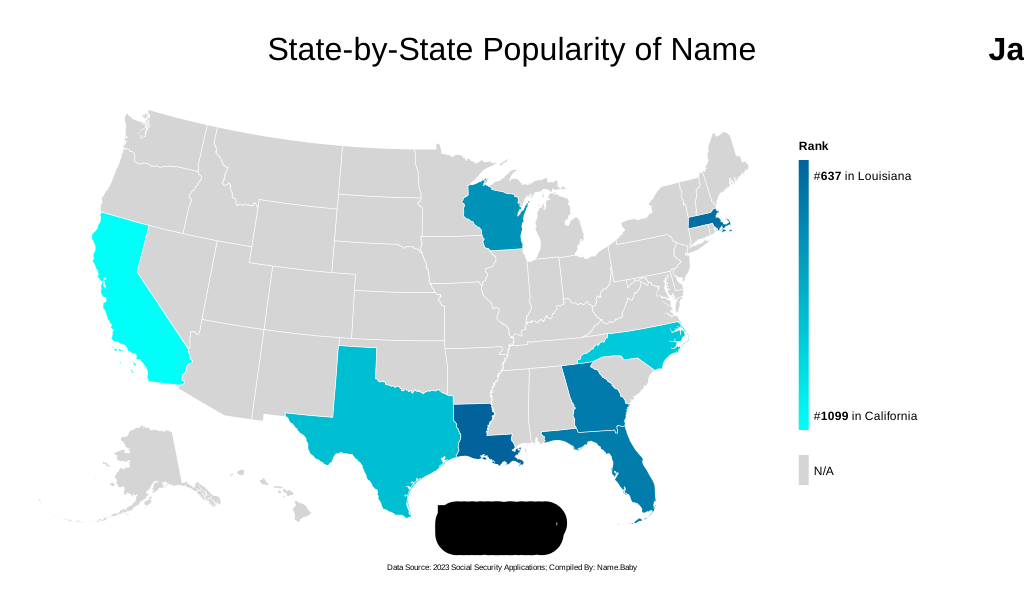
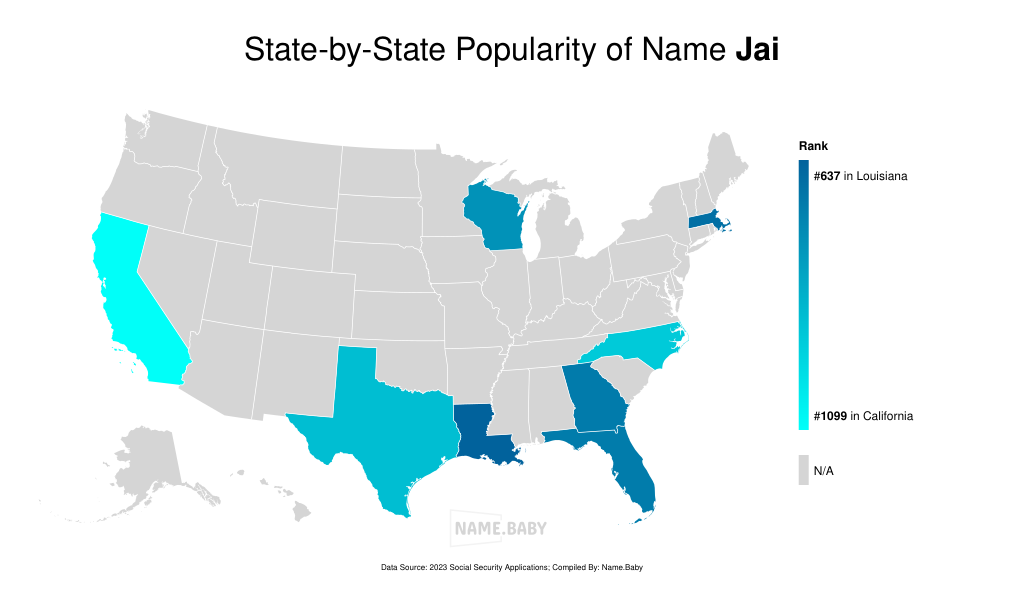
States Popularity Chart
Notable People Named Jai
| Jai Paul is a British singer, songwriter and producer whose early tracks BTSTU and Jasmine helped shape the sound of 2010s pop. |
| Mirza Raja Jai Singh I was the Kachhwaha ruler of Amber and a top general in the Mughal imperial court. |
| Jai Uttal is an American kirtan musician whose album Mondo Rama earned a Grammy nomination for blending Indian devotional music with rock, jazz, and folk. |
| Jai Arrow is a retired Australian rugby league forward who played for the South Sydney Rabbitohs in the NRL. |
| Jai Ram Thakur is a six-term Indian lawmaker who once served as Chief Minister of Himachal Pradesh and has led the opposition in the state assembly since 2022. |
| Jai Quitongo is a Scottish professional footballer known for his skills as a winger. |
| Jai is an American Christian R&B and gospel singer whose 2011 debut album, Culture Shock, landed on two Billboard charts. |
| Jai West is a Vancouver-born actor and poet of French Canadian and Japanese heritage who now lives in Tokyo. |
