Karmen
Meaning of Karmen
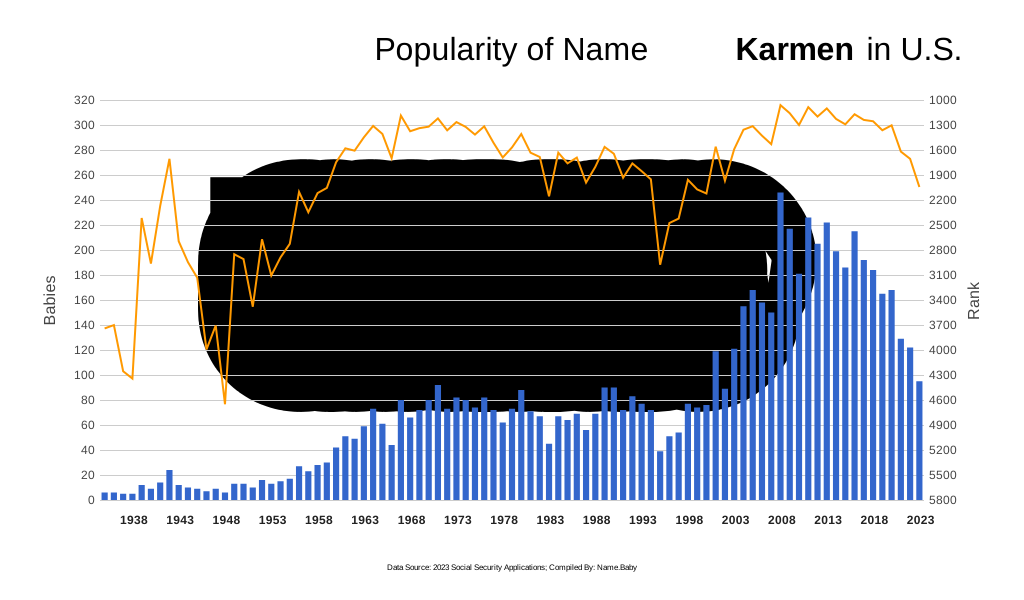
Karmen, pronounced KAHR-mən in English and KAHR-men in both Spanish and German, is a consonantal re-spelling of the Spanish classic Carmen whose etymological pathway runs from the Hebrew karmel, “vineyard” or “fruitful garden,” through the Marian title Nuestra Señora del Carmen, and, by scholarly extension, intersects with the Latin carmen, “song” or “poetic utterance.” This dual semantic lineage—earthly abundance and artistic expression—has allowed the name to circulate fluidly across linguistic borders since the early twentieth century, when the initial C was frequently exchanged for K in Central European and Slavic orthographies. Within the United States, Karmen has sustained a measured but durable presence: birth-record data show a narrow ranking band between roughly 600th and 850th since the 1940s, a statistical pattern that signals familiarity without saturation and offers parents a recognizable yet quietly distinctive choice. Coupling phonetic transparency across major Western languages with Marian cultural resonance and a subtle allusion to lyric creativity, Karmen projects an image that is at once historically grounded and contemporarily streamlined.
Pronunciation
Spanish
- Pronunced as KAHR-men (/karˈmen/)
German
- Pronunced as KAHR-men (/kaʁmɛn/)
British English
- Pronunced as KAHR-mən (/kɑːmən/)
American English
- Pronunced as KAHR-mən (/kɑrmən/)
U.S. Popularity Chart
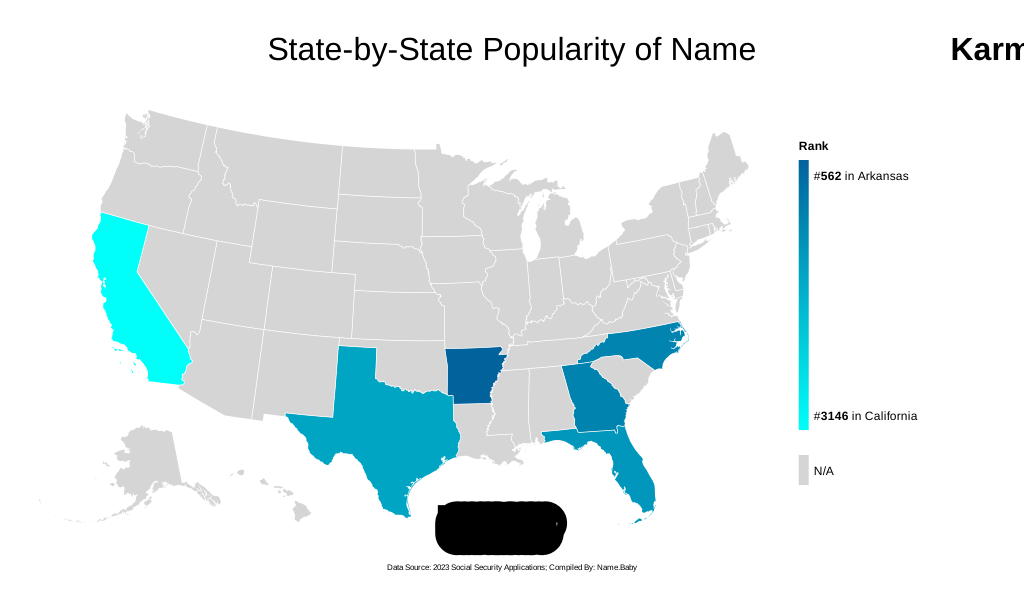
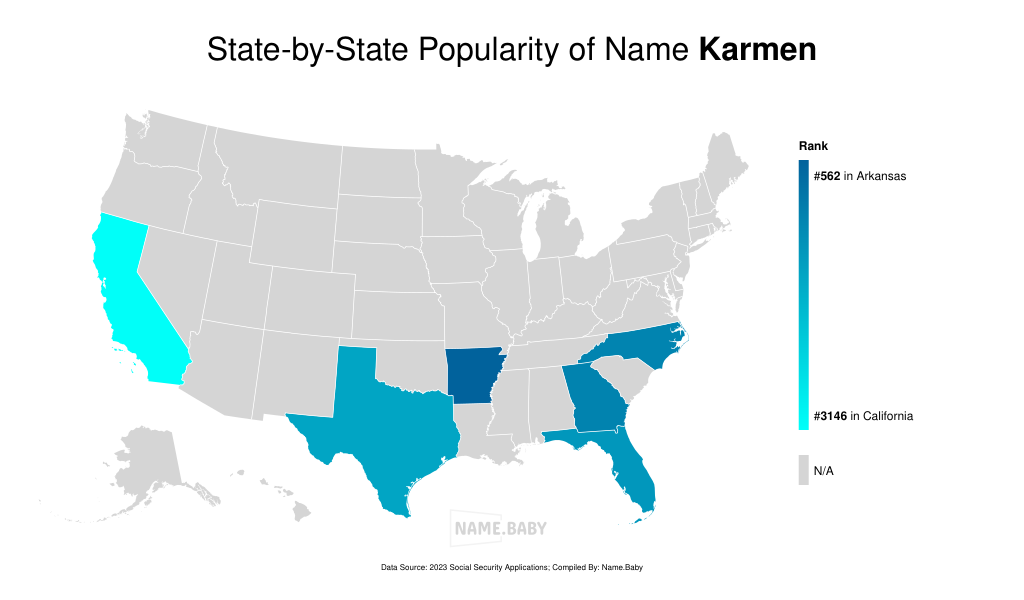
States Popularity Chart
Notable People Named Karmen
| Karmen McNamara is a retired Canadian triathlete and nonprofit founder who supports Ukrainian refugees and advocates for people with disabilities. |
| Karmen Pedaru is an Estonian model best known for her longtime work with Michael Kors. |
| Karmen Stavec is a Slovenian pop singer and musician. |
| Karmen Aksoy is a Turkish volleyball player and middle blocker who last played for Turk Hava Yollari. |
