Kimiko
Meaning of Kimiko
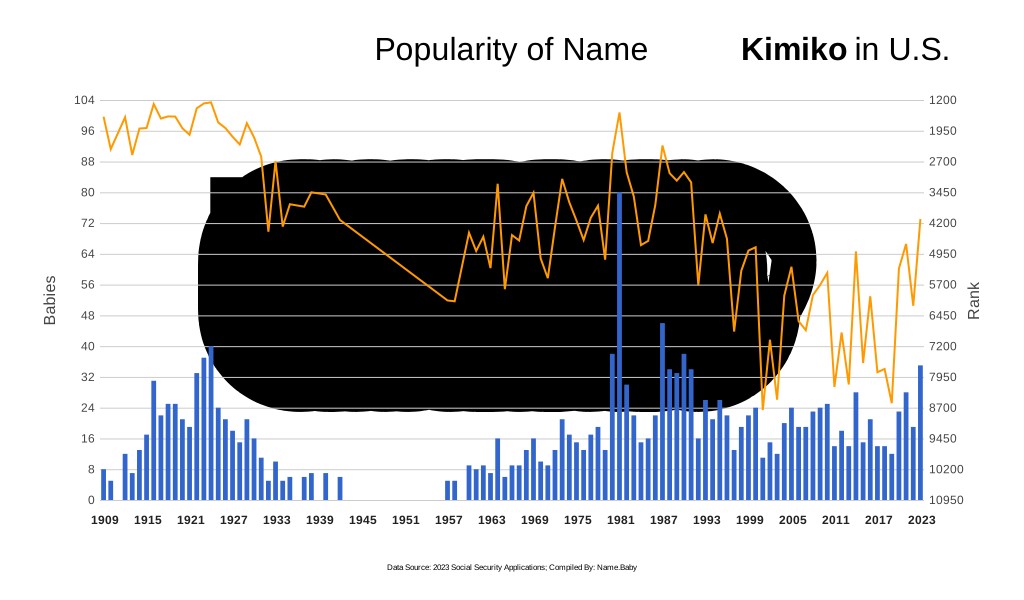
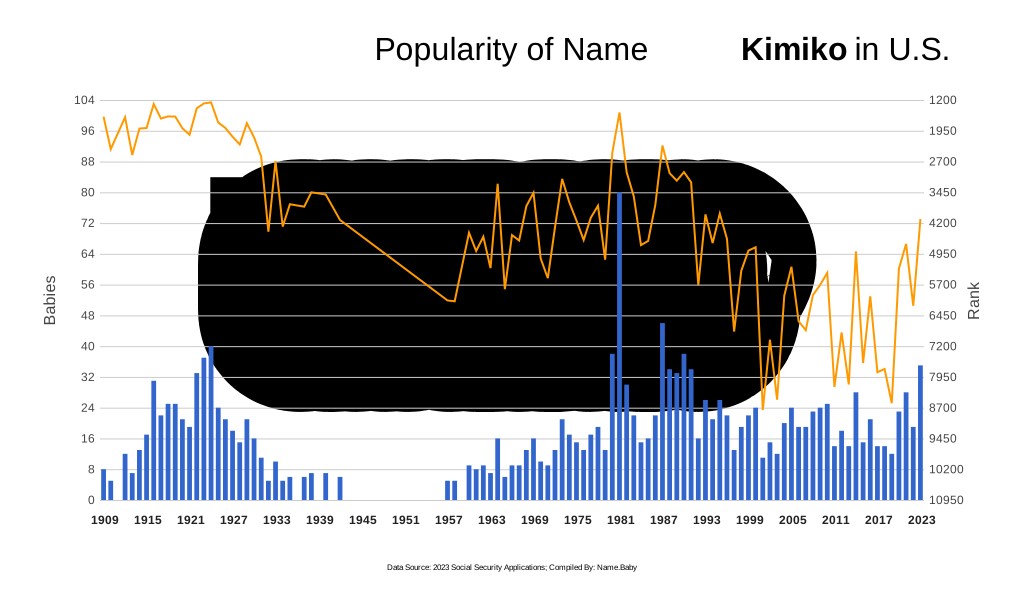
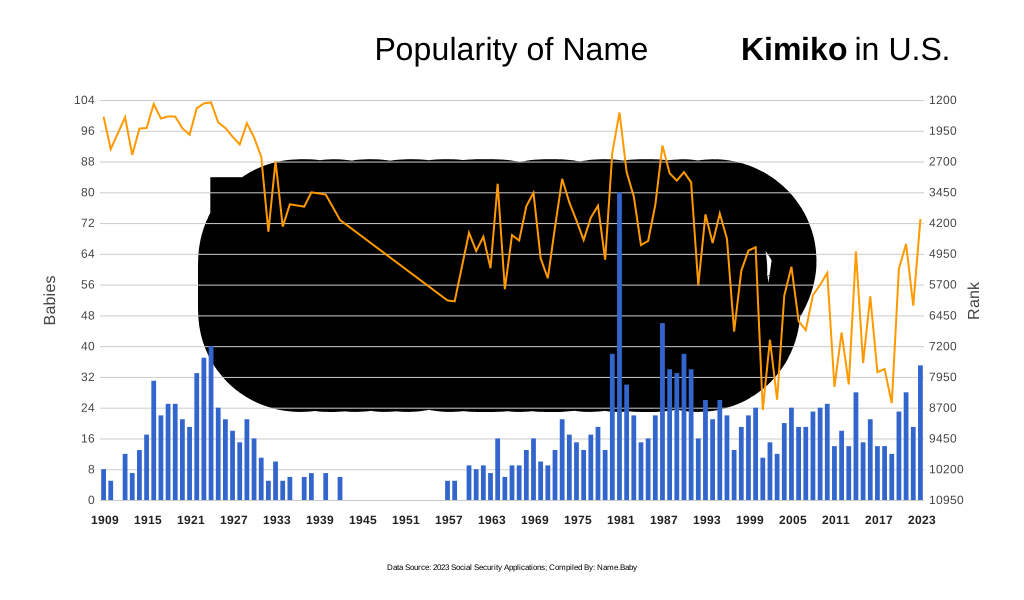
Kimiko is a Japanese feminine given name often formed by combining characters such as 貴 (ki, “noble”) or 君 (kimi, “lord”) with 子 (ko, “child”), yielding interpretations like “noble child” or “empress’s child.” Pronounced kee-MEE-koh (/kiːˈmiːko/) in its original Japanese, the name’s three-syllable structure translates smoothly for English speakers. In the United States, Kimiko has maintained a modest but consistent presence—ranking around 920th in 2024 with 30 recorded births and hovering in the low 900s over the past half-decade—suggesting it is neither a fleeting fad nor mired in obscurity. Depending on the kanji selected, it can also convey notions of honor, joy or preciousness, offering depth and flexibility. Though relatively uncommon in Anglo-American usage, Kimiko’s clear pronunciation and substantive heritage lend it a quietly confident appeal for parents seeking a name with genuine cultural resonance.
Pronunciation
Japanese
- Pronunced as kee-MEE-koh (/kiːˈmiːko/)
U.S. Popularity Chart
Notable People Named Kimiko
| Kimiko Date is a former Japanese tennis star who reached world No. 4 and won the Japan Open a record four times. |
| Kimiko Glenn is an American actress and singer known for Orange Is the New Black, Broadway's Waitress, and voicing Peni Parker in the Spider-Verse films. |
| Kimiko Burton is an American attorney who serves on the California State Personnel Board and was previously San Francisco Public Defender. |
| Kimiko Yo is a Japanese actress known for her award-winning supporting roles in Departures and Dear Doctor. |
| Kimiko Kasai is a retired Japanese jazz singer. |
| Kimiko Ikegami is an American-born Japanese actress best known for playing Gorgeous in the 1977 film House. |
| Kimiko Suzuki was a Japanese architect and the first graduate of the housing studies program at Japan Women's University. |
| Kimiko Gelman is an American actress. |
| Kimiko Shiratori is a former Japanese footballer who played for Japan's national team. |
| Kimiko Sato is a Japanese former swimmer who competed in the 100 meter butterfly at the 1964 Olympics. |
