Langdon
Meaning of Langdon
Langdon, pronounced LANG-dən (/ˈlæŋdən/), unfolds from the Old English elements lang, meaning “long,” and dūn, “hill,” conjuring the image of a gentle ridge stretching toward the Tuscan dawn. Born of medieval landscapes yet bearing a cosmopolitan grace—much like an apricot-scented breeze drifting through a Florentine piazza—the name conveys quiet strength and scholarly curiosity, evoking the intrepid symbologist from Dan Brown’s bestselling adventures. In recent years, Langdon has steadily climbed American popularity charts, its rarity adding a dash of adventure reminiscent of a vespa’s spirited hum through winding Umbrian lanes. It feels both grounded and aspirational, offering young bearers a sense of purpose as enduring as ancient olives rooted in sun-baked earth. With its storied lineage and melodic cadence, Langdon invites parents to choose a name as distinctive as a mosaic glinting in a Venetian palazzo. One can almost smile at the thought of a bright bambino mastering crossword clues for nonna’s delight, echoing the name’s playful promise of discovery.
Pronunciation
American English
- Pronunced as LANG-dən (/ˈlæŋdən/)
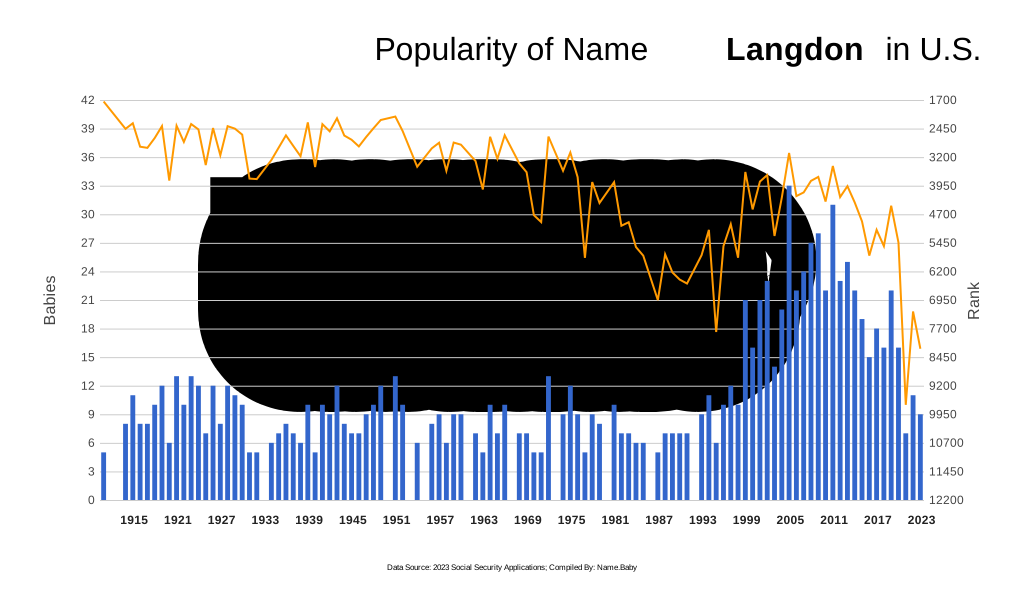
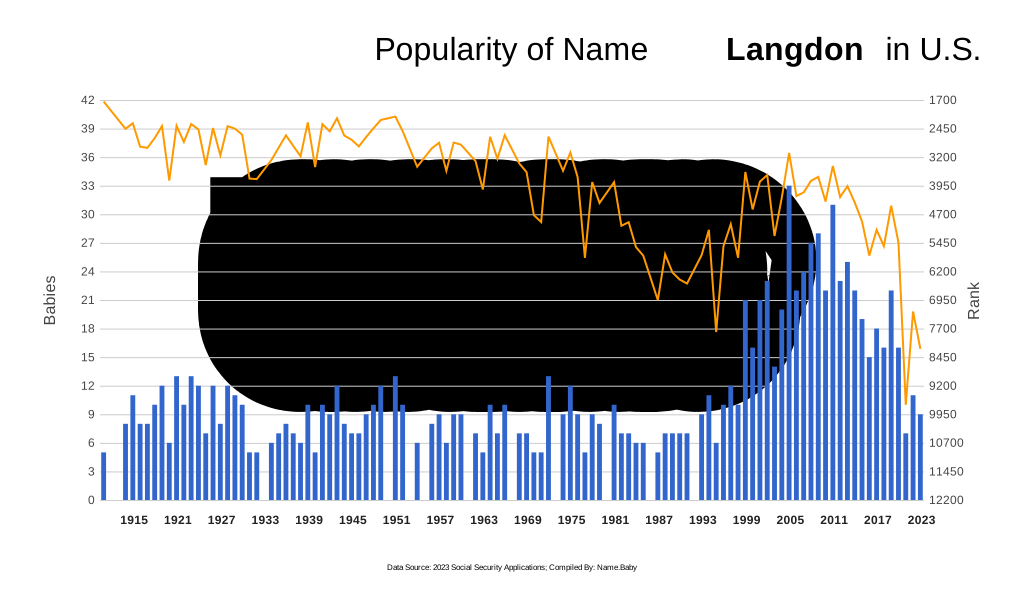
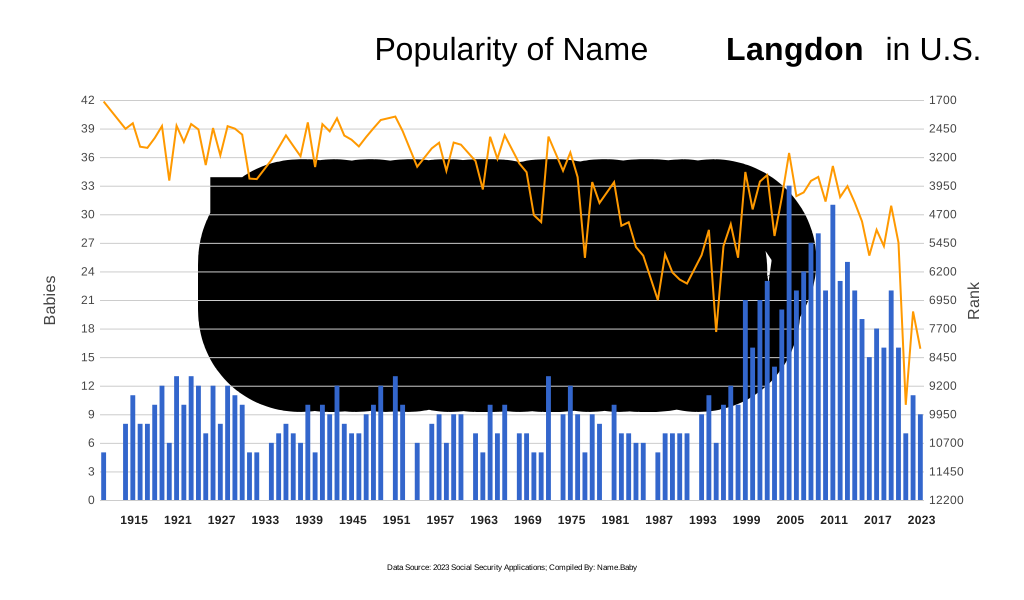
U.S. Popularity Chart
Notable People Named Langdon
| Langdon Cheves was a South Carolina politician, lawyer and businessman who served as Speaker of the House and president of the Second Bank of the United States. |
| Langdon Smith was an American journalist and writer best known for his poem Evolution. |
| Langdon Brown Gilkey was an American Protestant theologian who championed Christian unity. |
| Langdon Warner was an American archaeologist and Harvard art historian whose Silk Road explorations reportedly helped inspire Indiana Jones. |
| Langdon Winner is an American scholar and former Rolling Stone music critic known for exploring how technology shapes society. |
