Nataly
Meaning of Nataly
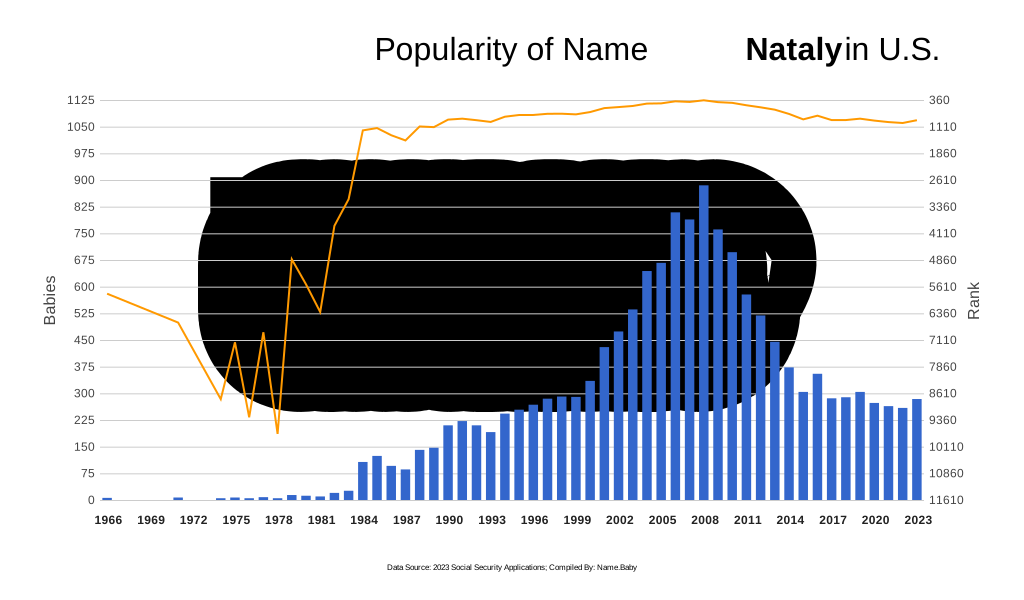
Nataly, a modern, mellifluous contraction of the venerable Latin name Natalia— itself born of the phrase “dies natalis” and historically tied to the celebration of Christ’s nativity—traverses cultures with quiet versatility: in Spanish-speaking communities it glides forth as nah-TAH-lee, in Russian circles it acquires the palatal nuance nuh-TAHL-yi, while in English it settles into the familiar yet slender cadence nuh-TAL-ee. Anchored by this shared etymological core yet liberated from the longer form’s final syllable, Nataly evokes the image of a dawn suffused with rose-gold light—brief, distinct, and memorable. Sociolinguistic data drawn from United States birth records indicate a gentle swell in popularity between the late 1990s and the mid-2000s, peaking at rank 353 in 2008 before tapering to the mid-600s in recent years; this trajectory suggests the name’s capacity to balance recognizability with a measure of individuality. Semantically linked to rebirth and festivity, and embraced across Latin American, Slavic, and Anglophone contexts, Nataly offers parents a culturally adaptable appellation whose classical roots confer both historical gravitas and contemporary elegance.
Pronunciation
Spanish
- Pronunced as nah-TAH-lee (/naˈtali/)
Russian
- Pronunced as nuh-TAHL-yi (/nʌ'tælji/)
English
- Pronunced as nuh-TAL-ee (/nəˈtæli/)
U.S. Popularity Chart
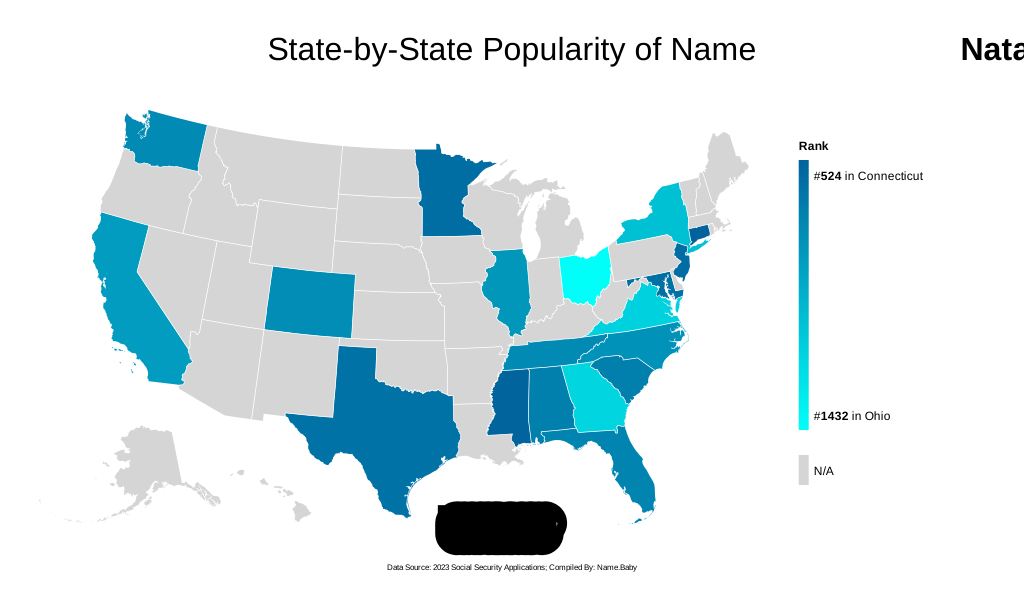
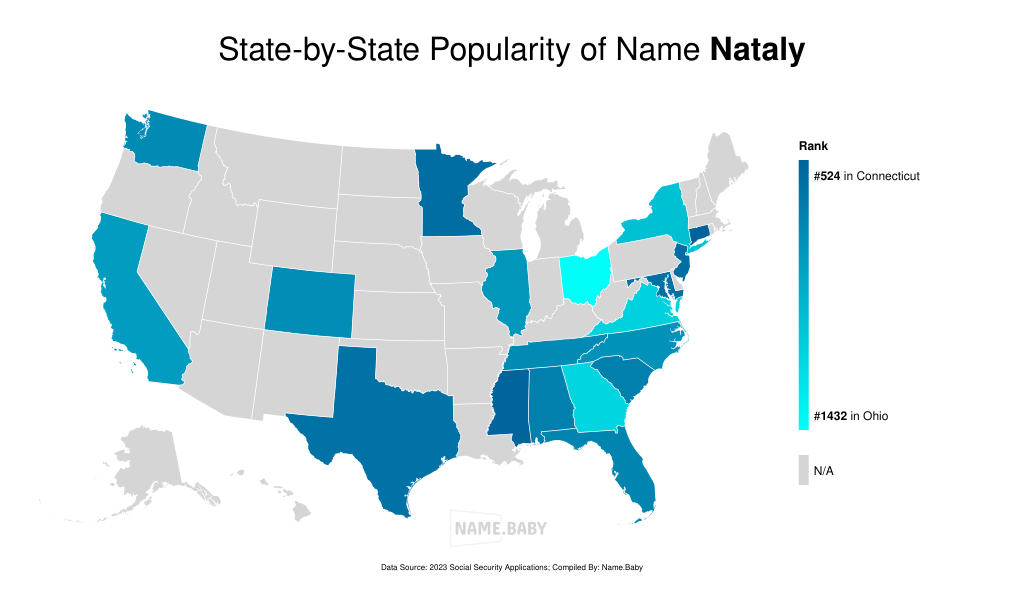
States Popularity Chart
Notable People Named Nataly
| Nataly Kogan is a Russian-born American author and speaker who champions emotional fitness and the power of gratitude for life's small, good moments. |
| Nataly Cahana-Fleishman is a former professional tennis player from Israel. |
| Nataly Arias - Katherine Arias is a former Colombian center back who played at two Women's World Cups and two Olympic Games. |
