Noble
Meaning of Noble
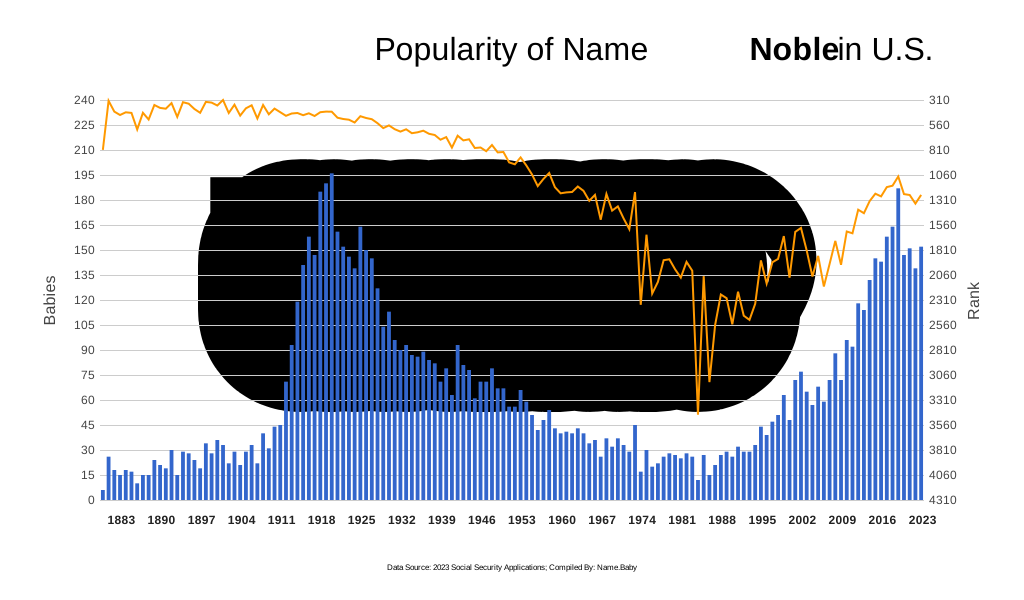
Rooted in the Middle English adjective “noble,” itself derived from the Latin nobilis, the name Noble began as a status-laden surname before Victorian parents repurposed it as a virtue name. In Anglo-American usage it signals “high-born, distinguished,” though—dry truth be told—the modern bearer is likelier to inherit Little League cleats than a coat of arms. U.S. Social Security data show a classic boom-and-bust curve: the name peaked just after World War I, drifted downward for half a century, and has been edging upward again, landing at rank 762 with 162 newborns in 2024. Historical associations range from jazz great Noble Sissle to a smattering of 19th-century governors, giving the choice a faint patina of vintage Americana. Pronounced simply NOH-bəl, it avoids orthographic snares and travels comfortably across regions. Occupying the same “word-virtue” niche as Justice or Loyal, Noble offers parents a dignified yet understated badge—one that sets a commendable standard without requiring its wearer to sport an actual coronet on picture day.
Pronunciation
English
- Pronunced as NOH-buhl (/noʊbl/)
U.S. Popularity Chart
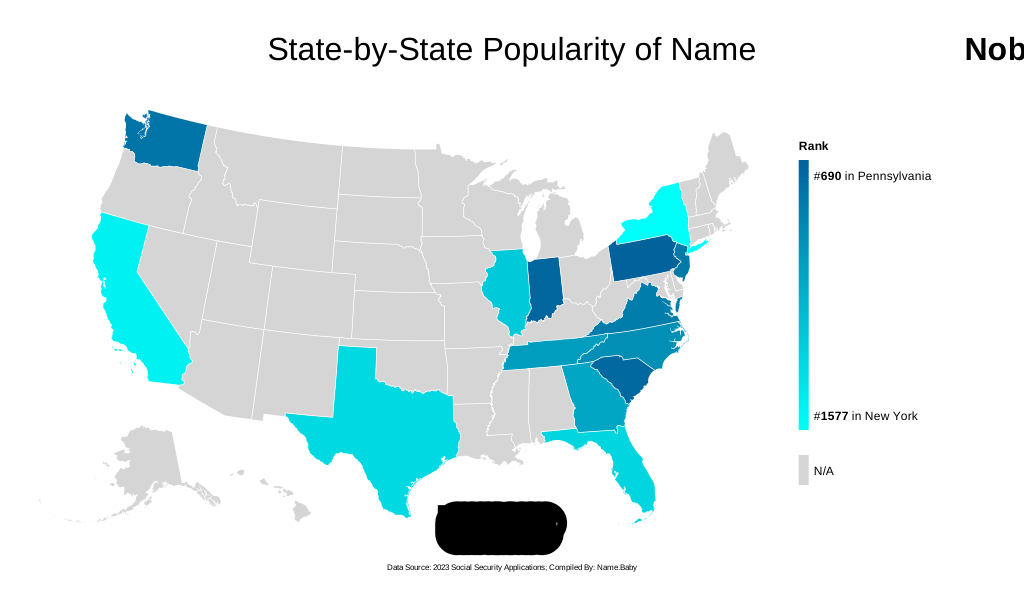
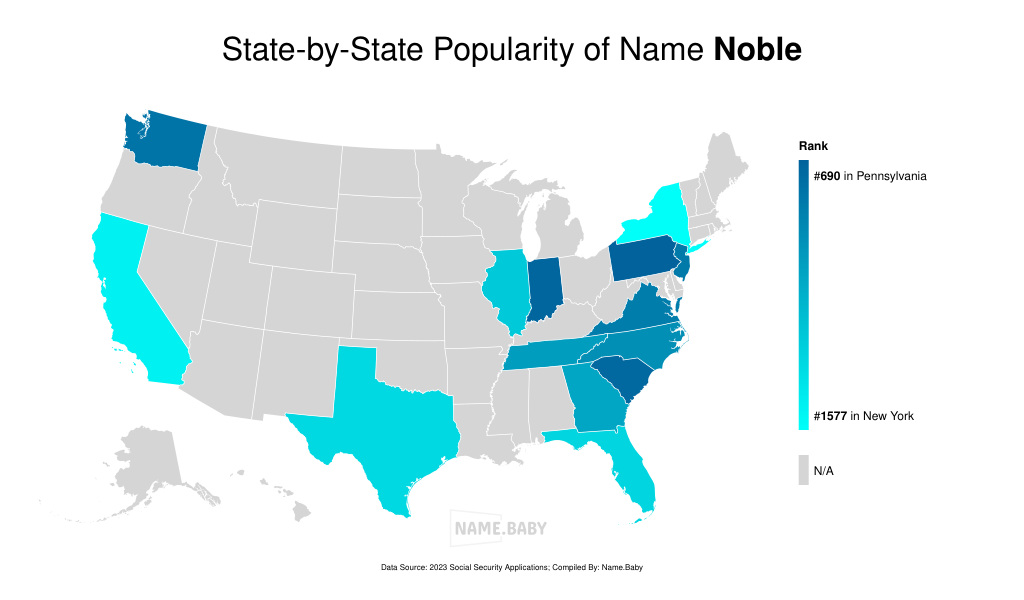
States Popularity Chart
Notable People Named Noble
| Noble was a British Thoroughbred racehorse who won the 1786 Derby as an unlikely outsider. |
| Noble Wimberly Jones was a Georgia physician and Revolutionary patriot who served in the Continental Congress. |
| Noble Willingham was an American actor known for more than thirty films and his role alongside Chuck Norris in Walker Texas Ranger. |
| Noble Jacob Johnson was a U.S. representative from Indiana who also served as a judge and chief judge on the United States Court of Customs and Patent Appeals. |
