Regenia
Meaning of Regenia
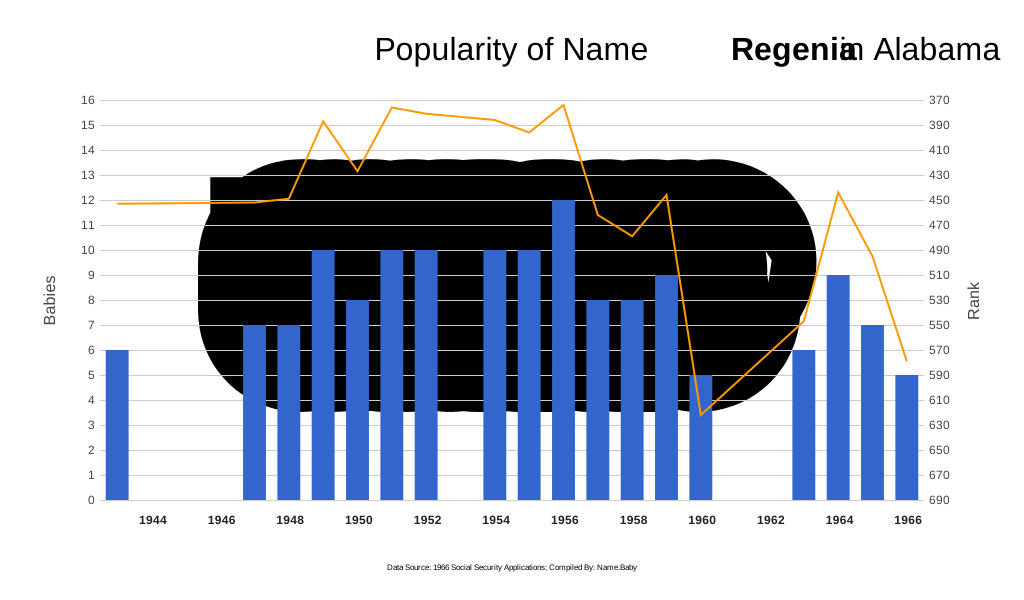
Regenia emerges from the Latin regina, ‘queen,’ a regal appellation suffused with noble resonance; its morphology, blending the Indo-European root reg- (to rule) with the feminine -ia suffix, evokes both sovereignty and lyrical grace. Historically entwined with medieval hagiographies and later romanticized in Renaissance manuscripts, Regenia (pronounced rɪˈdʒiːniə) conjures an image of poised authority and benevolent governance, as though each syllable were a jeweled diadem crowning its bearer with timeless dignity. While mid-twentieth-century Alabama records first note its discreet appearance—hovering modestly within the top 160 names—this gentle rarity only amplifies its stately distinction, inviting parents to bestow upon their daughter an emblem of refined individuality and latent power.
Pronunciation
English
- Pronunced as rih-JEE-nee-uh (/rɪˈdʒiːniə/)
U.S. Popularity Chart
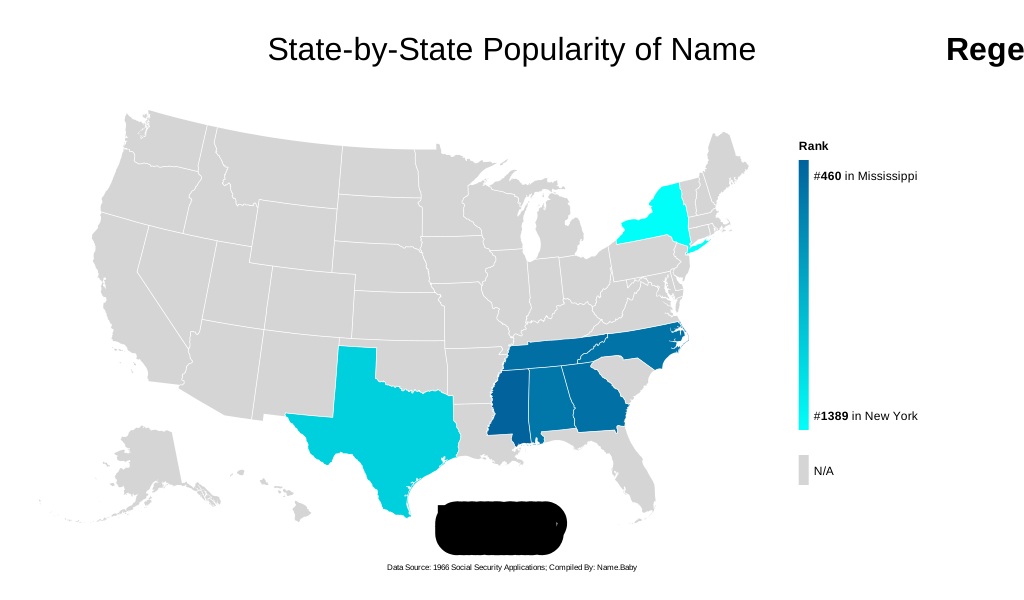
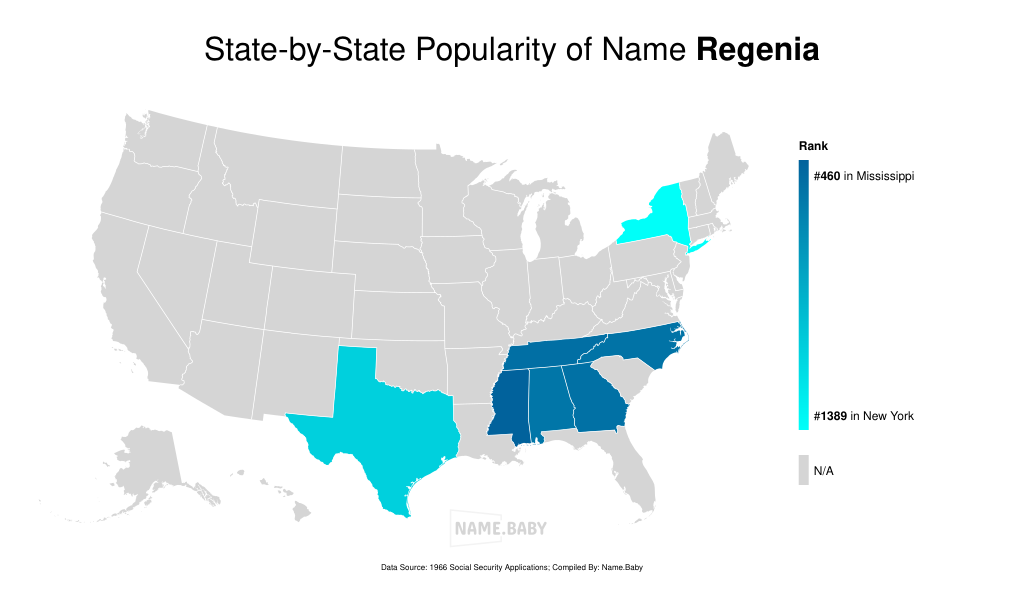
States Popularity Chart
Notable People Named Regenia
| Regenia A. Perry is a pioneering art historian and author who became the Metropolitan Museum of Art's first African American guest curator. |
| Regenia Gagnier is a University of Exeter English professor known for her work on Victorian literature and world literatures. |
