Salem
Meaning of Salem
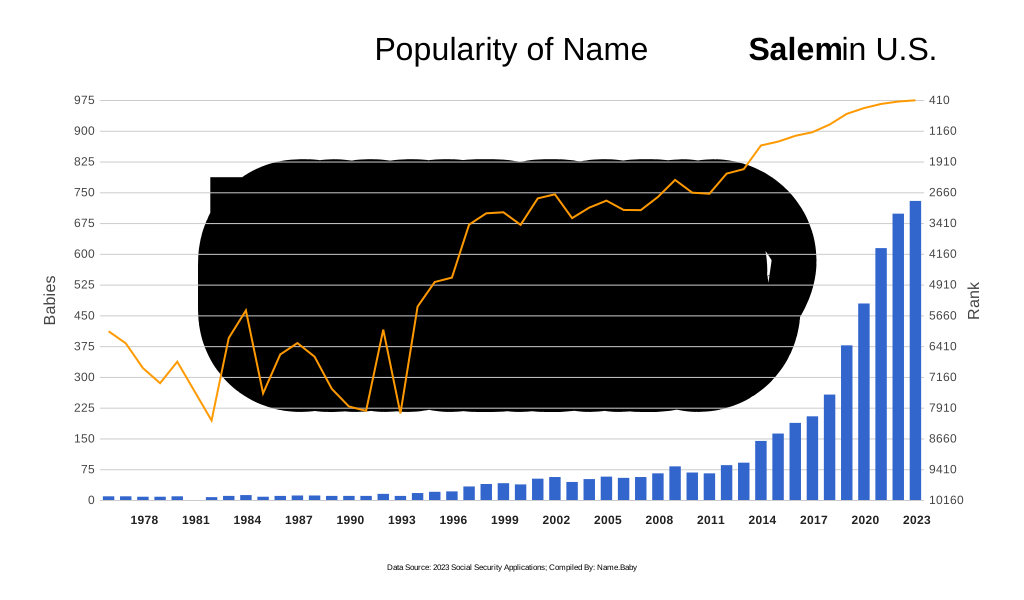
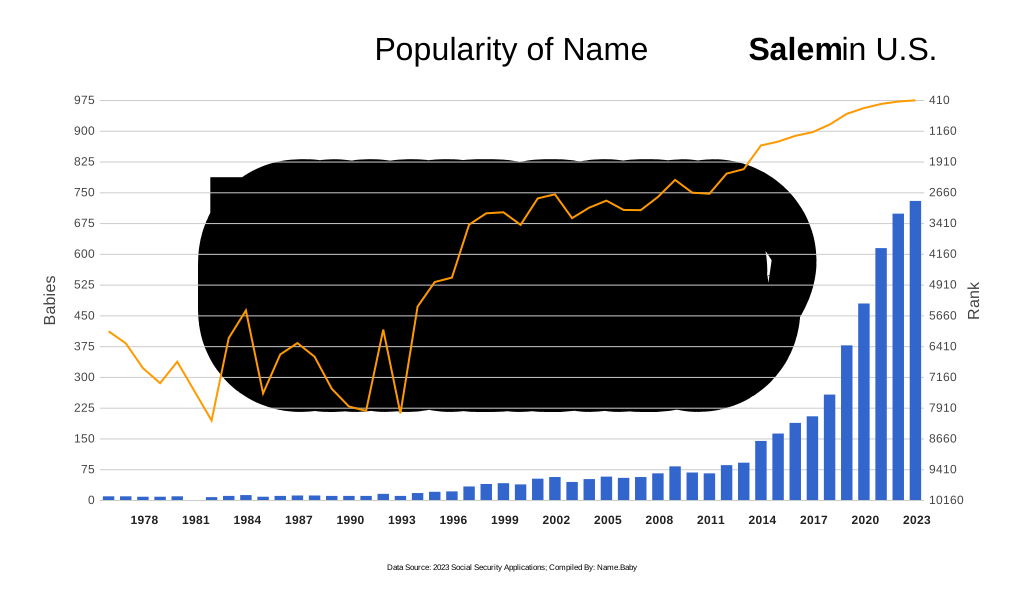
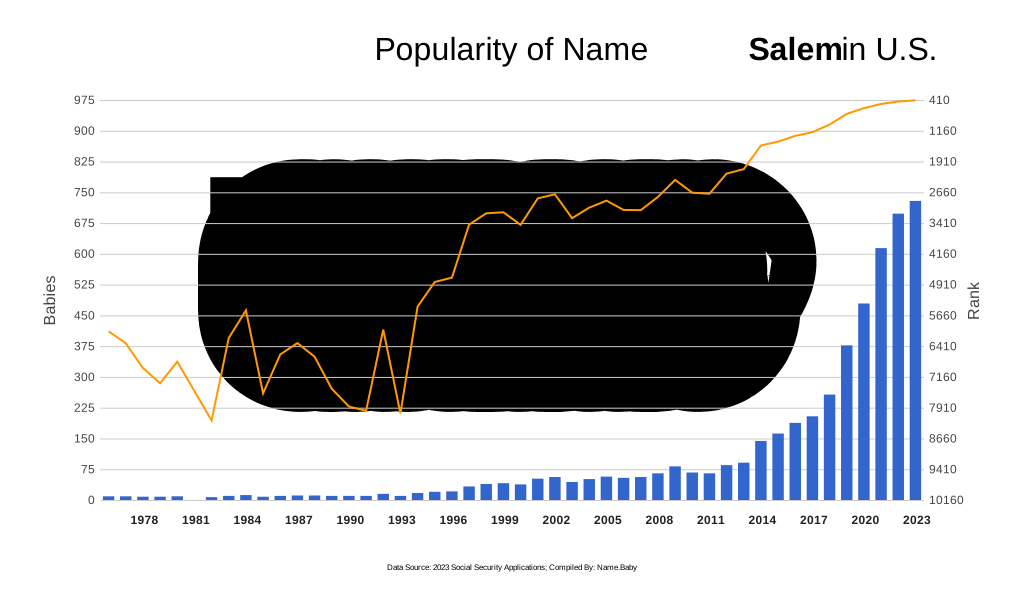
Salem, pronounced SAY-ləm, traces its etymological roots to the Semitic triliteral Š-L-M, yielding the Hebrew shālōm and the Arabic sālim—both connoting “peace,” “wholeness,” and “safety”—and it appears in biblical literature as a poetic name for ancient Jerusalem. In Anglo-American consciousness the toponym inevitably recalls Salem, Massachusetts, whose seventeenth-century witch trials lend the name a somber historical resonance, yet modern usage has largely reframed the designation as a unisex alternative to the more familiar Solomon or Selim, retaining the underlying sense of tranquility while adding a faintly gothic allure. Statistically, national birth records show a steady climb from near-obscurity in the late twentieth century to a position just inside the upper quartile of American baby names by the mid-2020s, indicating sustained, incremental acceptance rather than a sudden fashion spike. Thus, Salem occupies a distinctive niche: linguistically ancient, culturally layered, and demographically ascendant, it offers parents a gender-flexible choice that balances historical gravitas with contemporary stylistic appeal.
Pronunciation
American English
- Pronunced as say-lum (/seɪˈləm/)
U.S. Popularity Chart
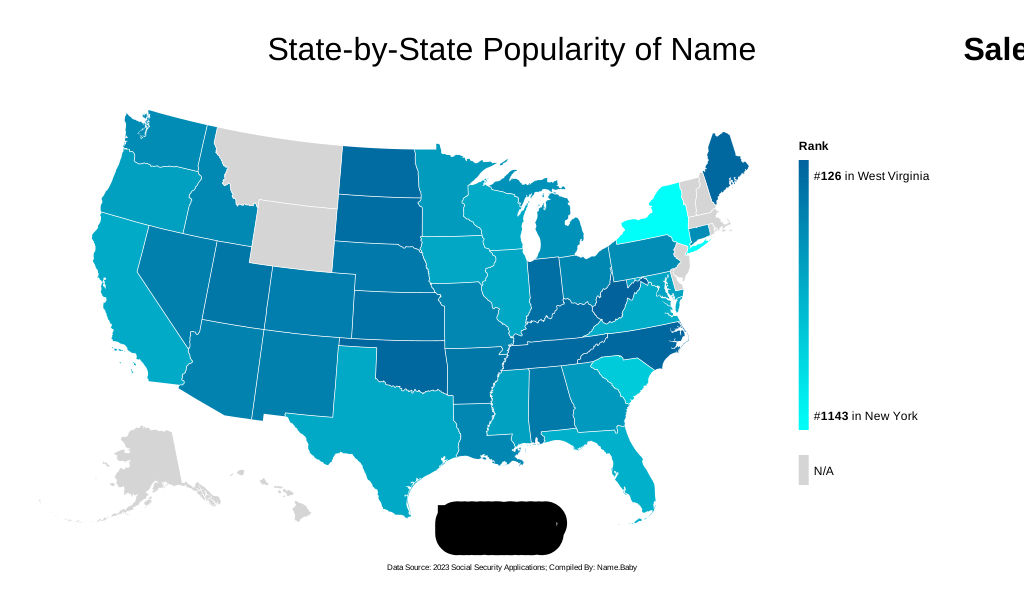
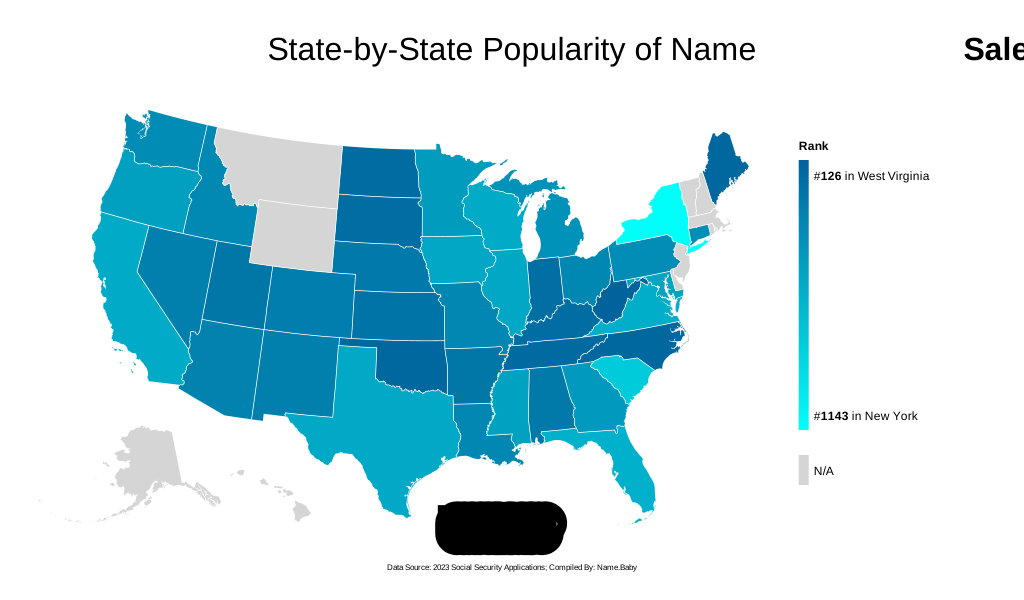
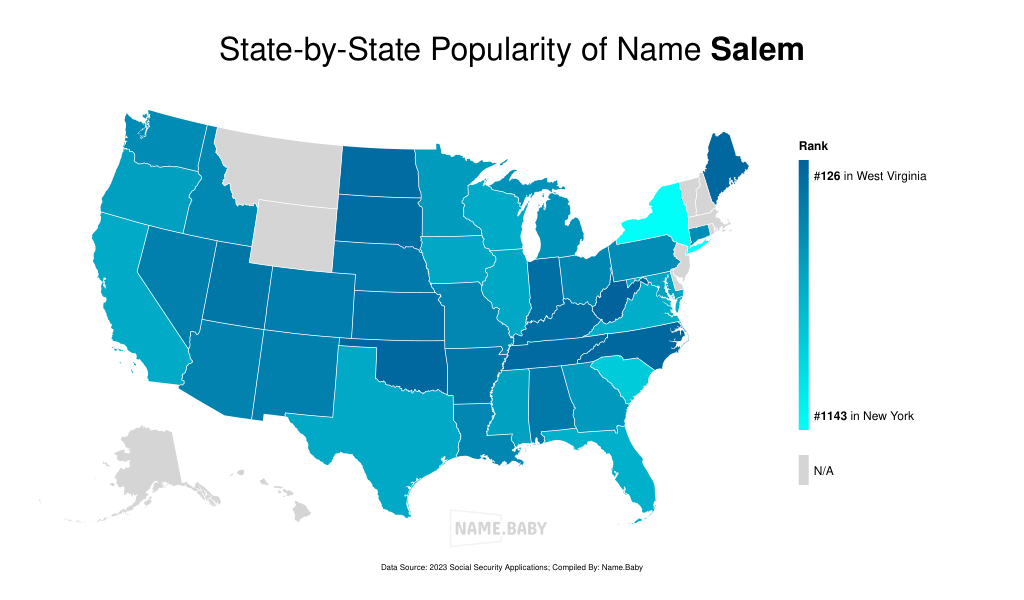
States Popularity Chart