Seamus
Meaning of Seamus
Séamus, the Gaelic cousin of James, traces its roots to the Hebrew Yaʿaqov—“supplanter”—but it has long since traded its ancient sandals for a tweed jacket and a windswept Irish cliff. In contemporary America the name hovers, statistically speaking, in the dignified middle: rarely cracking the Top 600, yet stubbornly refusing to vanish, much like a Persian cat that has claimed the best cushion and sees no reason to relocate. Literary minds will instantly summon Nobel laureate Seamus Heaney, whose verse lent the name an aura of peat-scented gravitas; music lovers might hear fiddles from County Donegal. Phonetically concise—SHAY-mus—it offers parents a single, surefooted choice in a sea of variant spellings. For those who favor meaning, heritage, and an under-the-radar familiarity, Seamus occupies a pleasant niche: recognizable, pronounceable, and still uncommon enough to turn a head, rather like the flicker of a turquoise tile in an otherwise muted Persian mosaic.
Pronunciation
Irish
- Pronunced as SHAY-mus (/ˈʃeɪməs/)
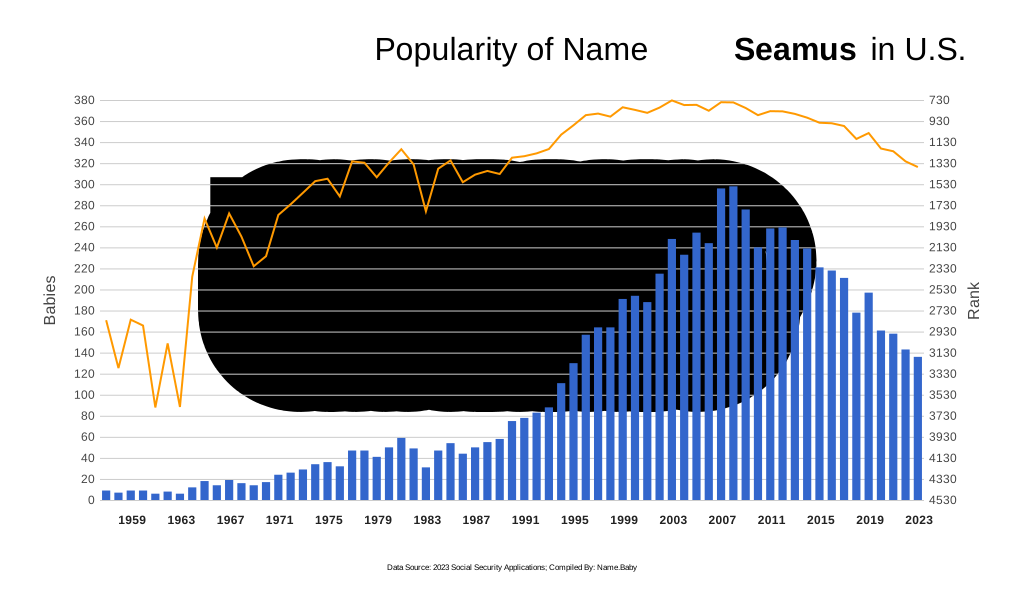
U.S. Popularity Chart
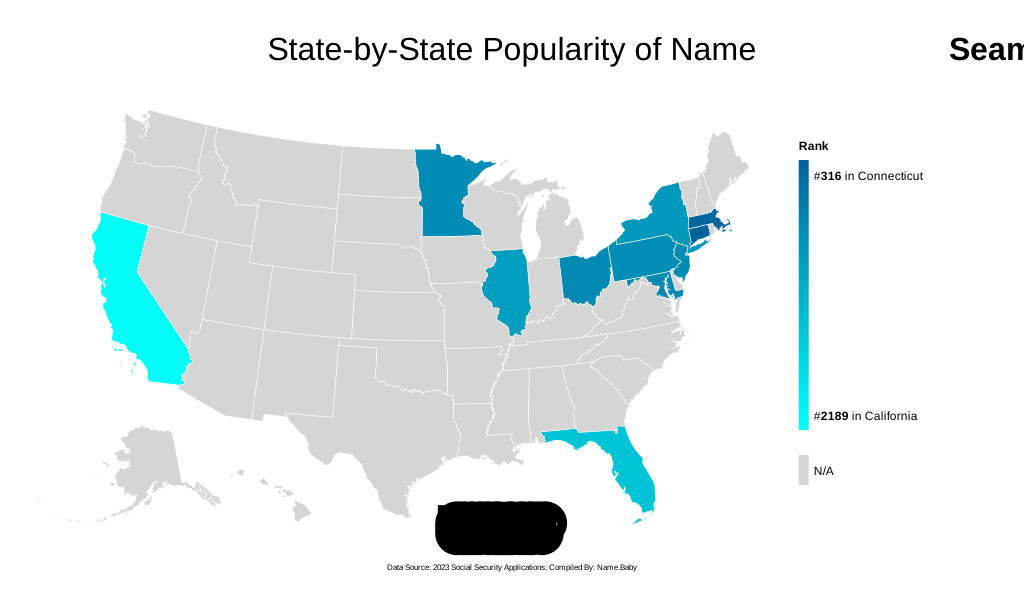
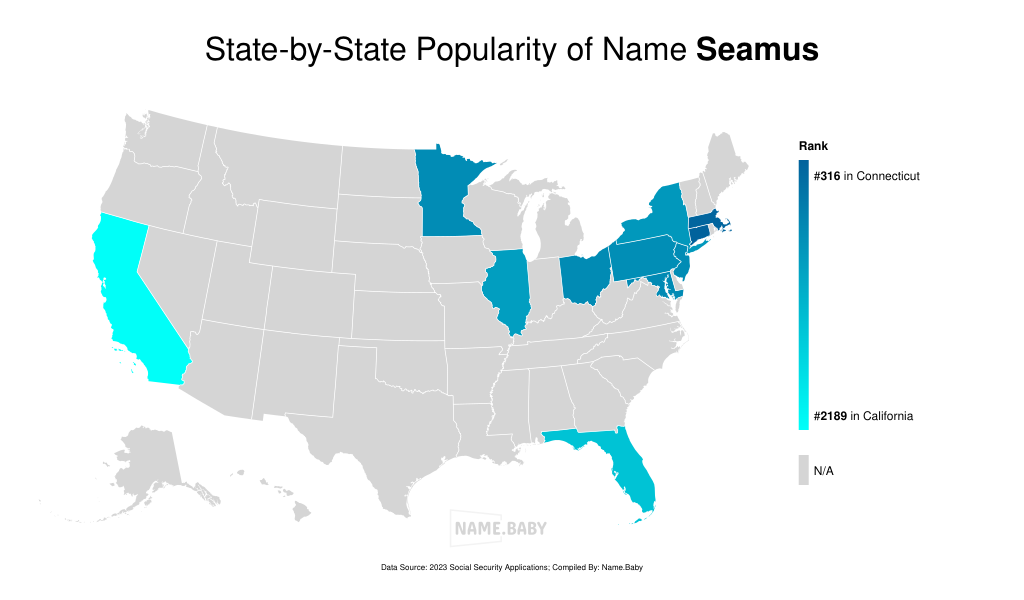
States Popularity Chart
Notable People Named Seamus
| Seamus Heaney was an Irish poet, playwright and translator who won the 1995 Nobel Prize in Literature and was hailed as the most important Irish poet since Yeats. |
| Seamus Ross is a Canadian-based academic and researcher known for his work in digital humanities and digital curation. |
| Seamus Finnegan is a Belfast-born playwright who lives in London with his wife Carolyn Cummings-Osmond. |
| Seamus Kelly is a former American rugby player who starred at outside centre for the US national team. |
| Séamus Coleman is an Irish footballer who plays right-back for the Republic of Ireland. |
