Steele
Meaning of Steele
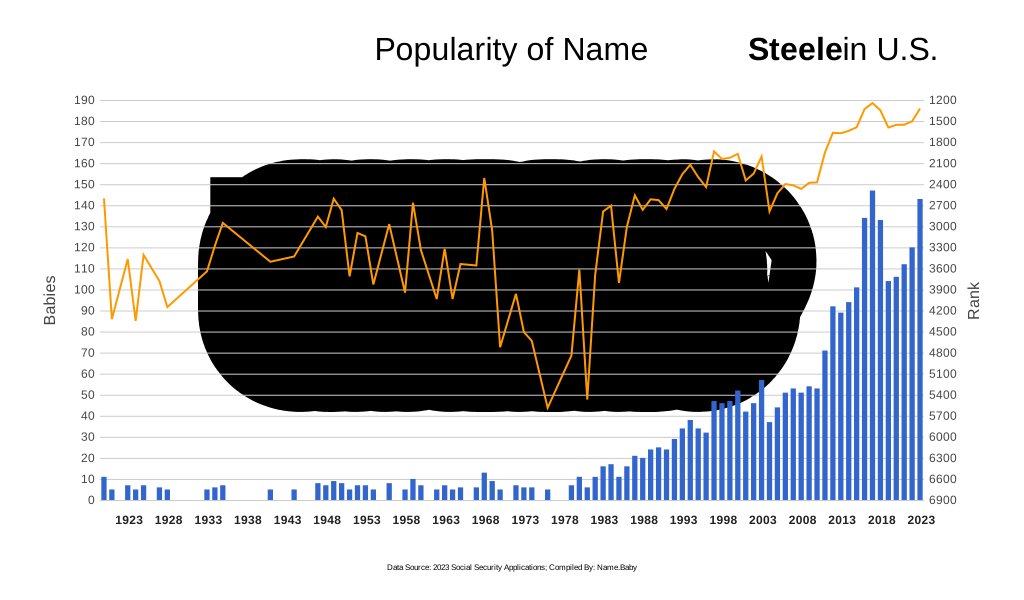
Steele, a masculine forename derived from an Anglo-English surname, ultimately traces its etymology to Old English stēle, “steel,” an occupational designation once applied to smiths or merchants whose livelihoods revolved around the alloy that underpinned medieval industry. As the term migrated from trade label to hereditary surname and, more recently, to given name, it acquired a semantic halo of durability, resilience, and austere modernity; consequently, contemporary American parents who choose Steele often signal an admiration for stoic strength expressed with linguistic economy. The name’s phonetic profile—one crisp, elongated syllable—reinforces this impression by matching form to meaning, while literary and historical echoes, most notably the Restoration essayist Sir Richard Steele, supply a subtle layer of cultural capital. Although federal birth records show the name in steady but never dominant circulation since the 1920s, its rank in the upper-700s confirms a measured rarity that may appeal to those who value distinctiveness without eccentricity. Thus, Steele stands as a concise, coolly authoritative choice, capable of evoking both industrial vigor and intellectual pedigree.
Pronunciation
English
- Pronunced as STEEL (/stiːl/)
U.S. Popularity Chart
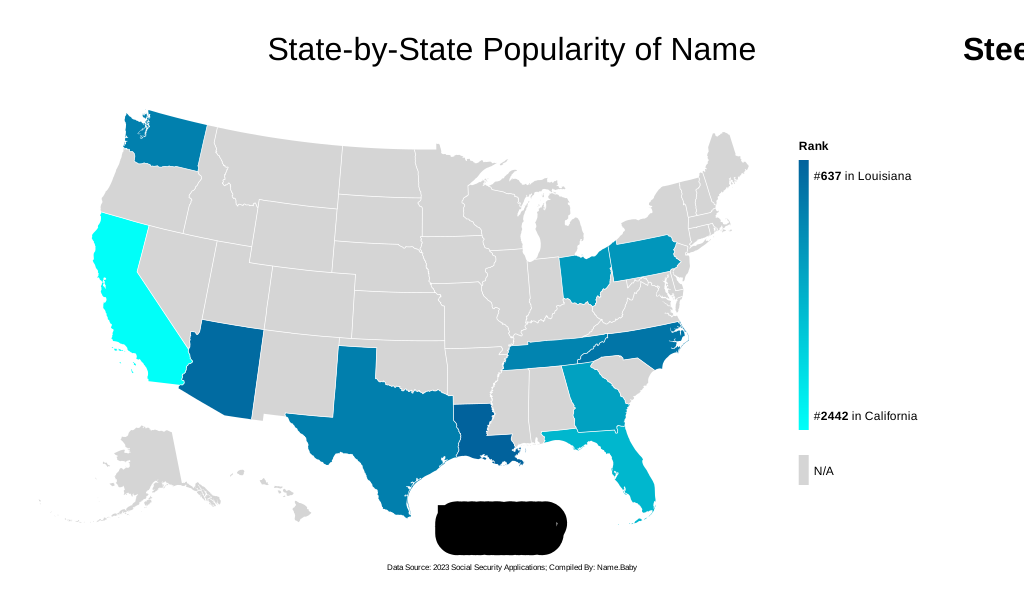
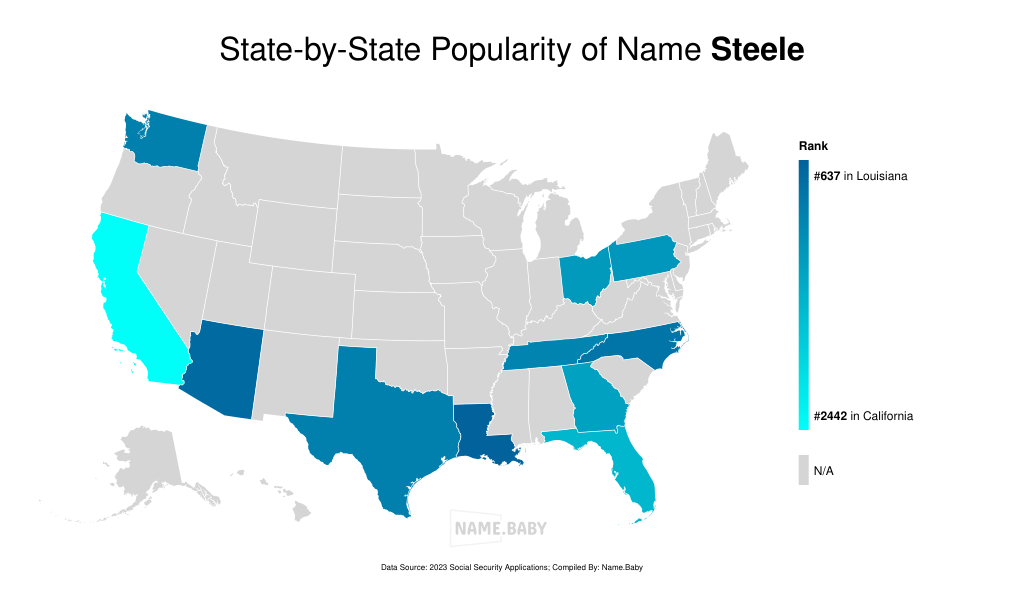
States Popularity Chart
Notable People Named Steele
| Raymond Steele Hall was an Australian politician who served as Premier of South Australia and in the federal Parliament. |
| Steele Johnson is an American former diver who won a silver medal at the 2016 Rio Olympics. |
| Steele MacKaye was a celebrated American playwright, actor, theater producer and inventor. |
| Steele Stanwick is a former American professional lacrosse player who starred at the University of Virginia and won the Tewaaraton Trophy. |
