Summer
Meaning of Summer
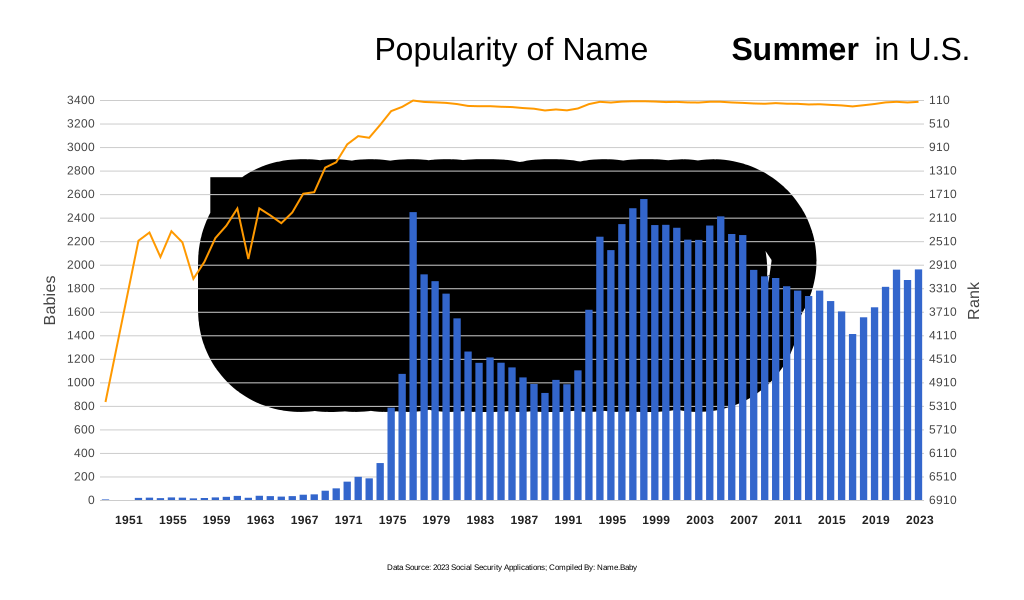
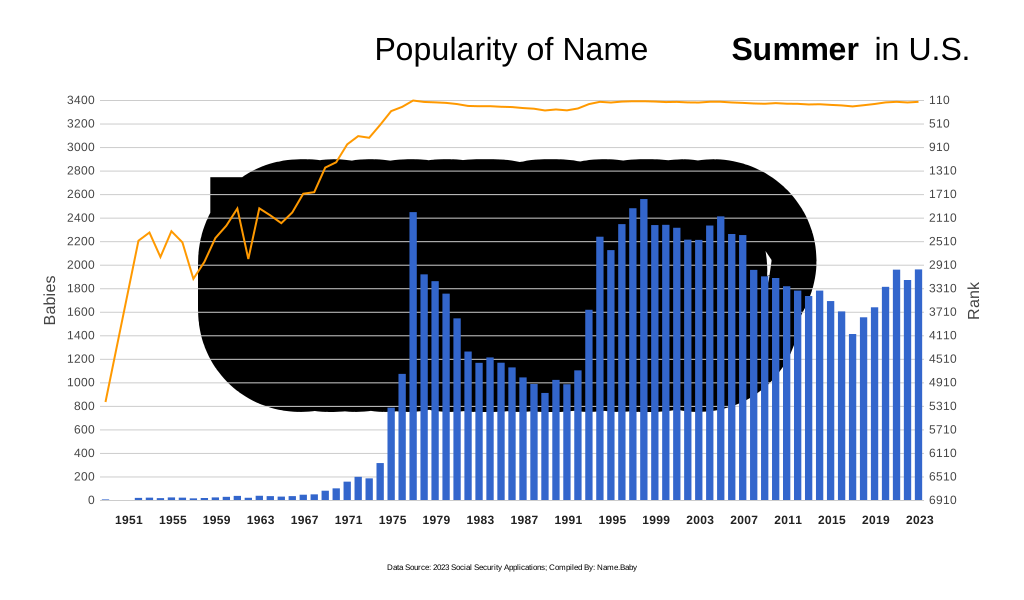
Summer—pronounced SUH-mur (/ˈsʊmər/)—unfolds like a sun-kissed scroll across the onomastic landscape: born of the Old English “sumor,” kin to the Proto-Germanic “*sumaraz,” and humming in quiet concord with the Latin “aestas,” that fulgent quarter of the year when Sol lingers in the firmament and ripens both wheat and wonder. As a given name for girls, it entered widespread use in the Anglophone world during the cultural heliotropism of the 1960s and 70s, when parents, intent on bottling the era’s luminous optimism, chose appellations redolent of nature’s plenitude; since its meteoric rise to Rank 117 in 1977, it has hovered—like a swallow riding a warm zephyr—within the upper two hundred of U.S. charts, testifying to a steady sociolinguistic appeal rather than a fleeting seasonal vogue. Semantically, Summer evokes images of Persephone’s brief earthly sojourn, Shakespeare’s “darling buds,” and Vivaldi’s tempestuous L’estate, weaving classical, literary, and musical threads into one radiant tapestry. Psycholinguists note that its auditory profile—soft sibilant onset, mellifluous mid-vowel, resonant nasal closure—mirrors the gradual crescendo and repose of a long solstitial afternoon, thereby reinforcing associations of warmth, vitality, and abundance. In contemporary usage, the name functions as a verbal solarium: it bathes its bearer in light, suggests resilience through the cyclical assurance of renewal, and whispers, in the sonorous Latin of centuries past, “lux perpetua”—an everlasting brightness carried into every introduction.
Pronunciation
English
- Pronunced as SUH-mur (/ˈsʊmər/)
U.S. Popularity Chart
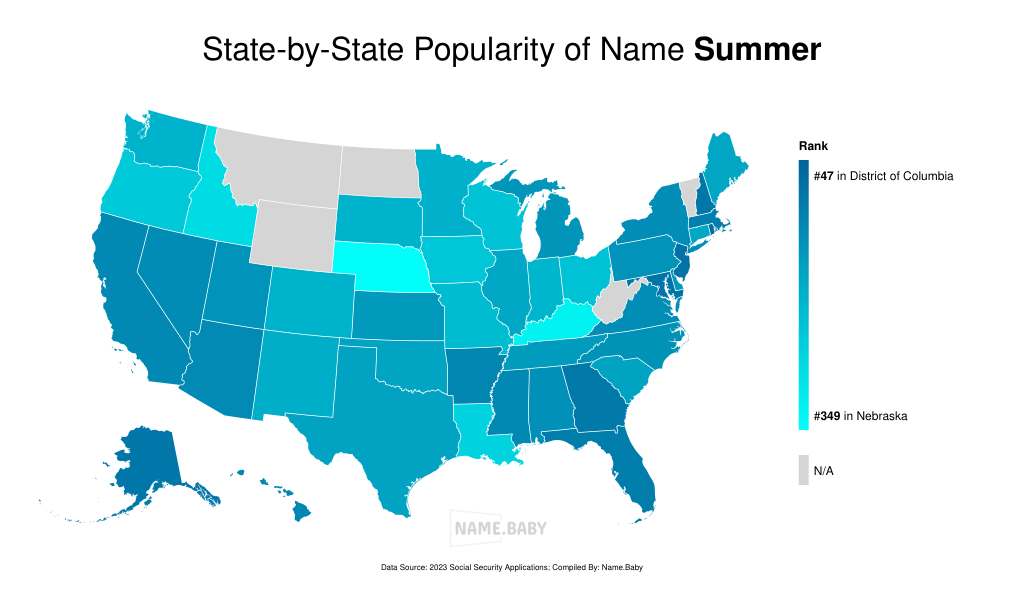
States Popularity Chart
Notable People Named Summer
| Summer Glau is an American actress known for science fiction and fantasy roles, including River Tam in Firefly and Serenity, Cameron in Terminator The Sarah Connor Chronicles, Tess Doerner in The 4400, and Isabel Rochev in Arrow. |
