Ulric
Meaning of Ulric
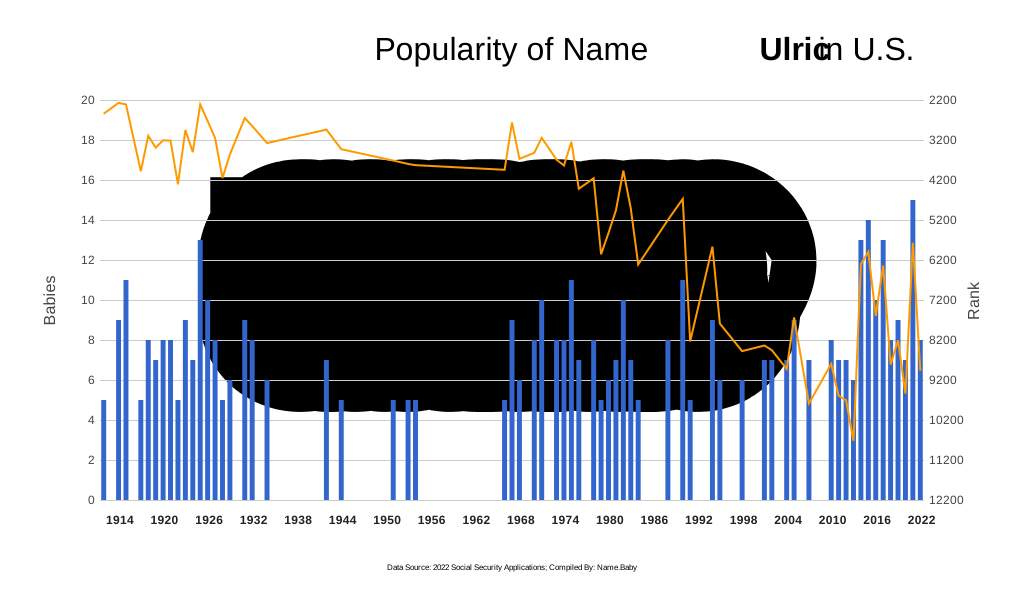
Ulric, pronounced UL-rik (ˈʊl.rɪk), traces back to the Old High German Ulrich—composed of ulf ‘wolf’ and rīhhi ‘power, ruler’—and gained early prominence through medieval bearers such as Saint Ulrich of Augsburg, whose tenth-century episcopate lent the name ecclesiastical prominence. In Anglo-American usage it has exhibited a sporadic yet enduring presence in U.S. birth records throughout the twentieth and twenty-first centuries, rarely exceeding double-digit annual occurrences; in 2024, for instance, only five newborns received the name, placing it at rank 919. Ulric’s most significant cluster of usage occurred in the mid-1960s to mid-1970s—peaking around rank 637 in 1966—yet it has consistently remained outside the top 600. This analytical perspective underscores Ulric’s status as a distinctive, low-frequency choice that balances precise Germanic etymology with a measured level of rarity.
Pronunciation
- Pronunced as UL-rik (/ˈʊl.rɪk/)
U.S. Popularity Chart
Notable People Named Ulric
| Ulric Neisser was a German-American psychologist known as the father of cognitive psychology for his pioneering research on perception and memory. |
| Philip Louis Ulric Cross was a Trinidadian jurist, diplomat and highly decorated World War II RAF navigator. |
| Ulric Manfred II of Turin - Ulric Manfred II was an early 11th century ruler of Turin and Susa whose daughter Adelaide linked his dynasty to the House of Savoy. |
| Ulric Haynes was the name of an American diplomat, lawyer, and professor and a Trinidadian footballer. |
| Ulric Dunbar - Ulric Stonewall Jackson Dunbar was a Canadian-born American sculptor. |
| Ulric Browne is a British actor best known for playing Winston in the BBC soap opera EastEnders. |
| Ulric Jones - Ulric Oduma Emmanuel Jones was Sierra Leone's first neurosurgeon and medical director of the Fajara Medical Clinic in the Gambia. |
