Valentine
Meaning of Valentine
Valentine is a spirited, unisex charmer that springs from the Latin Valentinus, meaning “strong” and “healthy,” yet it drapes itself in ribbons of romance thanks to the third-century Saint Valentine and the heart-studded holiday that bears his name. Pronounced VAL-en-tyn in English—or with a breezy French flair, VAH-lahn-teen—it delivers instant international polish while staying wonderfully familiar. Historically, poets and pop tunes have leaned on Valentine as shorthand for devotion, but the name’s steady, century-long appearance on U.S. charts proves it’s more than a once-a-year confection. It balances soft lyricism with quiet muscle, making it just as fitting for a future novelist as for a future point guard. Parents drawn to names like Julian or Vivienne often fall for Valentine’s blend of old-world grace and modern gender-flexibility, and who can blame them? Choosing Valentine is like handing a child a passport stamped with love, strength, and timeless style.
Pronunciation
French
- Pronunced as VAH-lahn-teen (/va.lɑ̃.tin/)
English
- Pronunced as VAL-en-tyn (/ˈvæləntaɪn/)
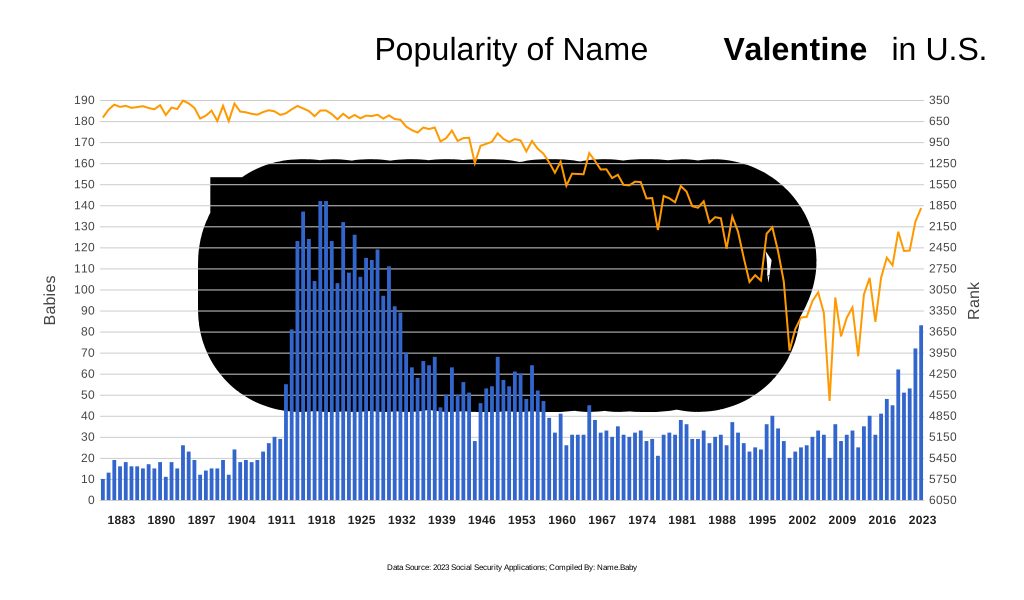
U.S. Popularity Chart
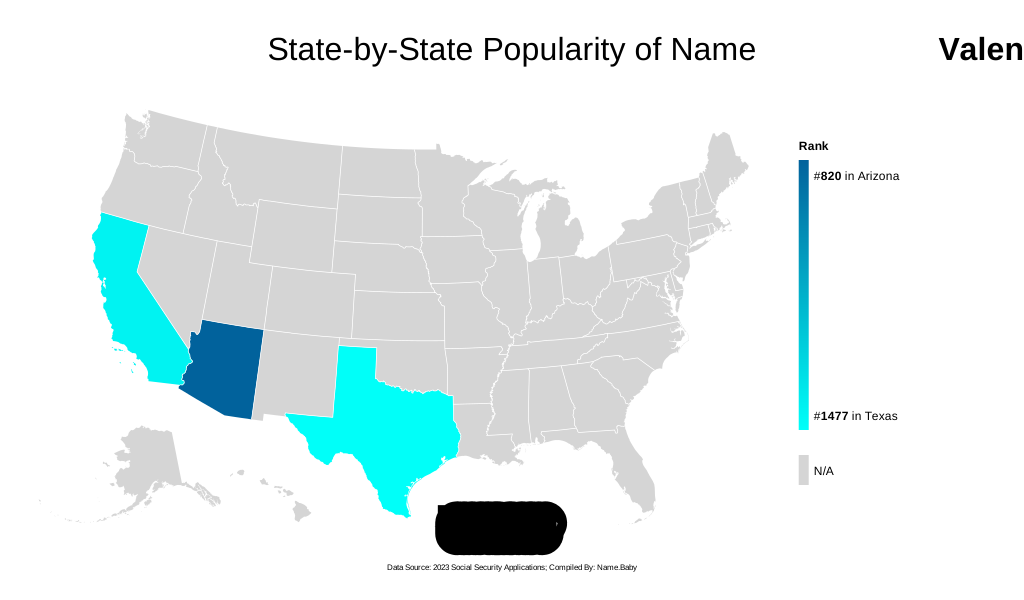
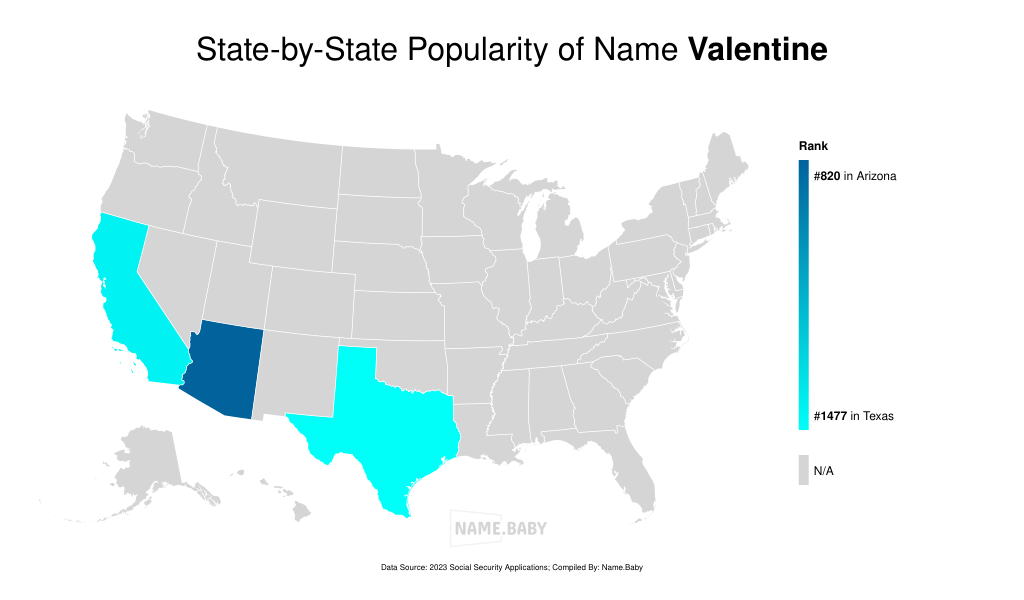
States Popularity Chart
Notable People Named Valentine
| Valentine de Saint-Point was a French poet, painter and choreographer best known as the first woman to write a futurist manifesto. |
| Valentine Greatrakes was a 17th century Irish faith healer, nicknamed The Stroker, who toured England in 1666 claiming he could cure the sick with his touch. |
| Valentine Fleming was a Scottish Conservative MP killed in World War I and the father of writers Peter and Ian Fleming, the creator of James Bond. |
