Venetia
Meaning of Venetia
Venetia, with its Latin heritage rooted in the fabled lagoons of Venezia, unfolds like a silk kimono drifting through misty canals, a name as fluid and luminous as a haiku at dawn; its vowels bloom in Italian as veh-NEH-tyah (/veˈne.tja/) and ripple into English as vuh-NEE-shuh (/vəˈniːʃə/), each syllable echoing polished marble floors and the hush of lantern-lit carnival nights. In its cool glow it carries the patina of mosaic-studded palaces and the gentle impermanence of a sakura petal brushing a koi pond’s surface—a wabi-sabi charm that marries Venetian grandeur to the serene poetry of Japanese gardens. Rare yet unmistakable, Venetia suggests both aristocratic lineage and earthy grace, a name that wears its history like an elegant mask, revealing more by what it conceals. And though it might seem to demand a gondolier’s oar, it accepts with dry humor that neither gondola license nor grand procession is necessary for its quiet voyage through time.
Pronunciation
Italian
- Pronunced as veh-NEH-tyah (/veˈne.tja/)
English
- Pronunced as vuh-NEE-shuh (/vəˈniːʃə/)
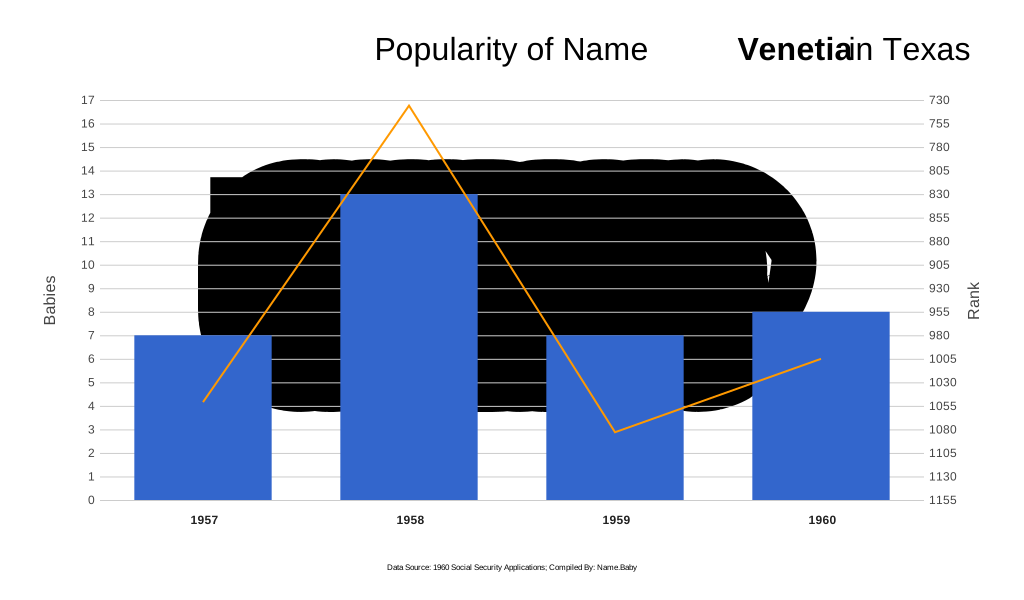
U.S. Popularity Chart
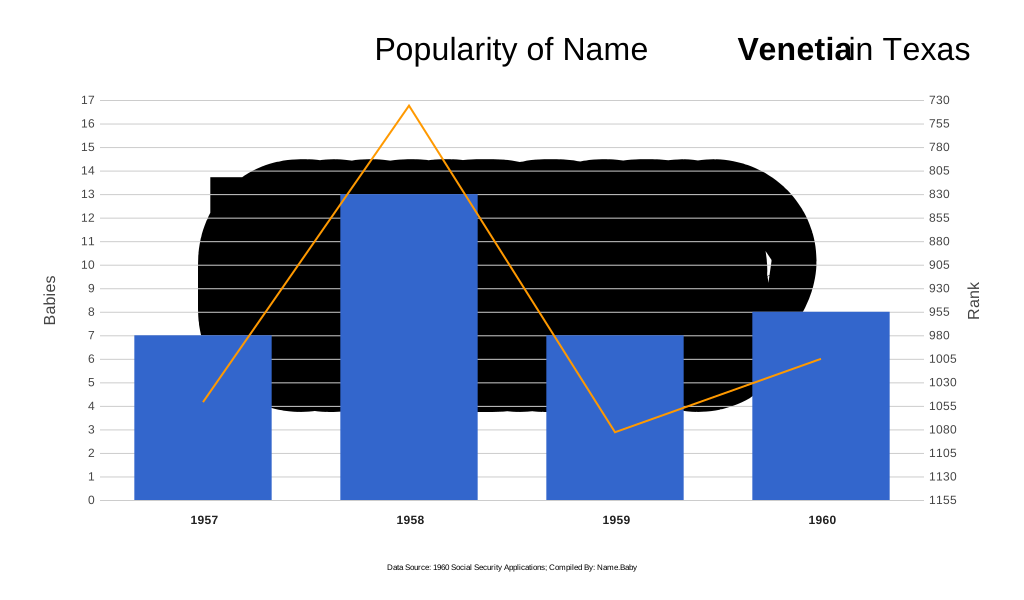
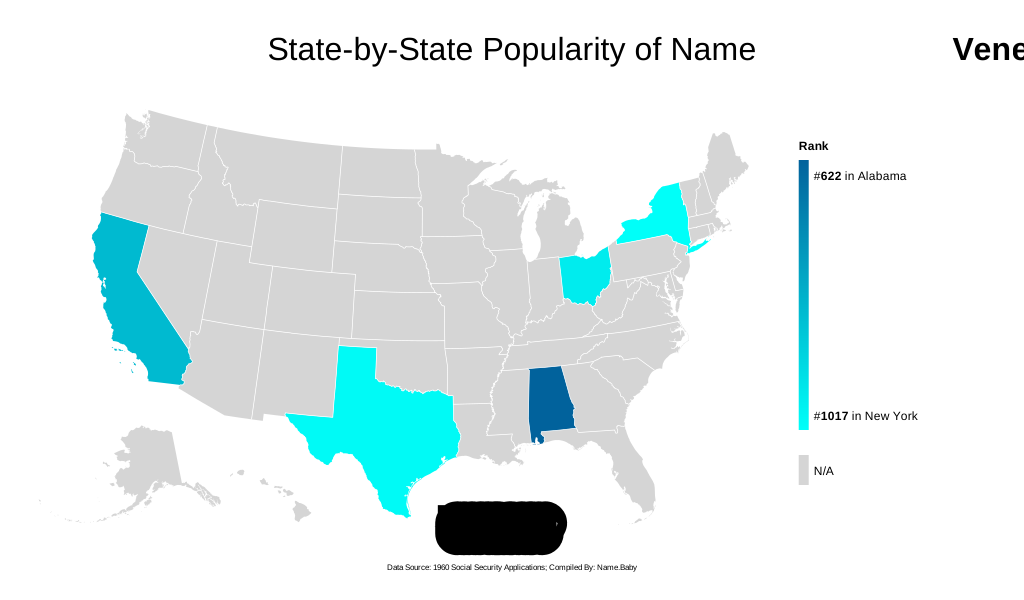
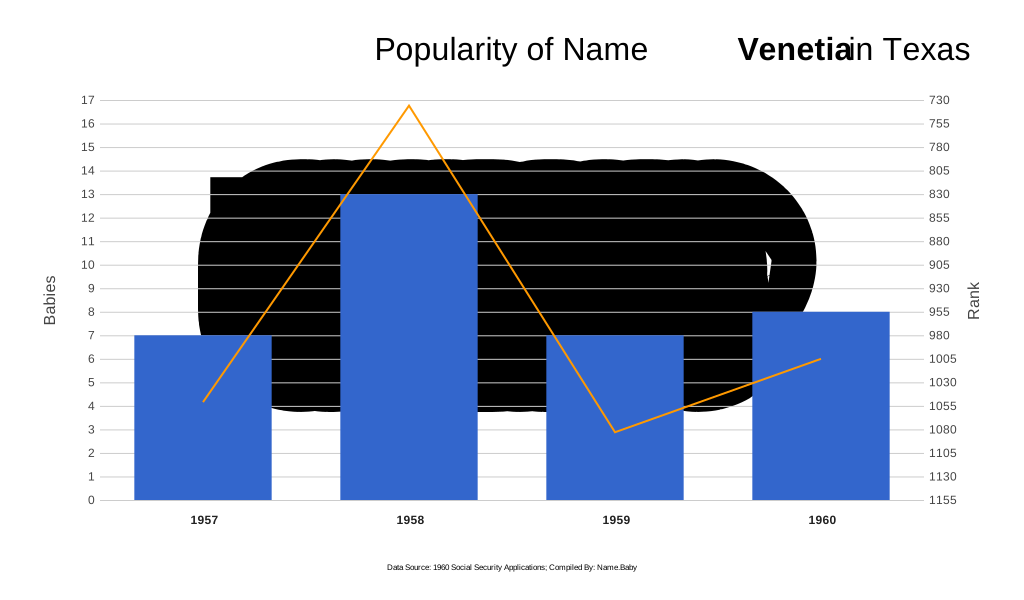
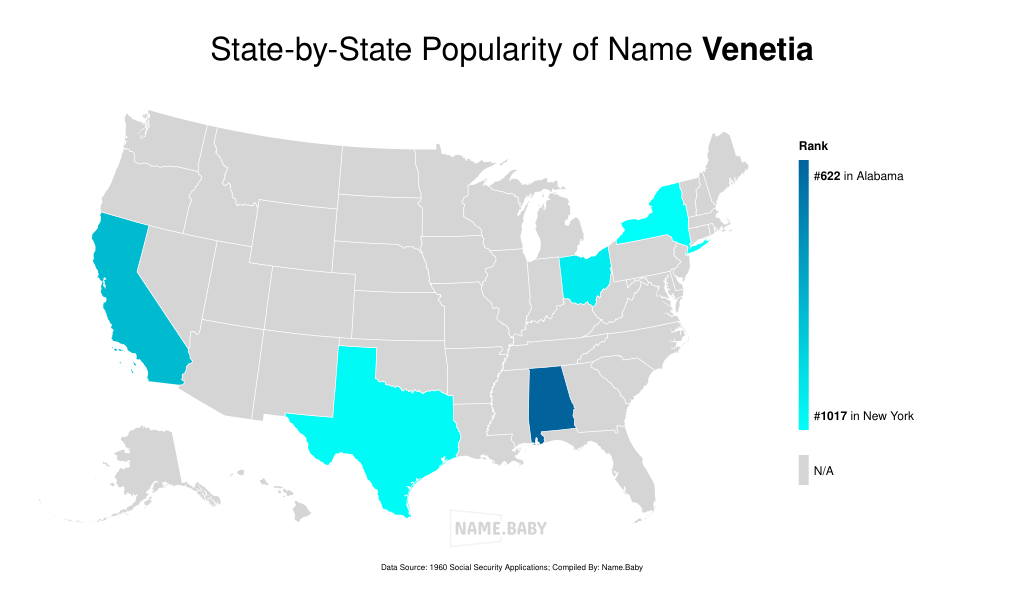
States Popularity Chart
Notable People Named Venetia
| Venetia Stanley - Venetia Anastasia, Lady Digby, was a celebrated Stuart-era beauty and the wife of courtier and scientist Sir Kenelm Digby. |
| Venetia Burney was an English teacher and accountant who suggested the name Pluto for the newly discovered world in 1930, when she was just 11. |
| Venetia Dearden is a British photographer and filmmaker known for books including Somerset Stories and Eight Days. |
