Violette
Meaning of Violette
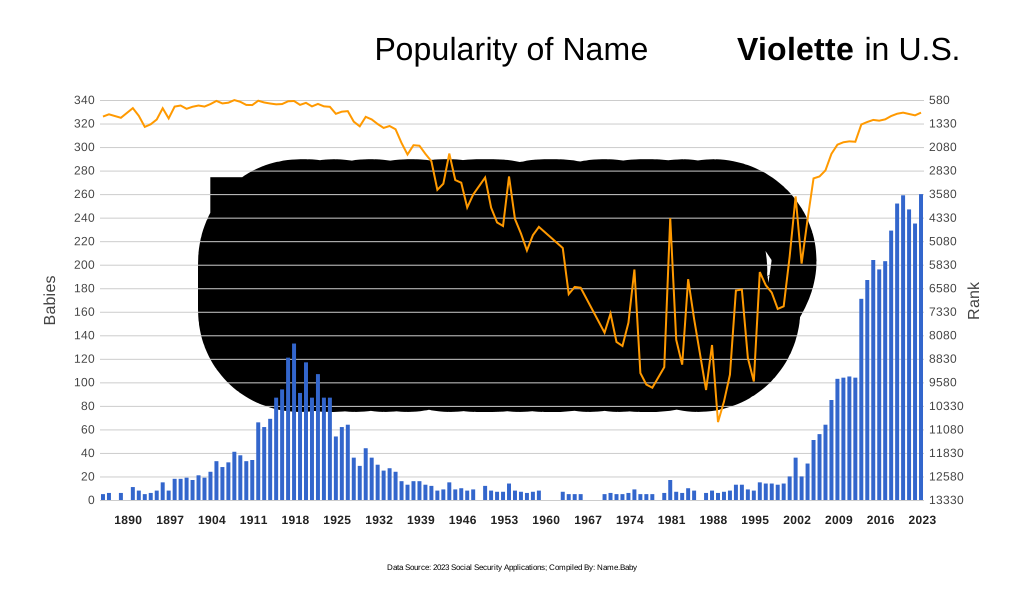
Violette breezes in like a Parisian spring morning—fresh, fragrant, and undeniably chic. Borrowed from the French diminutive of Violet, she ultimately traces her petals back to the Latin “viola,” the tiny purple bloom that has whispered tales of modesty and loyalty for centuries. In English she’s pronounced “vee-uh-LET,” while in her native French she twirls to “vyoh-LET,” giving parents an oh-so-continental flourish every time they call her name. Violette carries the color of twilight skies, the romance of vintage perfumes, and a dash of jazz-age sparkle—think flapper dresses, Art Deco posters, and speakeasy cocktails garnished with sugared violets. Literature buffs will spot her in ballets and novels, painters have bottled her hue in their palettes, and flavor-chasers know her as the sweet note in classic French candies. Trend-watchers, take heart: she’s been quietly climbing U.S. charts since the turn of the millennium, proof that this flower is no shrinking violet but a resilient bloom ready to charm a new generation.
Pronunciation
English
- Pronunced as vee-uh-let (/ˌviəˈlɛt/)
French
- Pronunced as vyoh-let (/vjɔ.lɛt/)
U.S. Popularity Chart
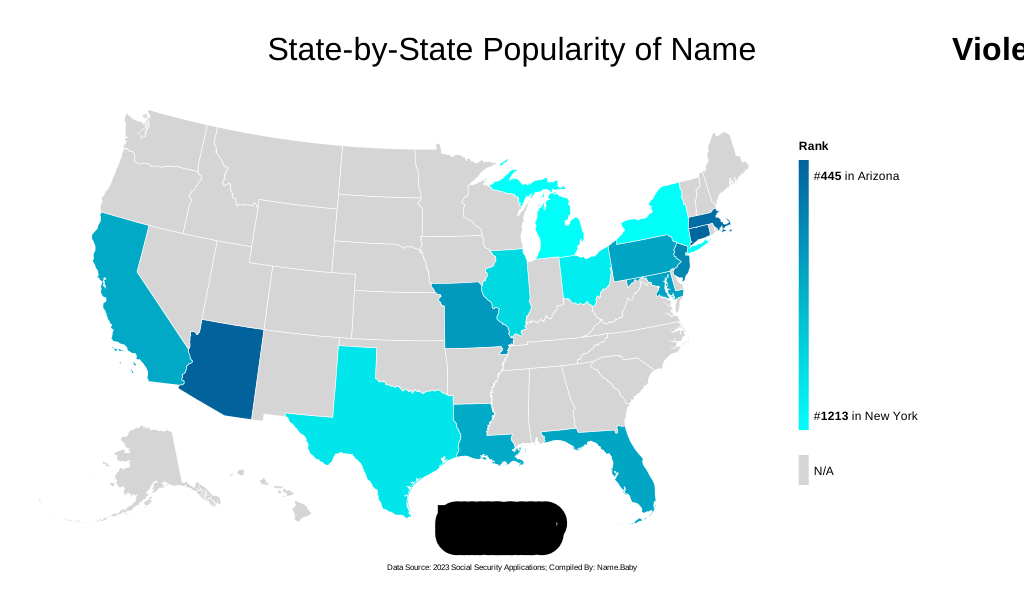
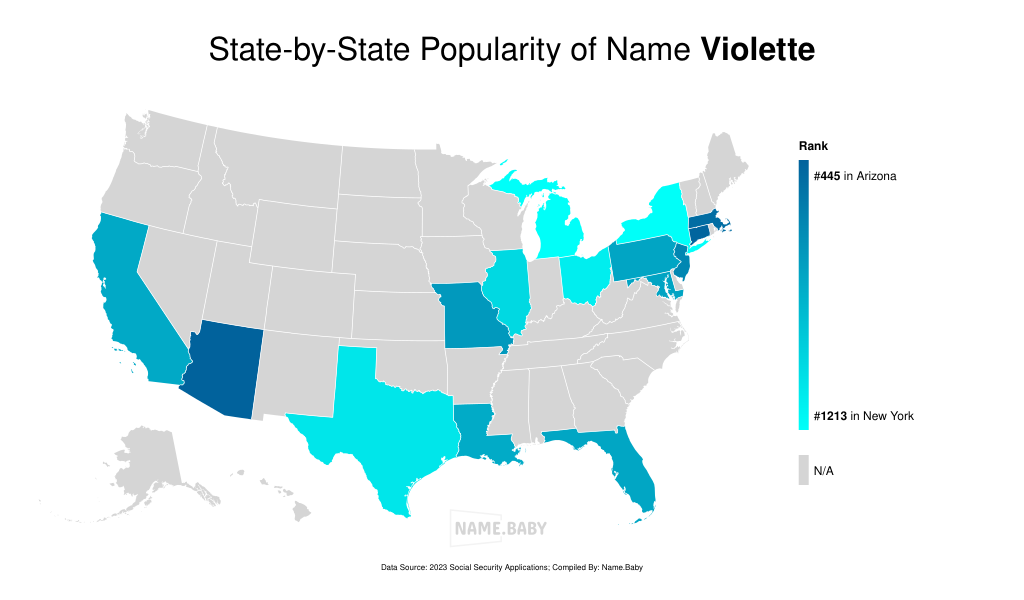
States Popularity Chart
Notable People Named Violette
| Violette Szabo was a British-French SOE agent in World War II who was captured on her second mission into occupied France and executed at Ravensbrück, earning a posthumous George Cross. |
| Violette Neatley Anderson made history in 1926 as the first African American woman to practice law before the United States Supreme Court and became a leading champion of the Bankhead-Jones Act, which helped Southern sharecroppers gain rights and economic opportunity. |
| Violette Cordery was a British racing driver who set long distance records. |
| Violette Nozière was a French woman whose 1934 conviction for poisoning her parents became one of interwar France's most sensational trials. |
| Violette Malan is a Canadian fantasy writer and editor with a PhD in eighteenth century English literature. |
