Woodrow
Meaning of Woodrow
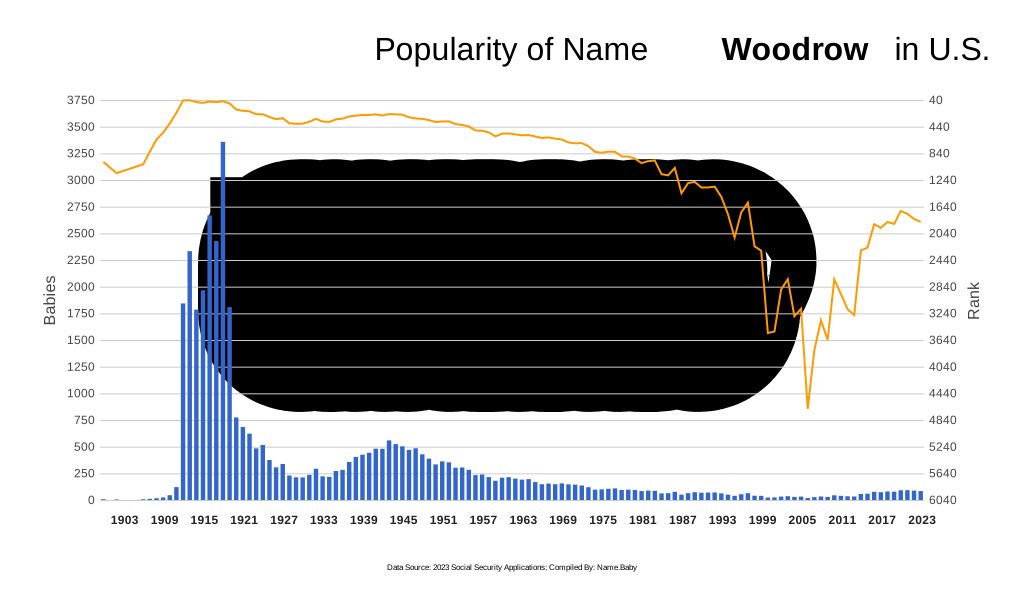
Woodrow, pronounced WOOD-roh, originated as an English habitational surname derived from the Old English elements “wudu” (wood) and “rāw” (row), thereby designating either a line of cottages skirting a forest or a hedgerow that marked a boundary; when transferred to given-name use in the United States at the turn of the twentieth century, it acquired an additional layer of political resonance through President Thomas Woodrow Wilson, whose tenure propelled the name to its historic apex in 1918. Although its national rank has gradually receded from the Top 100 to the mid-800s, longitudinal birth-record data reveal a modest but steady persistence that distinguishes Woodrow from many other early-century favorites that have vanished entirely from contemporary registers. The name’s semantic link to timbered landscapes evokes connotations of firmness, rootedness, and quiet endurance, while its familiar diminutive “Woody” lends informal approachability without severing ties to the dignified full form. Within Anglo-American nomenclature, Woodrow therefore occupies a niche that is simultaneously rustic and presidential—an uncommon synthesis that may appeal to parents seeking historical gravitas tempered by a subtle, nature-inflected charm.
Pronunciation
British English
- Pronunced as WOOD-roh (/wʊdˈrəʊ/)
American English
- Pronunced as WOOD-roh (/wʊdˈroʊ/)
U.S. Popularity Chart
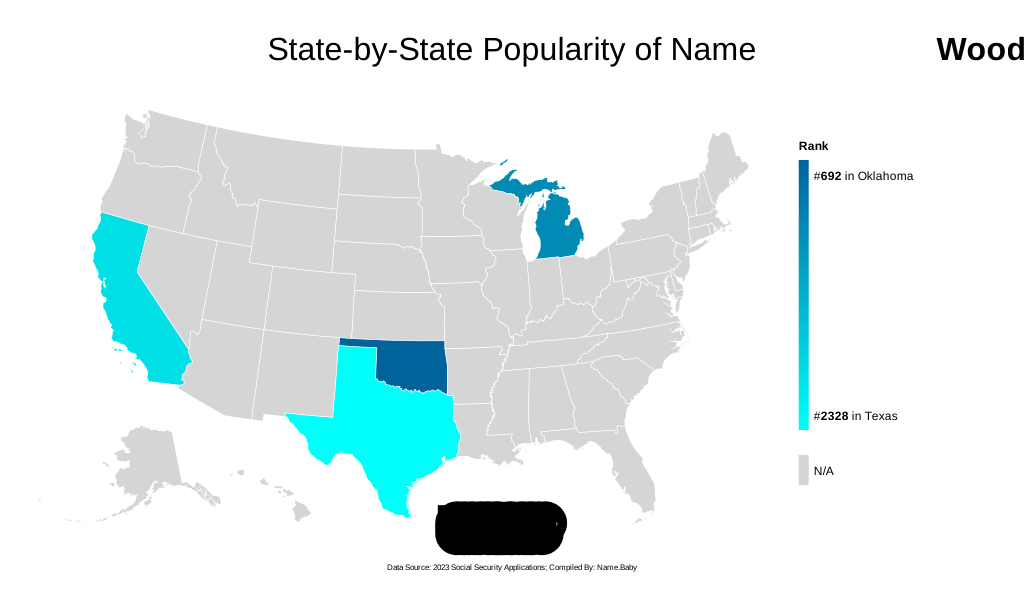
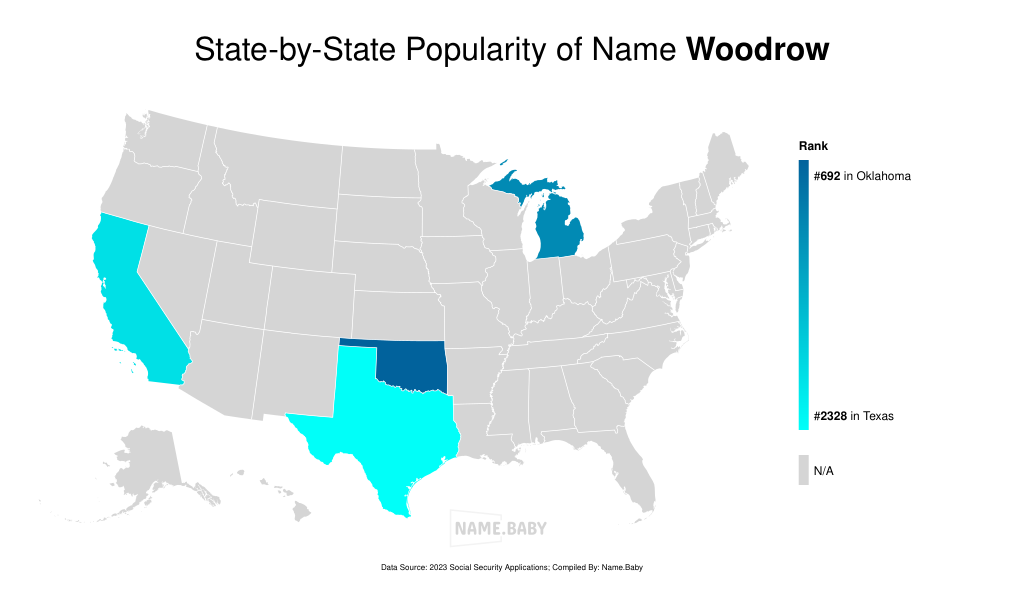
States Popularity Chart
Notable People Named Woodrow
| Woodrow Wilson, the 28th president of the United States, led the country through World War I and championed the League of Nations. |
| Woodrow Wilson Keeble was a Dakota Army veteran of World War II and Korea who received the Medal of Honor posthumously in 2008. |
| Woodrow Lowe was a College Football Hall of Fame linebacker at Alabama who spent 11 seasons with the San Diego Chargers before becoming a coach. |
| Woodrow Stanley was a Democratic politician who served as mayor of Flint and later as a Michigan state representative. |
| Woodrow Wilson, known as Lefty, pitched in the Negro leagues from 1936 to 1940. |
