Yasmina
Meaning of Yasmina
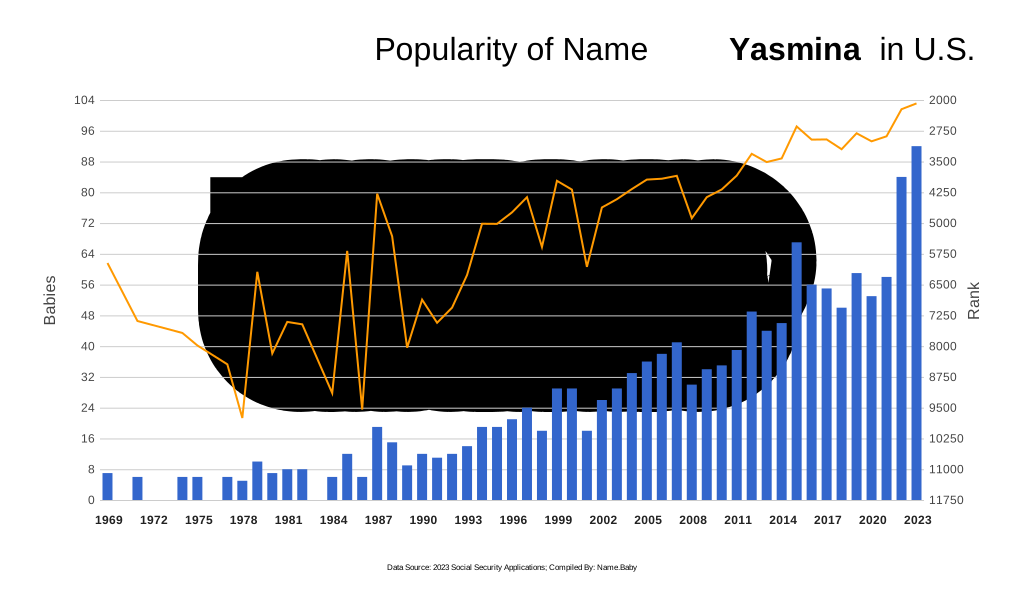
Yasmina is the Arabic elaboration of Jasmine, ultimately stemming from the Persian “yasmin,” the night-scented flower long prized for its delicate white petals and heady perfume. In English it is voiced yas-MEE-nah, while the original Arabic softens the first consonant to a gentle yass-MEE-nah—minor phonetic differences that speak to the name’s easy passage across cultures. Literary circles may think first of French playwright Yasmina Reza; football fans, of Danish star Yasmina Pedersen; gardeners, of trellised jasmine vines in midsummer bloom. Within the United States, the name has shown low-key stamina: since the early 1970s it has drifted, somewhat like its floral namesake on a warm breeze, between the 700s and 900s on the national charts, most recently landing at No. 834 with 116 newborns in 2024. That steady, unhurried pattern suggests a choice that feels familiar yet not overworked—a cosmopolitan alternative to Jasmine that carries the same fragrance of elegance while politely sidestepping playground ubiquity.
Pronunciation
English
- Pronunced as yas-MEE-nah (/jæz.ˈmi.nə/)
Arabic
- Pronunced as yas-MEE-nah (/jas.mi.na/)
U.S. Popularity Chart
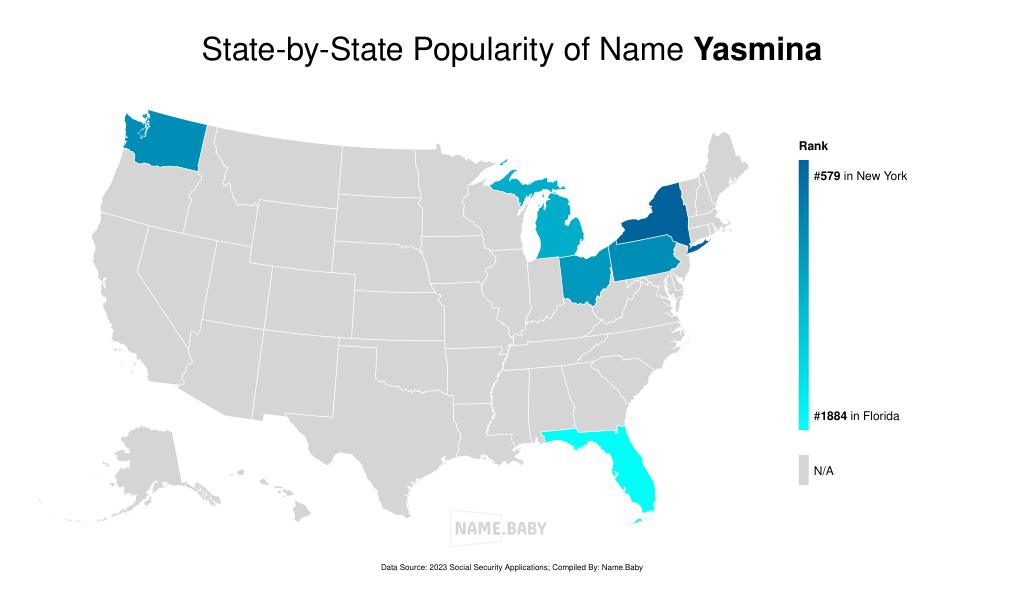
States Popularity Chart
Notable People Named Yasmina
| Mohammed Moulessehoul, better known as Yasmina Khadra, is a celebrated Algerian novelist whose nearly 40 books, published in over 50 countries, explore war, radical Islamism and the divide between East and West. |
| Yasmina Reza is a French playwright and novelist best known for her witty satirical plays Art and God of Carnage, the latter of which won a Tony Award and became a Roman Polanski film. |
| Yasmina Siadatan is a British Iranian businesswoman who won the fifth series of The Apprentice and landed a job working for Alan Sugar. |
