Teal
Meaning of Teal
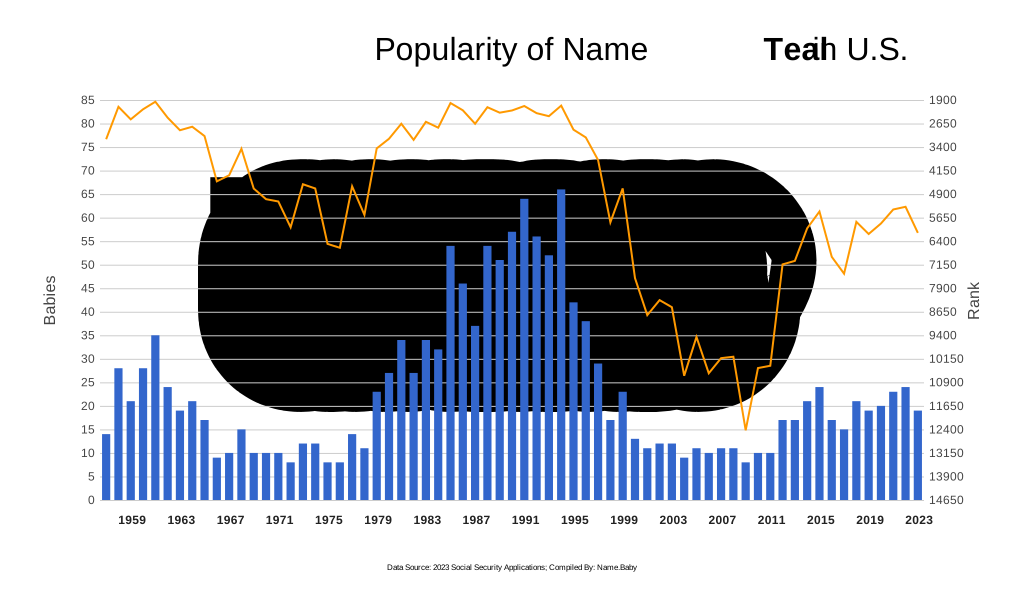
In its etymological trajectory, the appellation Teal derives from the Middle English term tele, originally designating a diminutive freshwater duck (Anas crecca) distinguished by an iridescent greenish‐blue plumage and later extended to denote the corresponding chromatic hue; this dual ornithological and chromatic heritage informs its adoption as a unisex given name within contemporary Anglo‐American contexts. Throughout the latter half of the twentieth century and into the twenty‐first, Teal has maintained a modest yet consistent presence in the United States’ Social Security Administration records, with its annual ranking typically situated near the lower end of the top one thousand and its yearly occurrences reflecting a stable preference among parents seeking a concise, nature‐inflected moniker. Phonetically rendered in English as /til/, the name’s monosyllabic structure and its associations of ecological subtlety, modern minimalism, and refined understatement have contributed to its cross‐gender appeal, positioning it as a choice that synthesizes academic rigor with contemporary aesthetic sensibilities. From an onomastic perspective, Teal’s convergence of avian taxonomy and chromatic terminology yields a name characterized by semantic precision and minimal ornamental excess, resonating with those who prioritize lexical clarity and understated elegance in their selection of personal names.
Pronunciation
English
- Pronunced as teel (/til/)
U.S. Popularity Chart
Notable People Named Teal
| Teal Wicks is an American singer and stage actress best known for playing Elphaba in Wicked and Mary Barrie in Finding Neverland. |
| Teal Alexander Bunbury is a Canadian-born professional soccer forward who played for the United States national team. |
| Teal Swan is an American spiritual influencer and author whose mental health teachings have drawn criticism. |
